
Yoga Mats
How Thick Should a Yoga Mat Be for Bad Knees on Hard Floors?
Thickness alone does not protect knees — density does. Here is how to choose mat thickness for hard floors, and when a knee pad beats a thicker mat.
Direct answer
For bad knees on hard floors, choose a dense 6 mm mat or a standard 4–5 mm mat plus a knee pad. Dense rubber or PVC at 6 mm cushions kneeling without wobbling, while soft 12 mm foam feels plush but compresses flat under a knee and destabilizes standing poses.
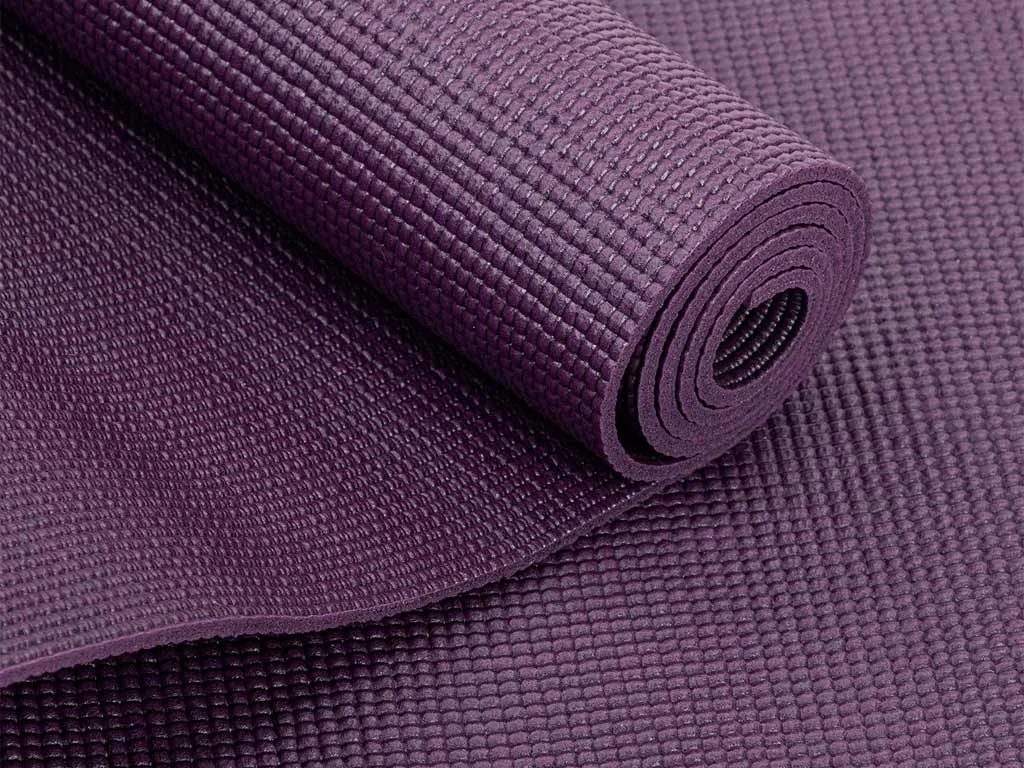
Most people shopping for knee comfort buy the thickest mat on the shelf — and end up with a soft foam slab that bottoms out under the knee and wobbles under standing poses. Thickness is only half the story; density decides whether the cushioning is still there when your weight is on it.
This guide explains how thickness and density work together on hard floors, what to buy at each budget, and when a small knee pad is the better tool. For full product rankings, see our yoga mat buying guide; for care that keeps cushioning alive, see how to clean and care for your yoga mat.
Quick comparison
| Mat type | Thickness | Knee comfort on hard floors |
|---|---|---|
| Dense rubber or PVC | 5–6 mm | Best balance of cushion and stability |
| Standard PVC | 4–5 mm | Good with a knee pad |
| Extra-thick foam | 10–13 mm | Plush at first, compresses under knees |
| Thin travel mat | 2–3 mm | Not enough on hard floors |
| Any mat + knee pad | 4–6 mm + pad | Most comfort per dollar |
1. Why does density matter more than thickness for knees?
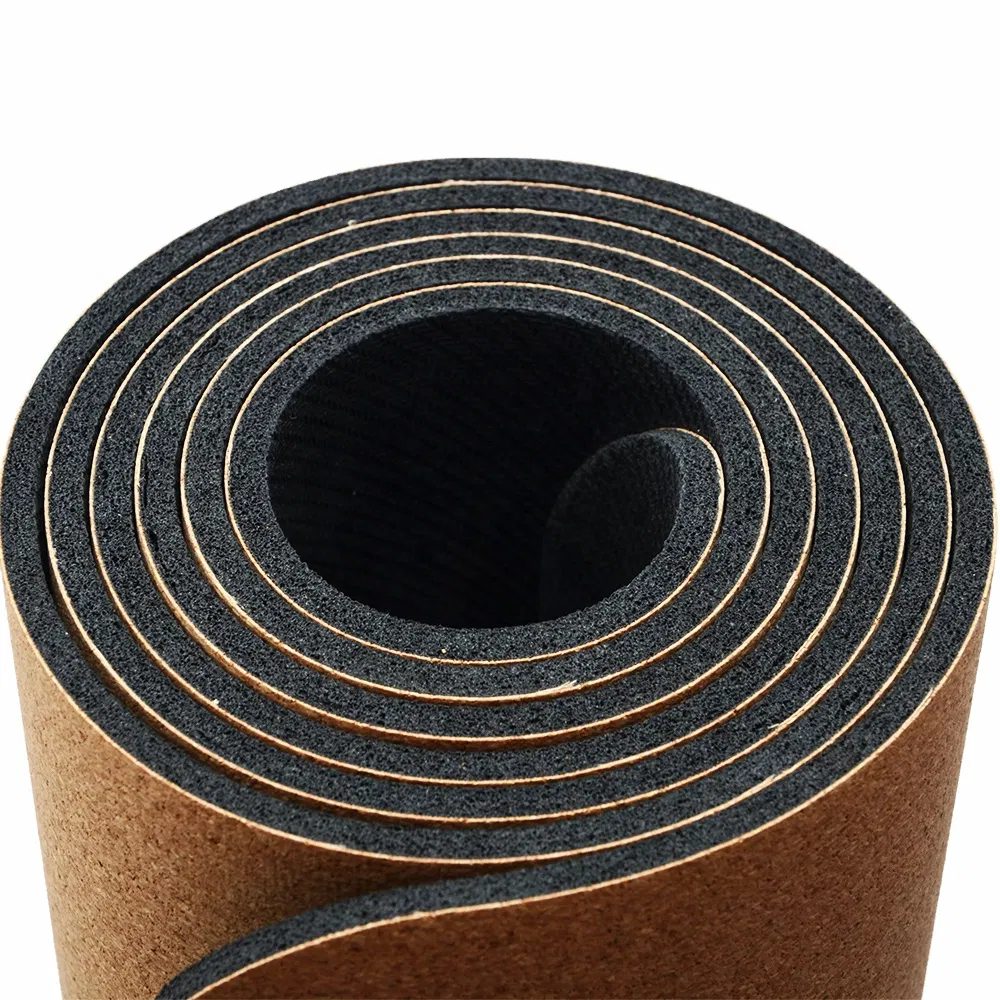
Density matters more because a knee concentrates your weight on a small area, and soft foam compresses until the floor is effectively under your kneecap. A dense 6 mm mat keeps a real layer of material under the knee; a soft 12 mm mat often does not.
Press your thumb hard into a mat sample: if you can feel the floor through it easily, your knee will too. Dense rubber and firm PVC pass this test; spongy foam fails it.
2. How thick should a mat be on wood or tile floors?
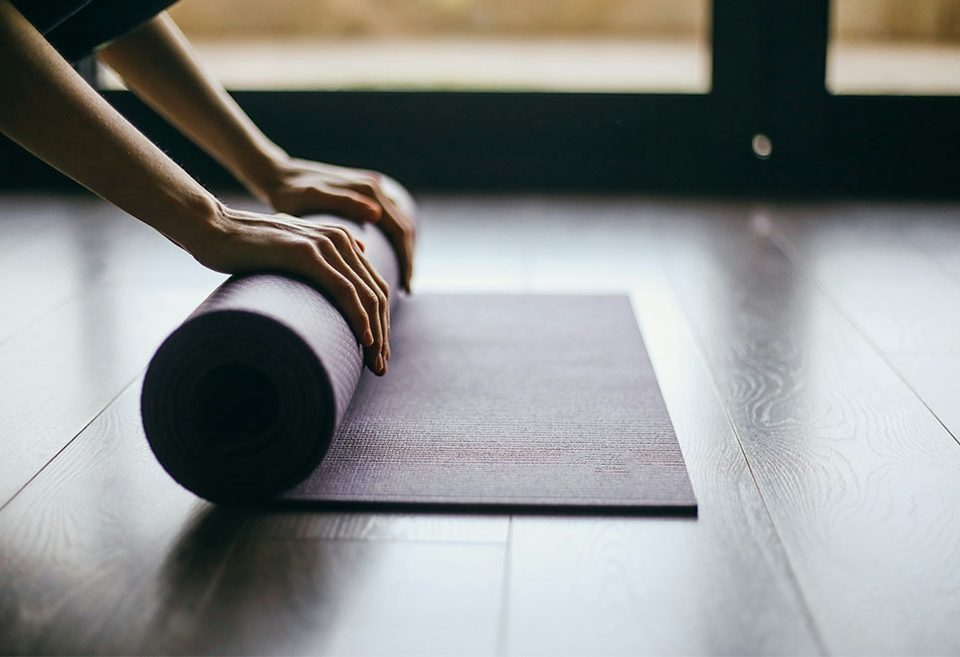
On wood or tile, 5–6 mm of dense material is the practical sweet spot: enough cushion for kneeling, firm enough for balance. Below 4 mm, hard floors announce themselves through the mat within minutes.
Carpet is more forgiving and lets a 4 mm mat work. The harder and colder the floor, the more the 6 mm dense option earns its place.
3. When is a knee pad better than a thicker mat?
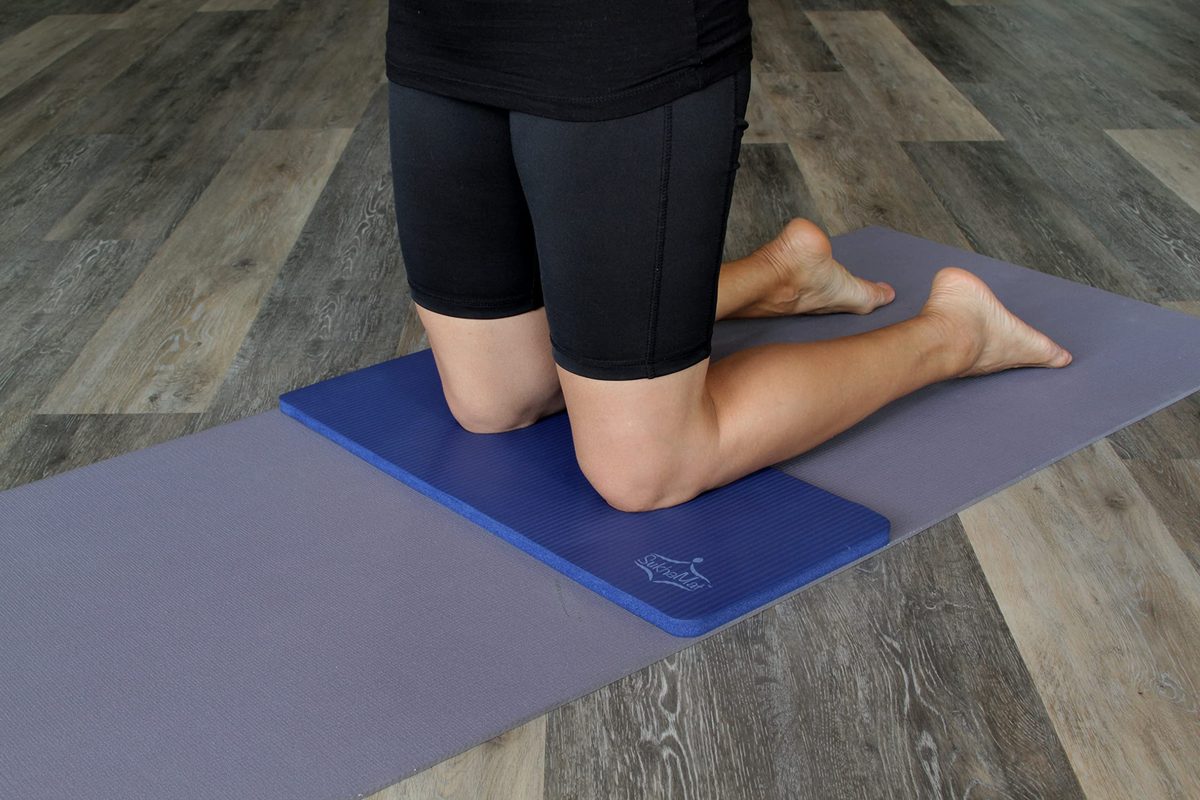
A knee pad is better when only kneeling poses hurt and standing poses feel fine. It adds cushion exactly where the knee lands without changing how the mat behaves under your feet.
A pad also travels between mats and floors, costs far less than a premium thick mat, and folds flat. For most people with sensitive knees, a 5 mm mat plus a pad beats a 12 mm foam mat.
4. What do extra-thick 12 mm mats actually feel like?
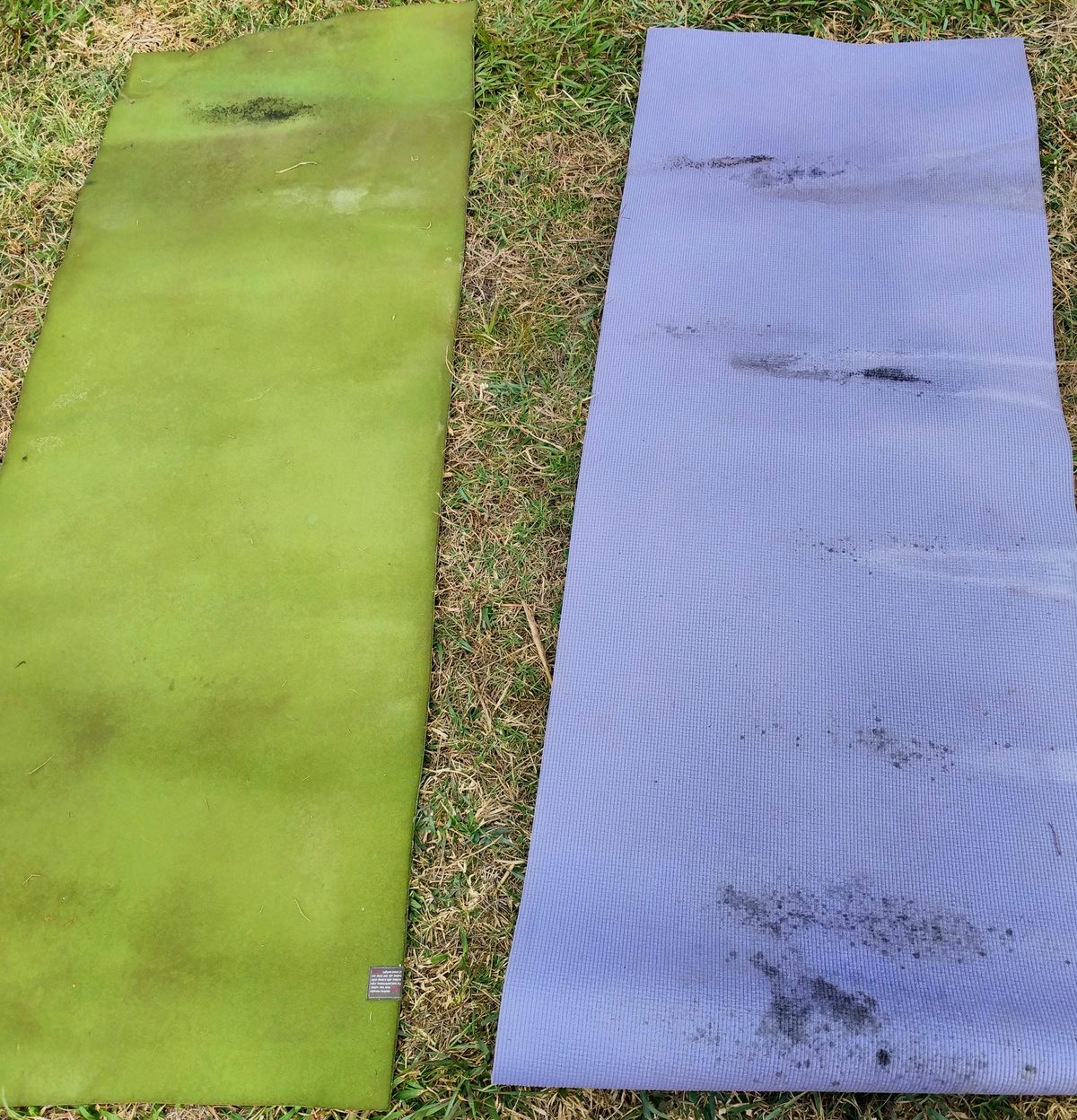
Extra-thick foam mats feel plush for lying poses and gentle floor work, but they compress under knees and make balance poses wobbly. They suit restorative practice on hard floors better than flowing sequences.
If you love the soft feel, keep the thick mat for floor work and use a firmer mat for standing practice. Owning two cheap mats often beats one compromise.
5. Which materials cushion knees without going soft?
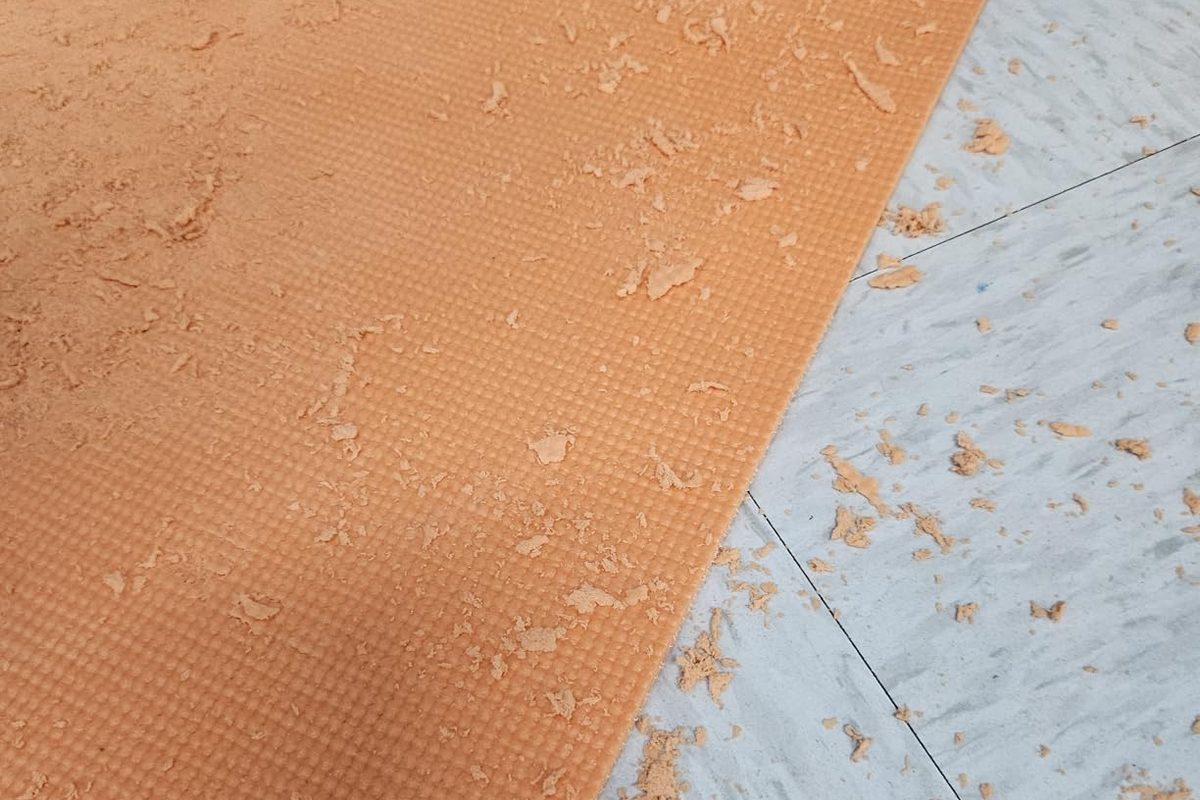
Natural rubber and firm PVC cushion knees without going soft, because both resist compression under point loads. Cork-topped mats add a firm, grippy surface over a rubber base.
Foam and low-density TPE feel soft in the hand but flatten under a knee. Judge materials by the thumb test, not by how plush they feel in the shop.
6. Does a thicker mat hurt balance and grip?
Yes — past about 6 mm, extra thickness usually costs balance and can reduce grip, because your foot sinks and shifts on the soft surface. Dense 6 mm mats are the exception: firm enough to stand on, thick enough to kneel on.
Grip also depends on the top surface. A grippy 5 mm mat will serve standing poses better than a slick 10 mm mat, whatever the thickness numbers say.
7. How do you test a mat before buying?
Test a mat by kneeling on it on the hardest floor available for a full minute, then standing on one leg. If your knee aches through it or your ankle wobbles constantly, the mat fails your floor, whatever its label says.
Online, look for density cues: mat weight is a useful proxy. A 6 mm mat weighing around 3 kg or more is usually dense; a feather-light thick mat is mostly air.
8. When should you replace a mat that used to feel fine?
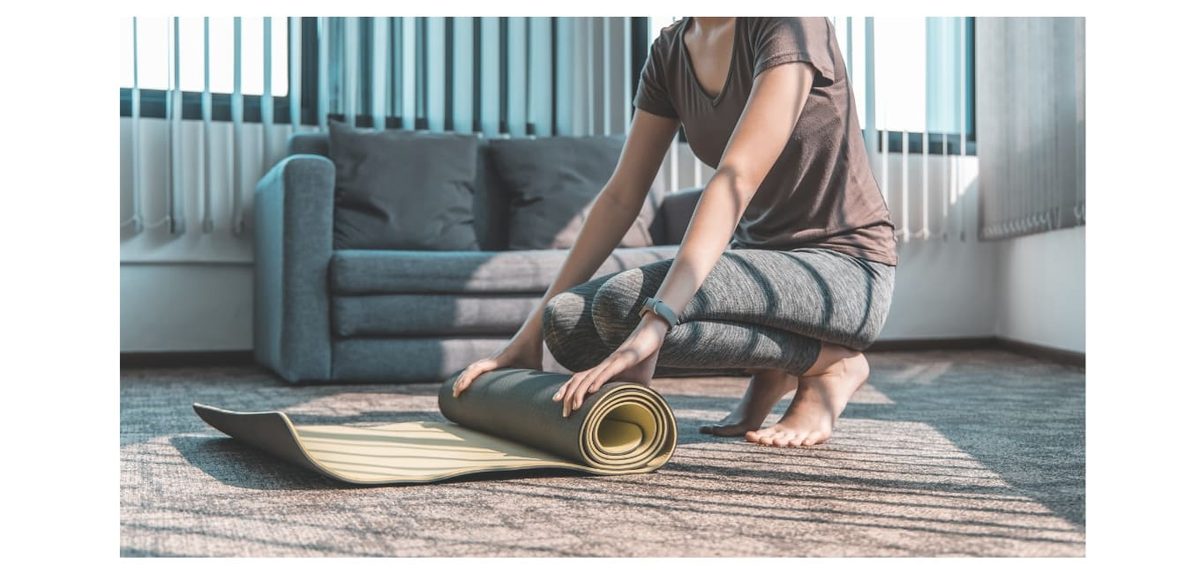
Replace a mat when the knee area stays compressed after use, the surface turns slick, or the edges curl and crack. Worn foam loses exactly the cushioning you bought it for, usually within a few years of regular use.
Regular cleaning slows the decline — sweat and oils break down surfaces. Our mat care guide covers cleaning by material so grip and cushion last longer.
Our verdict
For sensitive knees on hard floors, buy density first: a firm 6 mm mat, or a good 4–5 mm mat plus a knee pad. Treat 12 mm foam as a floor-work specialty mat, not an all-purpose answer.
Your knees will judge the mat in the first minute of kneeling. Buy for that minute, not for the thickness number on the label.
Gear mentioned in this guide
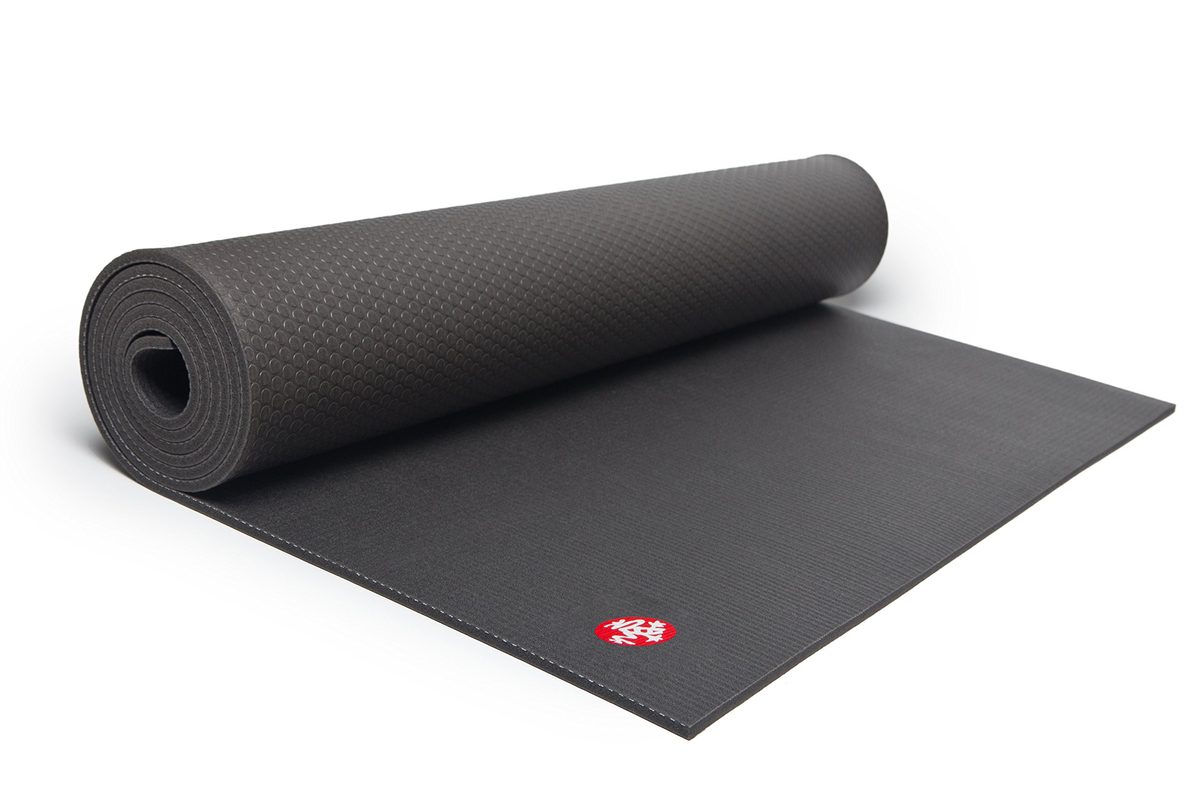
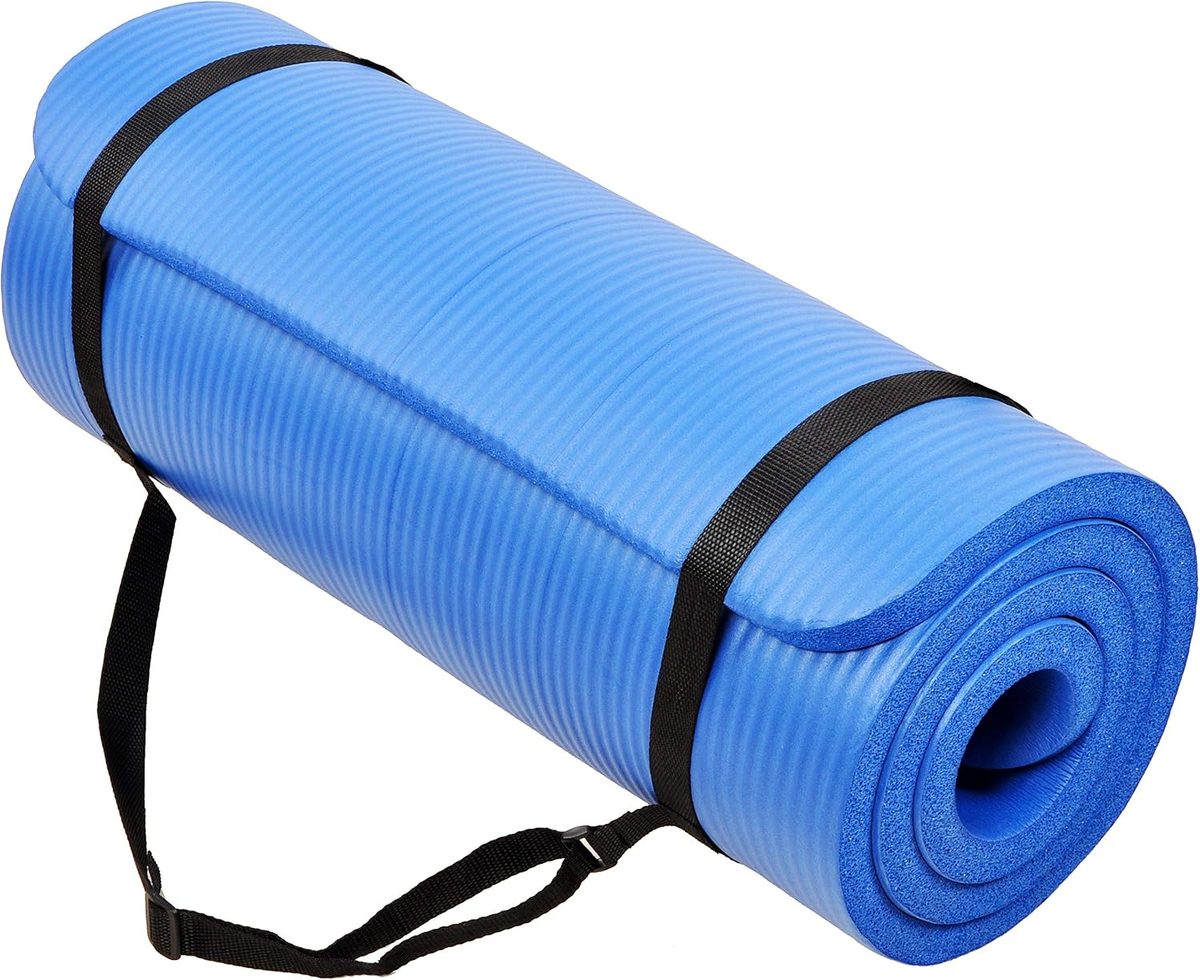
BalanceFrom GoYoga Mat
12.7 mm (1/2 in) · 71" × 24" · PVC foam
$20–$30 Typical price — check the live listing.
Yoga Knee Pad Cushion
A dense mini-pad that takes the pressure off knees on thin mats.
Frequently asked questions
How thick should a yoga mat be for bad knees?
A dense 6 mm mat, or a 4–5 mm mat plus a knee pad. Density matters more than thickness: soft 12 mm foam compresses flat under a knee.
Is a 12 mm mat good for knees?
For lying and restorative poses, yes. For kneeling it compresses under point load, and for standing balance it wobbles. Dense 6 mm usually serves knees better overall.
What is the best mat thickness for hard floors?
5–6 mm of dense rubber or PVC. Below 4 mm, wood and tile come through the mat quickly.
Do knee pads work with any mat?
Yes — a knee pad adds cushion only where the knee lands and works on any mat and floor. It is the cheapest comfort upgrade available.
Why does my thick mat still hurt my knees?
Because soft foam bottoms out: your knee compresses it until the floor is effectively under the kneecap. A denser mat or a knee pad fixes this.
How can I tell if a mat is dense enough?
Press your thumb hard into it — if you feel the floor easily, it is too soft. Mat weight helps too: a 6 mm mat around 3 kg or more is usually dense.
Does mat thickness affect balance?
Yes. Beyond about 6 mm, soft mats let the foot sink and shift. Dense 6 mm mats keep standing poses stable.
Related guides
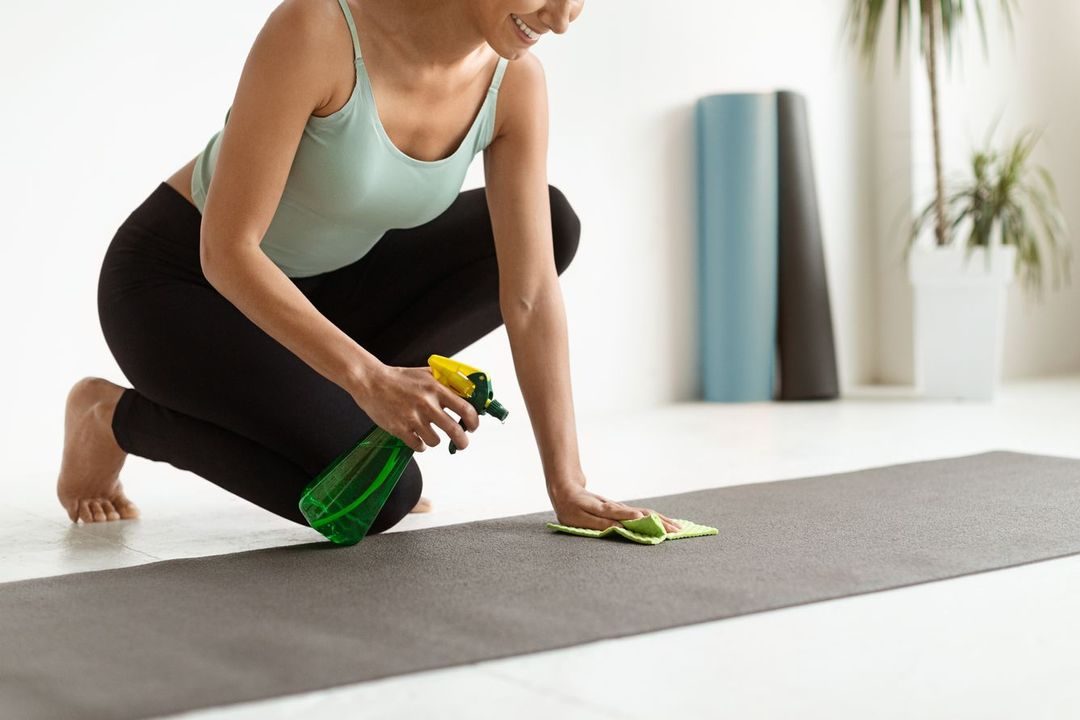
How to Clean and Care for Your Yoga Mat
A yoga mat is a surface you press your face into. Keeping it clean is not vanity — it is grip, hygiene and lifespan in one habit. Here is how to clean every mat…
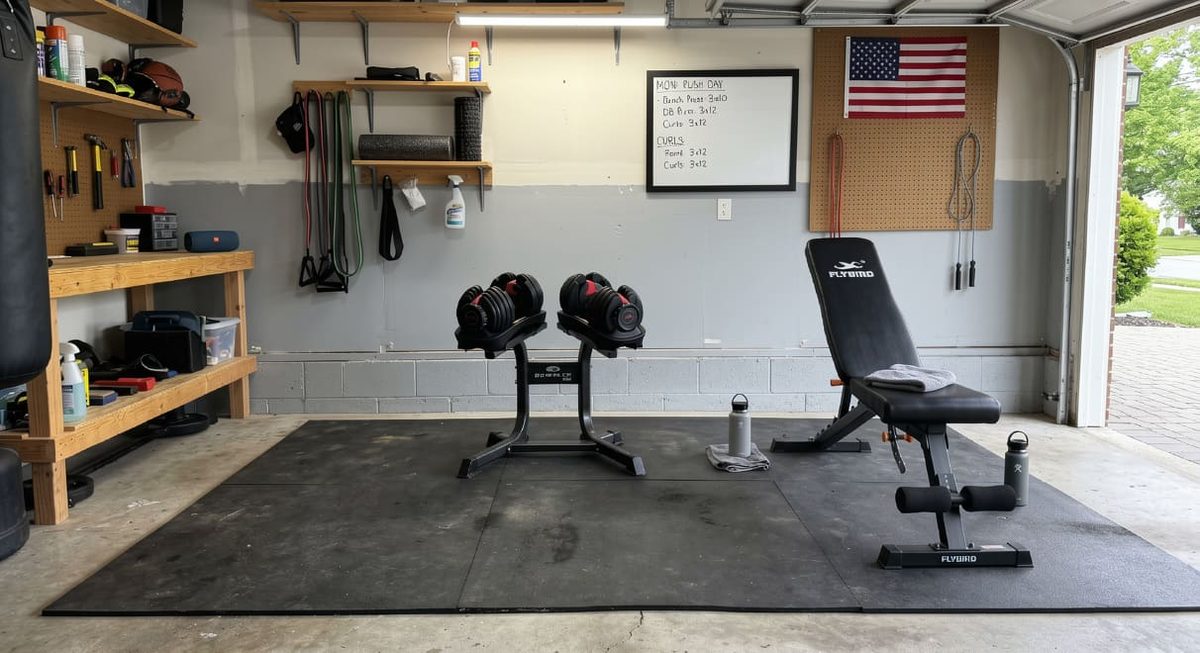
How to Start a Home Gym on a Budget
You do not need a $5,000 rack to train at home. You need a floor that survives dropped weight, one good pair of dumbbells, and a bench — in that order. Here is …
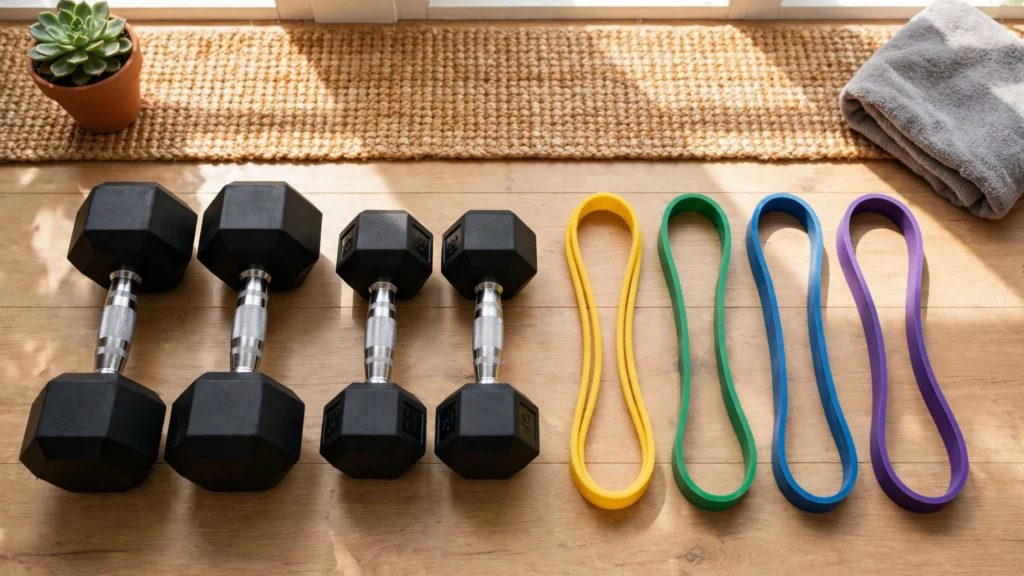
Resistance Bands vs Dumbbells: Which Builds More Strength?
Bands are cheap, light and travel anywhere. Dumbbells are heavy, precise and last forever. The real question is not which is better — it is which kind of resist…
As an Amazon Associate, we earn from qualifying purchases. Prices and availability change — always check the live listing before you buy.