Yoga Mats
Best Yoga Mats for Home Workouts
A yoga mat is the floor you bring with you. The right one grips when you sweat, cushions your knees without wobbling your balance, and still looks decent in three years. We compared 15 mats on thickness, material, grip and weight — and we say plainly which ones are worth the money.
Direct answer
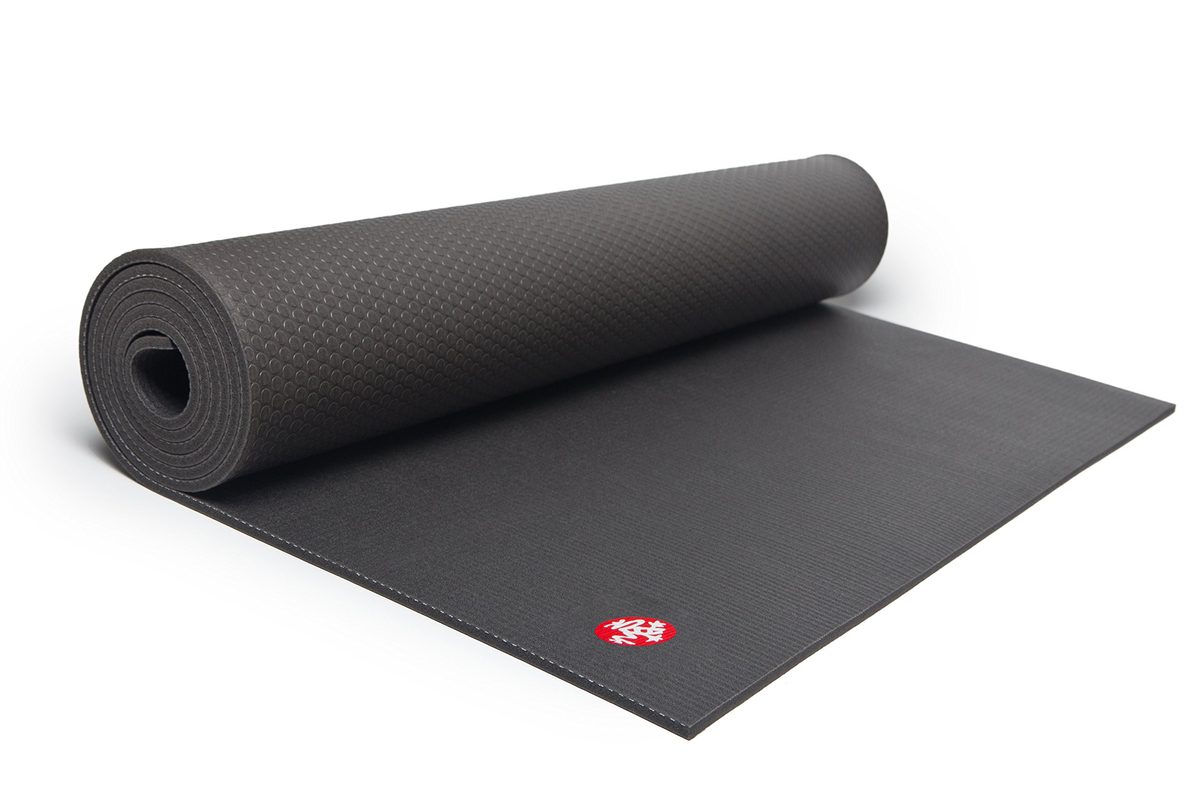
The Manduka PRO 6mm is the best yoga mat for most home workouts: its dense PVC cushions knees without wobbling your balance, the grip improves the more you use it, and it is built to last for years. For very sweaty practice, a polyurethane-topped mat grips better when wet.
Yoga mats fail in predictable ways: they get slippery when you sweat, they compress into pancakes within a year, they smell of chemicals for a month, or they weigh so much you never carry them anywhere. The best mat for you depends on which failure you care about most — and on whether your practice is slow and seated or fast and sweaty.
This guide covers 15 mats from $25 to $160, across every material that matters: dense PVC, natural rubber, cork, TPE and polyurethane. Thickness runs from 4.2 mm to a half inch. Every entry lists real dimensions and weight, because a mat's spec sheet tells you more than its marketing copy ever will.
A note on what we do not do: we do not give fitness or medical advice. This guide is about equipment — grip, cushioning, size, durability and price. If you have a joint or health concern that affects what you can do on a mat, talk to a clinician, not a review site.
At a glance
| Product | Thickness | Size | Material | Weight | Typical price |
|---|---|---|---|---|---|
| Manduka PRO Yoga Mat 6mm | 6 mm | 71" × 26" | PVC | 7.5 lb | $130–$150 |
| Liforme Original Yoga Mat | 4.2 mm | 73" × 27" | Eco-polyurethane + rubber | 5.5 lb | $140–$160 |
| JadeYoga Harmony Mat | 4.7 mm | 68" × 24" | Natural rubber | 5 lb | $95–$120 |
| Manduka PROlite Yoga Mat | 4.7 mm | 71" × 24" | PVC | 4 lb | $100–$115 |
| Manduka eKO Yoga Mat 5mm | 5 mm | 71" × 26" | Natural rubber | 6.3 lb | $105–$120 |
| Gaiam Premium Print Yoga Mat 6mm | 6 mm | 68" × 24" | PVC | 3.3 lb | $25–$35 |
| Gaiam Dry-Grip Yoga Mat 5mm | 5 mm | 68" × 24" | PVC, dry-grip coat | 3.5 lb | $60–$75 |
| Gaiam Essentials Premium Mat + Sling | 6 mm | 72" × 24" | PVC | 3.5 lb | $20–$30 |
| Alo Yoga Warrior Mat | 5 mm | 73.5" × 26" | Polyurethane + rubber | 8 lb | $130–$150 |
| B Yoga B Mat Strong 6mm | 6 mm | 71" × 26" | Natural rubber | 6.2 lb | $100–$120 |
| Hugger Mugger Earth Elements Mat | 5 mm | 68" × 24" | TPE | 2.2 lb | $75–$90 |
| IUGA Pro Non Slip Yoga Mat | 5 mm | 72" × 26" | Polyurethane + rubber | 2.1 lb | $55–$70 |
| BalanceFrom GoYoga Mat | 12.7 mm (1/2 in) | 71" × 24" | PVC foam | 4 lb | $20–$30 |
| HemingWeigh Extra Thick Yoga Mat | 12.7 mm (1/2 in) | 72" × 24" | PVC foam | 4 lb | $25–$40 |
| Yoloha Nomad Cork Yoga Mat | 4.5 mm | 72" × 25" | Cork + rubber | 4.5 lb | $95–$130 |
Typical price — check the live listing.
1. Manduka PRO 6mm — Best Overall
Best for: Daily practice, any style
The Manduka PRO is the mat other mats are measured against: 6 mm of dense PVC that cushions knees without feeling soft, a sealed surface that does not absorb sweat, and a lifetime warranty that Manduka actually honors. At 71 × 26 inches it is longer and wider than standard, which tall practitioners notice immediately.
It is heavy — 7.5 lb — so it lives at home rather than traveling. The sealed surface is slippery for the first few sessions until it breaks in, and the price is premium. But for a mat you unroll every day for years, the PRO is the default recommendation for a reason.
Pros
- Lifetime warranty, genuinely honored
- Dense 6 mm cushion without wobble
- Extra-long 71 × 26 in size
Cons
- Heavy at 7.5 lb — not a travel mat
- Slippery until broken in
- Premium price
2. Liforme Original — Best for Alignment
Best for: Alignment-focused practice
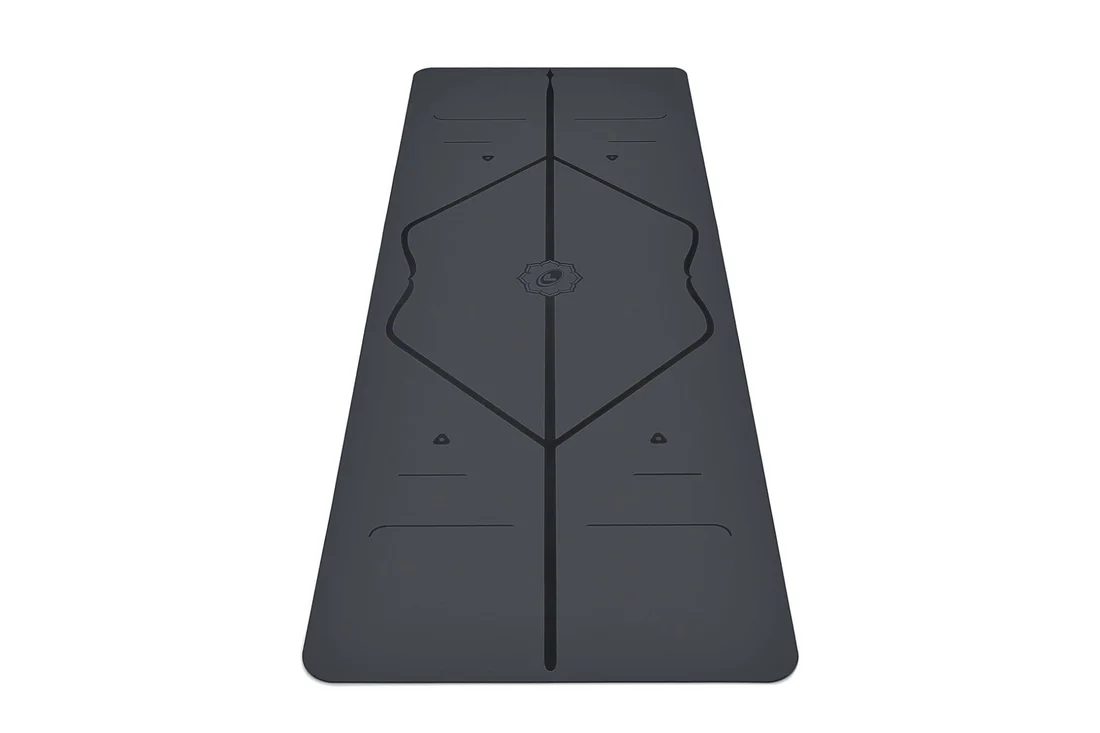
Liforme etches its AlignForMe guides directly into the mat surface — lines that show you where hands and feet go — and the eco-polyurethane top grips harder as it gets damp, which makes it the best mat here for sweaty practice. At 73 × 27 inches it is the largest mat in this guide, and a carry bag is included.
The surface needs care: no harsh cleaners, no direct sun, and the polyurethane layer wears faster than rubber if you drag your feet. It is also heavy for its size. But for practitioners who want alignment feedback built into the floor, nothing else does this.
Pros
- Etched alignment guides on the surface
- Grip improves when damp
- Largest mat here; bag included
Cons
- Surface needs gentle cleaning
- Wears faster than rubber with dragging
- Heavy for travel
Liforme Original Yoga Mat
4.2 mm · 73" × 27" · Eco-polyurethane + rubber
$140–$160 Typical price — check the live listing.
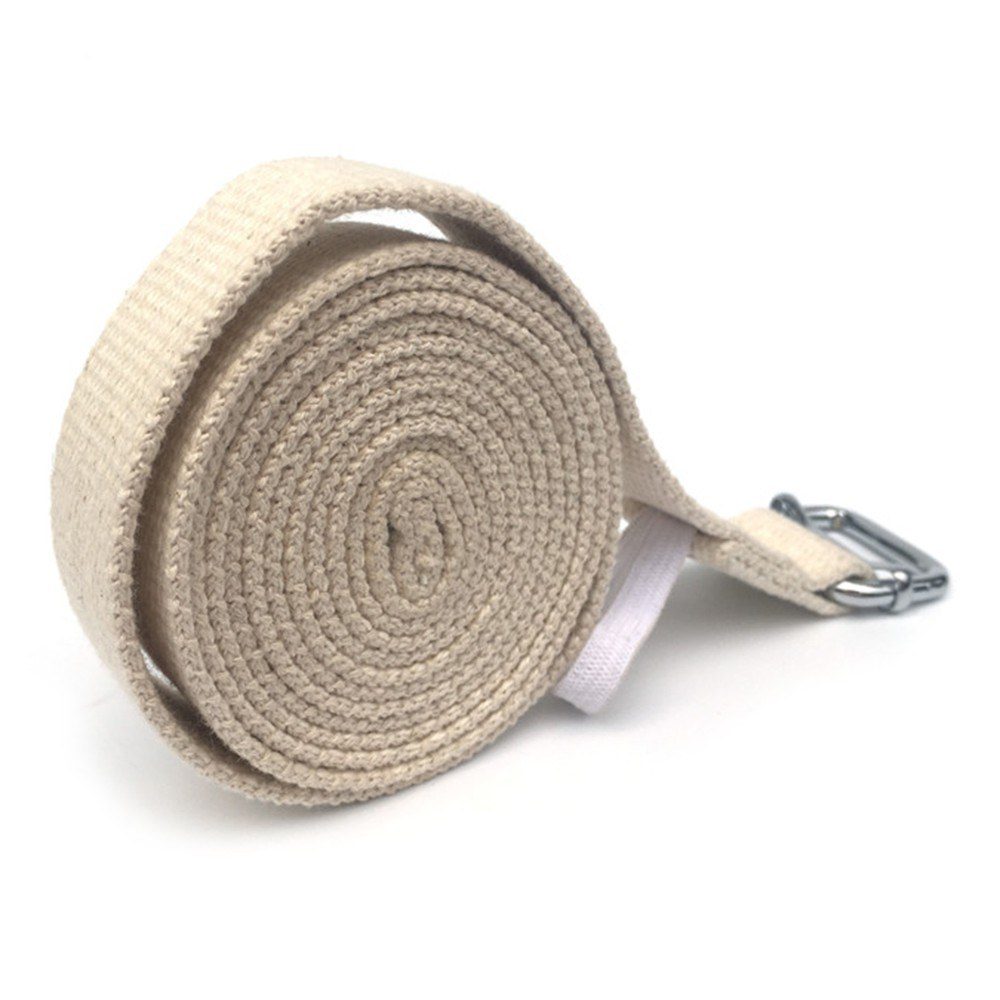
Cotton Yoga Strap with Buckle
A long cotton strap with a metal buckle for binds and hamstring work.
3. JadeYoga Harmony — Best Natural Rubber Grip
Best for: Grip without a towel
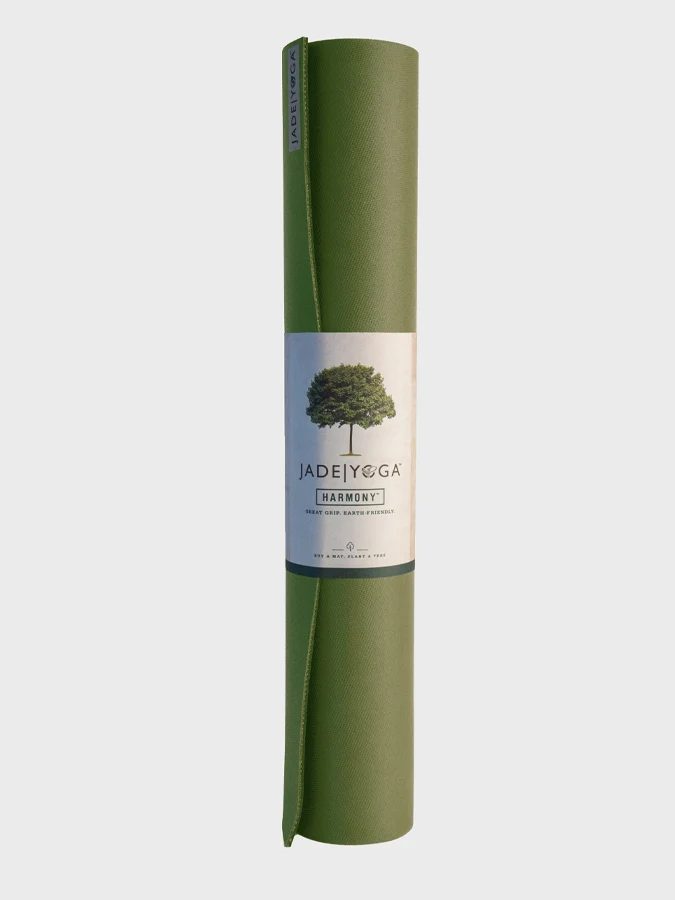
The Harmony is open-cell natural rubber, which means the surface absorbs a little moisture and grips through it — the reason teachers have recommended it for a decade. At 4.7 mm it balances cushion and floor feel, and Jade plants a tree for every mat sold, which is a genuine program, not a badge.
Open-cell rubber has real downsides: it attracts lint and pet hair, it needs gentle cleaning, and it must stay out of direct sunlight, which degrades the rubber. It also smells faintly of rubber for the first week. For pure grip, though, it is still the benchmark.
Pros
- Open-cell rubber grip is the benchmark
- Good balance of cushion and floor feel
- Tree planted per mat sold
Cons
- Attracts lint and pet hair
- Keep out of direct sunlight
- Rubber smell at first
JadeYoga Harmony Mat
4.7 mm · 68" × 24" · Natural rubber
$95–$120 Typical price — check the live listing.
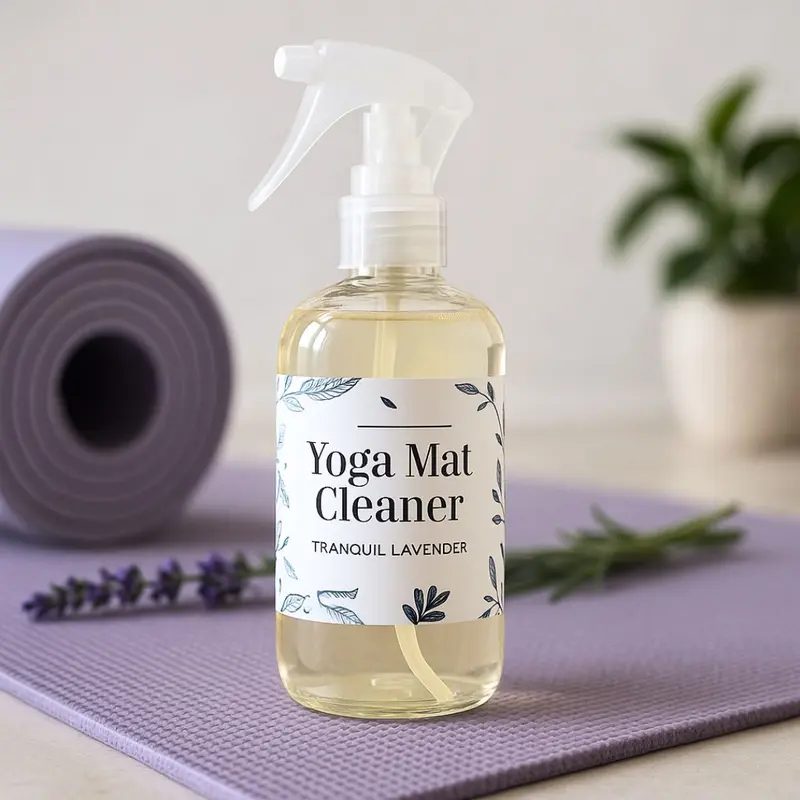
Natural Yoga Mat Cleaner Spray
A plant-based spray that cleans without the solvents that break down rubber.
4. Manduka PROlite — Best Lighter PRO
Best for: PRO feel, less weight
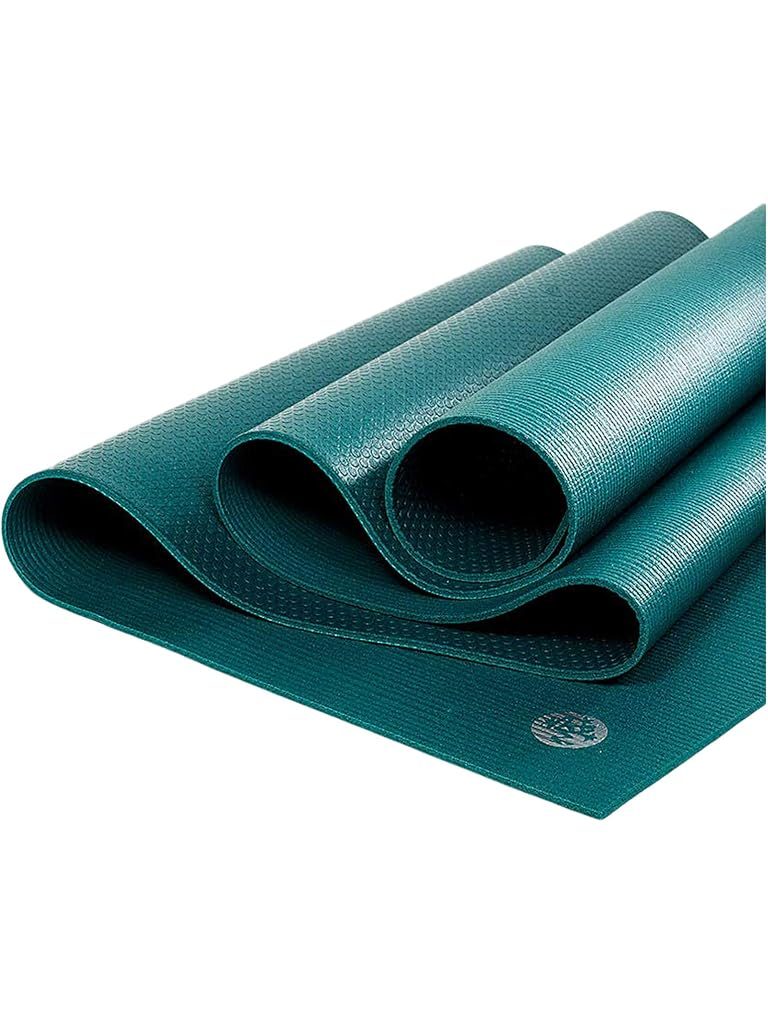
The PROlite is the PRO with 1.3 mm shaved off: same dense PVC, same sealed surface, same lifetime warranty, but 4 lb instead of 7.5 lb. It rolls tighter, carries easier, and still cushions well enough for daily practice on a wood floor.
The thinner build gives less knee protection on hard floors, and the sealed surface has the same break-in period as the PRO. If the PRO is too heavy for your routine but you want the same material and warranty, the PROlite is the obvious step.
Pros
- Same PRO material and warranty, 4 lb
- Rolls tighter and carries easier
- 71-inch length
Cons
- Less knee cushion on hard floors
- Slippery until broken in
- Premium price for a thinner mat
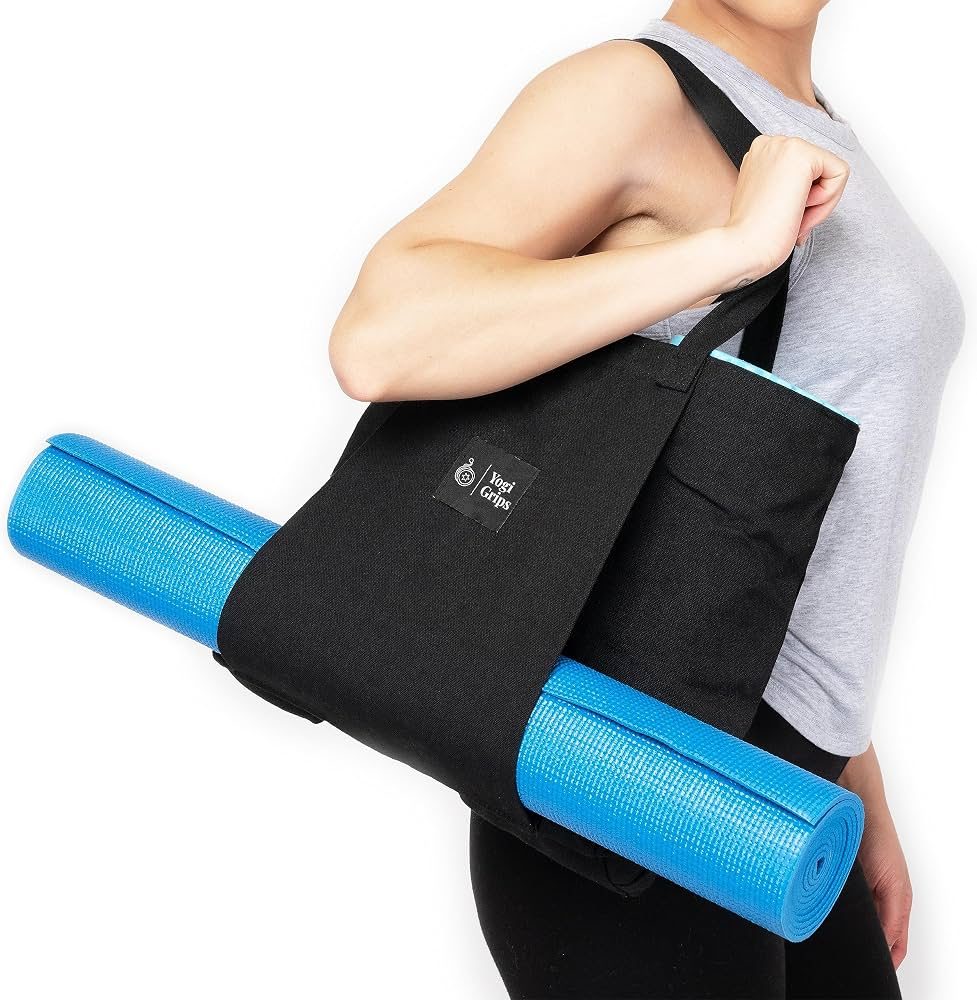
Yoga Mat Carry Bag
A padded tote that fits a rolled mat plus blocks, strap and a water bottle.
5. Manduka eKO 5mm — Best Eco Rubber Mat
Best for: Sweaty practice, natural materials
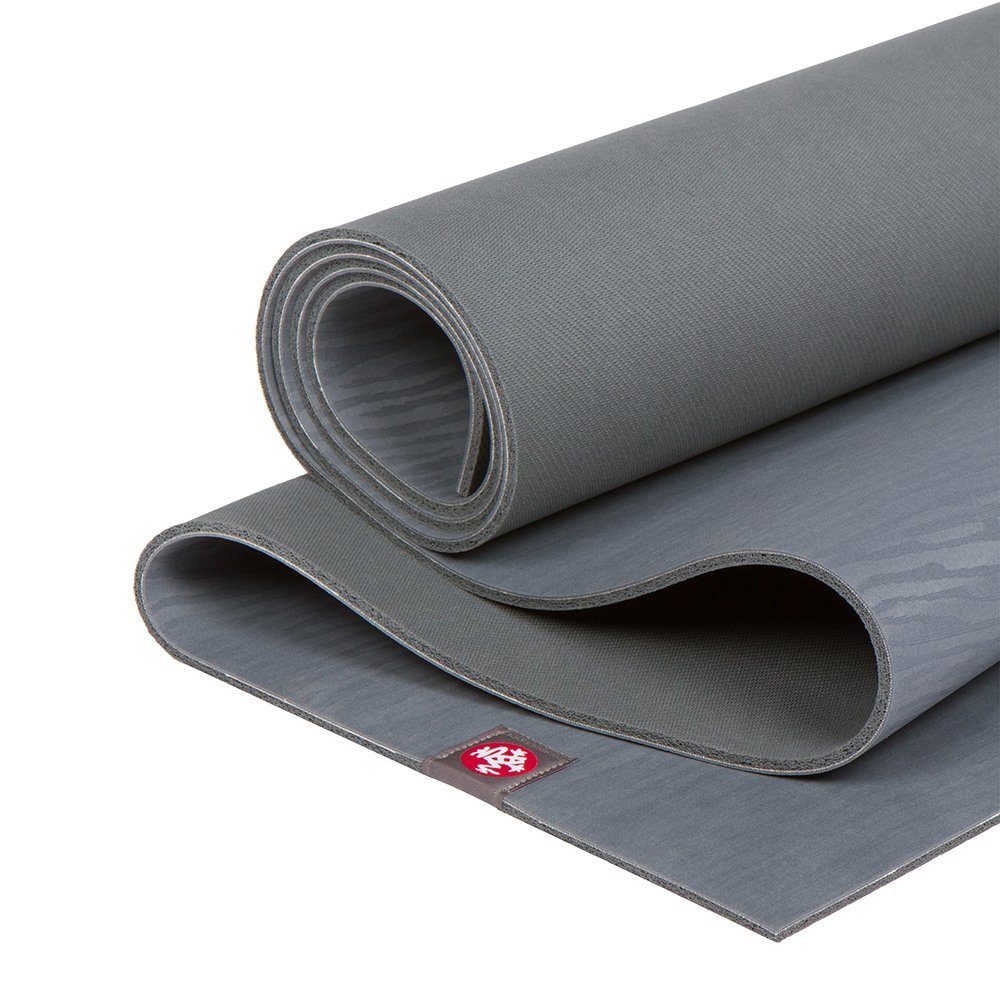
The eKO is Manduka's natural rubber answer to the PRO: 5 mm of biodegradable tree rubber with a textured top layer that grips through sweat. It is the mat for practitioners who want rubber grip with Manduka's build quality and a lighter conscience about materials.
At 6.3 lb it is heavy, and like all natural rubber it needs to stay out of sunlight and away from oils. The textured surface can feel rough on sensitive skin in long holds. For hot, sweaty sessions on a natural mat, it is the strongest pick here.
Pros
- Natural rubber grip for sweaty practice
- Biodegradable, non-Amazon harvested rubber
- 5 mm cushion
Cons
- Heavy at 6.3 lb
- Keep out of sun and away from oils
- Textured top can feel rough
Manduka eKO Yoga Mat 5mm
5 mm · 71" × 26" · Natural rubber
$105–$120 Typical price — check the live listing.
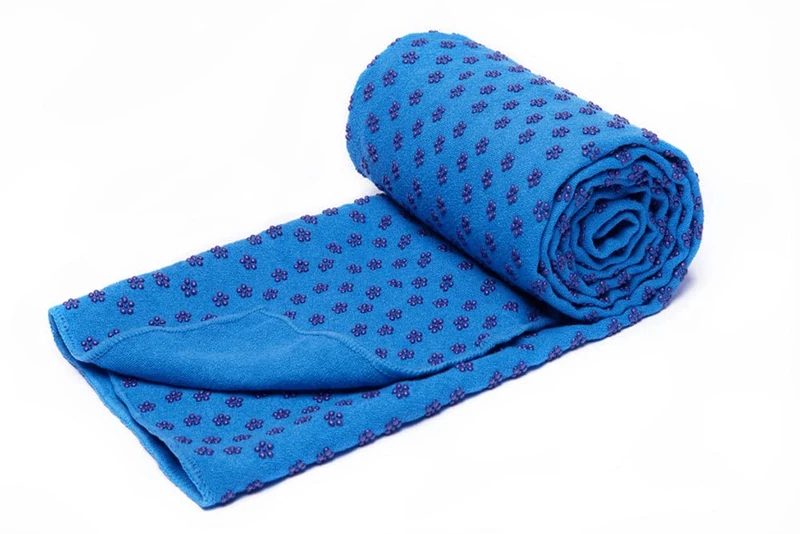
Microfiber Yoga Towel
A grippy microfiber towel that layers over the mat for sweaty sessions.
6. Gaiam Premium Print 6mm — Best Budget Mat
Best for: First mat, casual practice
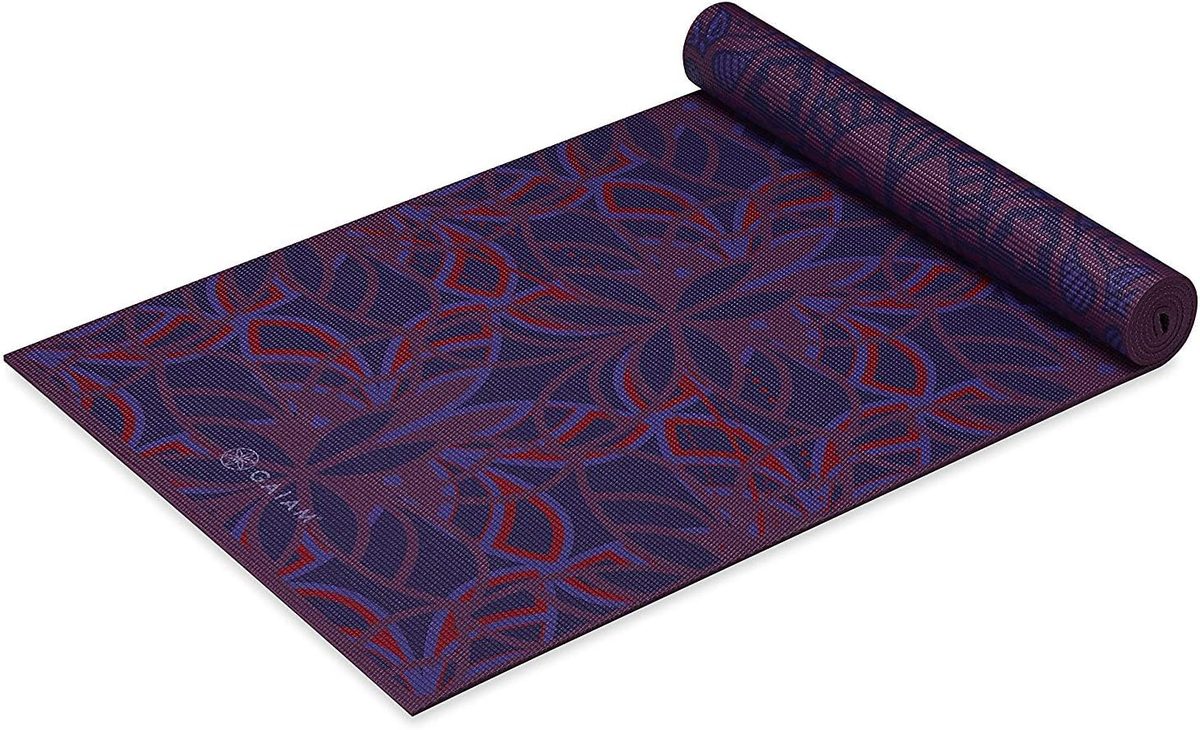
The Gaiam Premium is the mat to buy when you are not sure yoga is for you yet: 6 mm of cushion, a sticky textured surface, and a price around $30 — less than a single studio class in most cities. The printed designs are genuinely nice, and the 68 × 24 inch size fits most people.
It is lighter-duty than the premium mats: the PVC compresses faster, the edges curl with age, and the grip fades as the surface wears. But as a first mat, or a second mat for the living room, it is the right amount of mat for the money.
Pros
- Around $30 — best value here
- 6 mm cushion
- Good-looking prints
Cons
- Compresses faster than premium mats
- Edges curl with age
- Grip fades as surface wears
Gaiam Premium Print Yoga Mat 6mm
6 mm · 68" × 24" · PVC
$25–$35 Typical price — check the live listing.
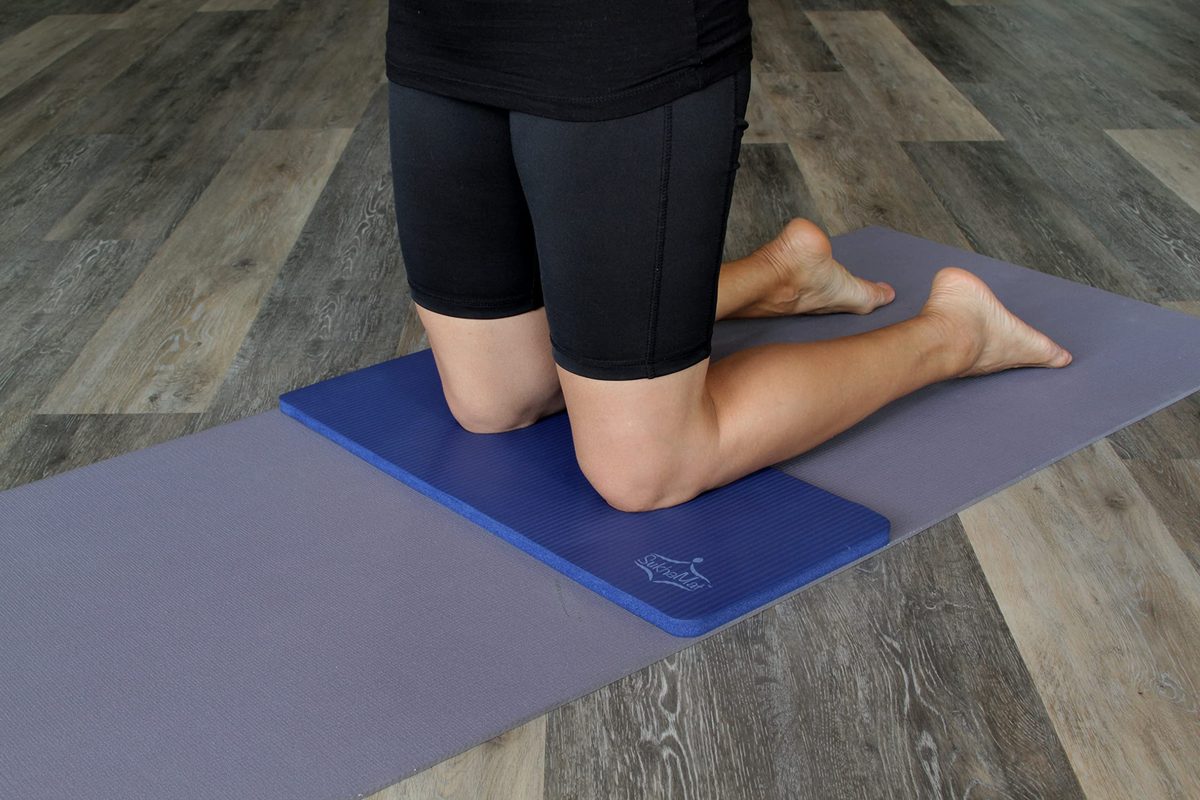
Yoga Knee Pad Cushion
A dense mini-pad that takes the pressure off knees on thin mats.
7. Gaiam Dry-Grip 5mm — Best Budget Mat for Sweat
Best for: Sweaty practice on a budget
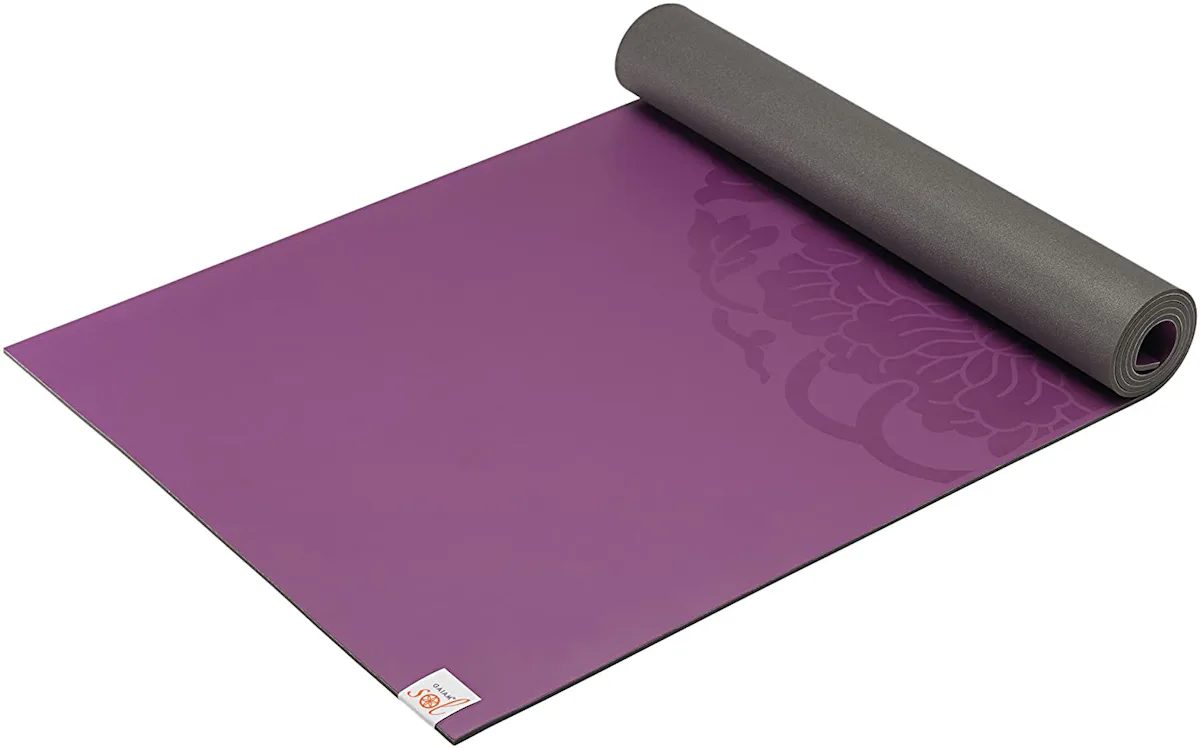
The Dry-Grip adds a moisture-wicking top coat to Gaiam's standard mat, which makes it the cheapest mat here that genuinely handles sweaty hands. At 5 mm it is thinner and lighter than the Premium, with the same 68 × 24 inch footprint.
The dry-grip coating is a surface treatment, not a material property — it wears with cleaning and time, and harsh cleaners kill it faster. Treat it gently and it earns its price several times over.
Pros
- Cheapest mat here that handles sweat
- Lightweight at 5 mm
- Good dry grip from day one
Cons
- Grip coating wears over time
- Harsh cleaners damage it
- Less cushion than the 6 mm Premium
Gaiam Dry-Grip Yoga Mat 5mm
5 mm · 68" × 24" · PVC, dry-grip coat
$60–$75 Typical price — check the live listing.
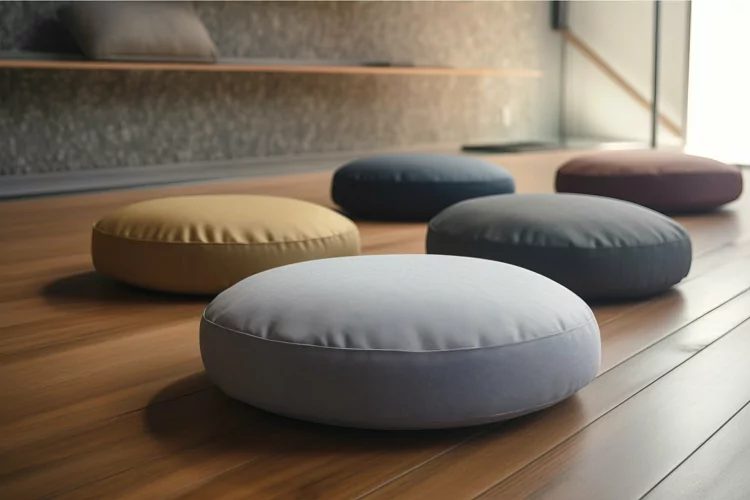
Round Meditation Cushion
A firm buckwheat-filled cushion that lifts the hips for seated practice.
8. Gaiam Essentials Premium + Sling — Best Mat with a Carry Strap
Best for: Carrying to class
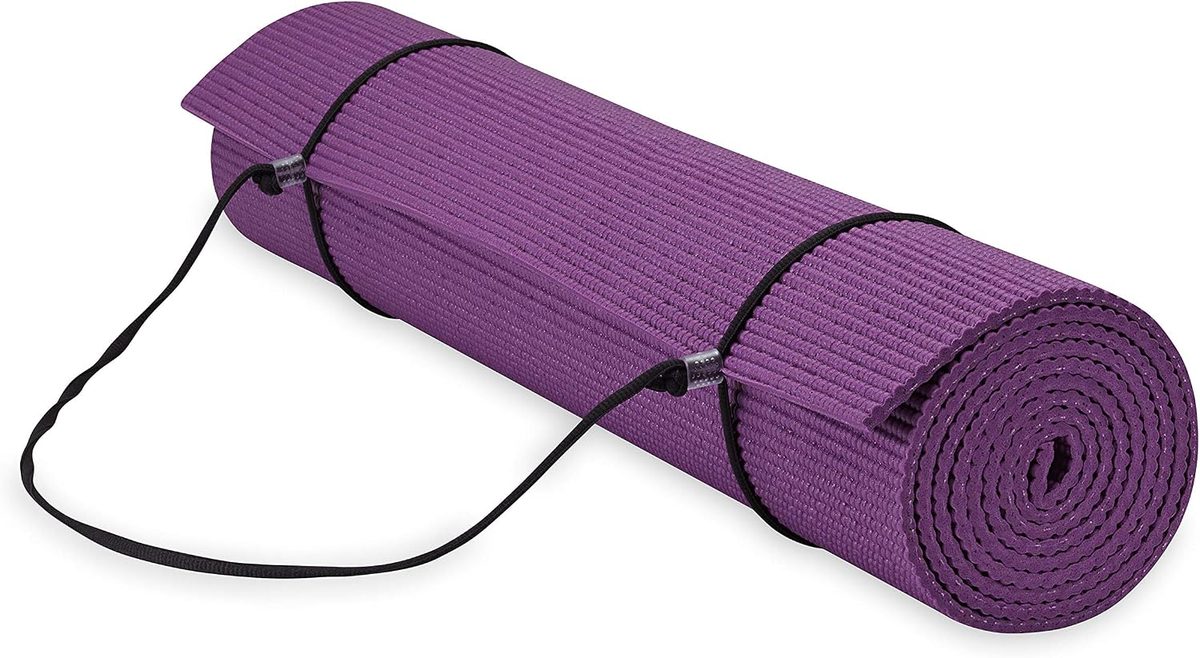
The Essentials Premium is Gaiam's straightforward 6 mm mat with one useful extra: a carrier sling in the box. At 72 inches it is longer than the Premium Print, which helps taller practitioners, and the price stays in the budget tier.
It is the same lighter-duty PVC as the Premium, with the same compression and edge-curling over time. The sling is basic but functional. If you carry your mat to class and do not want to buy a bag separately, this is the tidy option.
Pros
- Carrier sling included
- 72-inch length
- Budget price
Cons
- Lighter-duty PVC compresses over time
- Edges curl with age
- Basic sling
Gaiam Essentials Premium Mat + Sling
6 mm · 72" × 24" · PVC
$20–$30 Typical price — check the live listing.
9. Alo Yoga Warrior Mat — Best Studio-Style Mat
Best for: Hot yoga, style-conscious practice
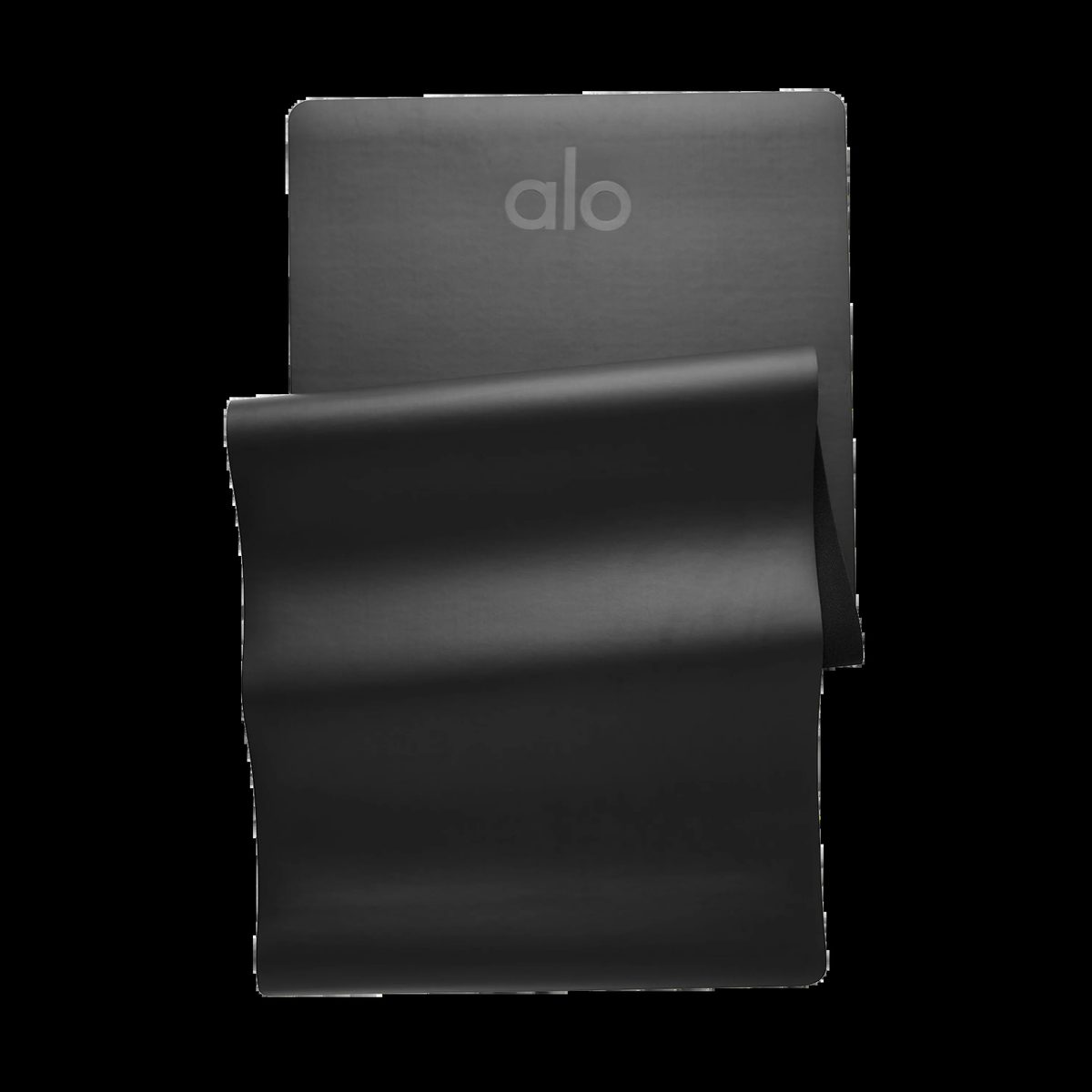
The Warrior Mat pairs a polyurethane leather top with a natural rubber base, which gives it the wet grip of a Liforme with a matte, studio look. At 73.5 × 26 inches it is generously sized, and the 5 mm build cushions well on hard floors.
It is the heaviest mat here at around 8 lb, and the polyurethane top needs the same gentle care as the Liforme's. The price is premium. If your mat lives in your living room and you want it to look good there, the Warrior is the one.
Pros
- Excellent wet grip
- Generous 73.5 × 26 in size
- Matte studio look
Cons
- Heaviest mat here at ~8 lb
- Top layer needs gentle cleaning
- Premium price
Alo Yoga Warrior Mat
5 mm · 73.5" × 26" · Polyurethane + rubber
$130–$150 Typical price — check the live listing.
Rectangular Yoga Bolster
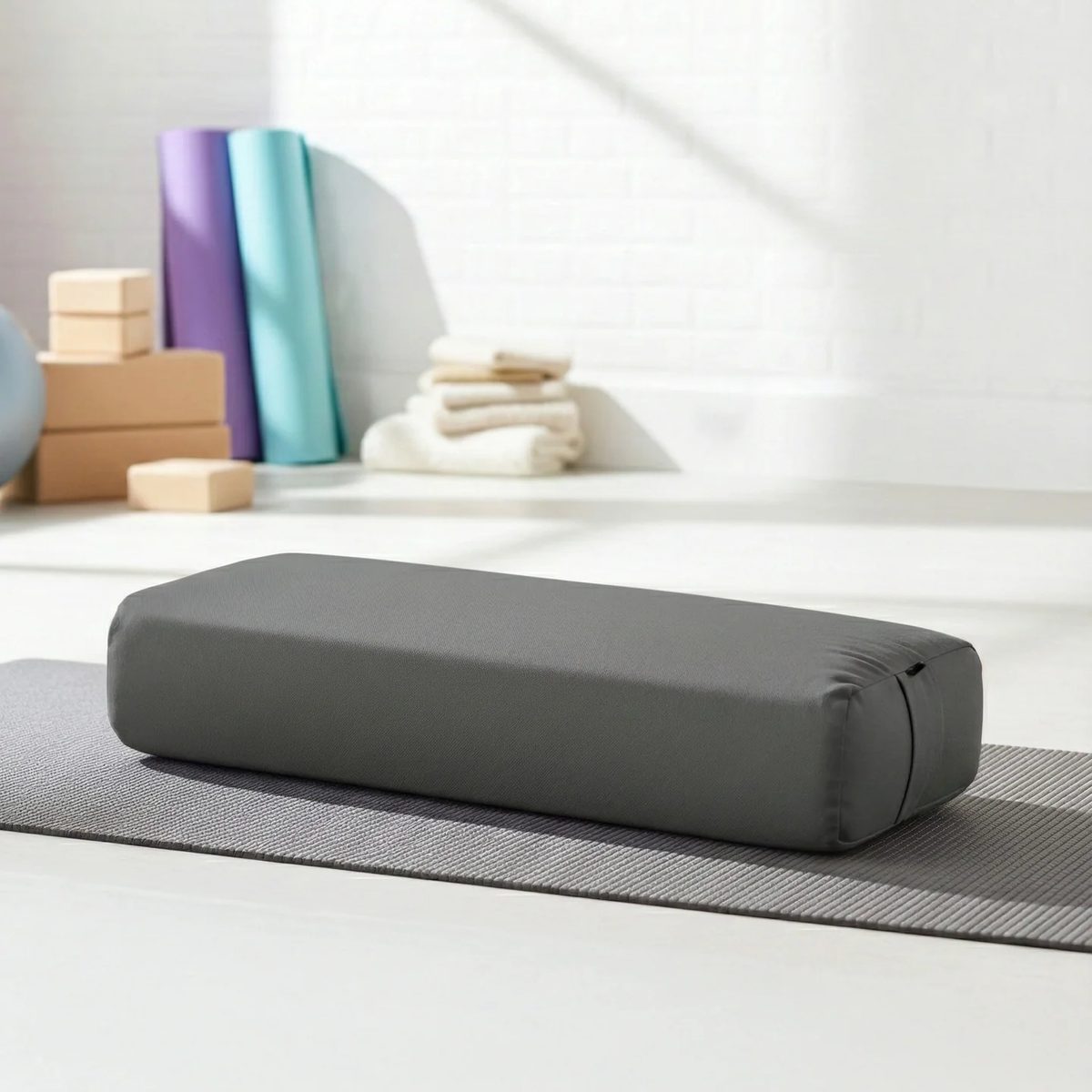
A firm bolster for restorative poses, chest openers and seated support.
10. B Yoga B Mat Strong 6mm — Best Cushioned Rubber Mat
Best for: Sensitive joints, restorative practice
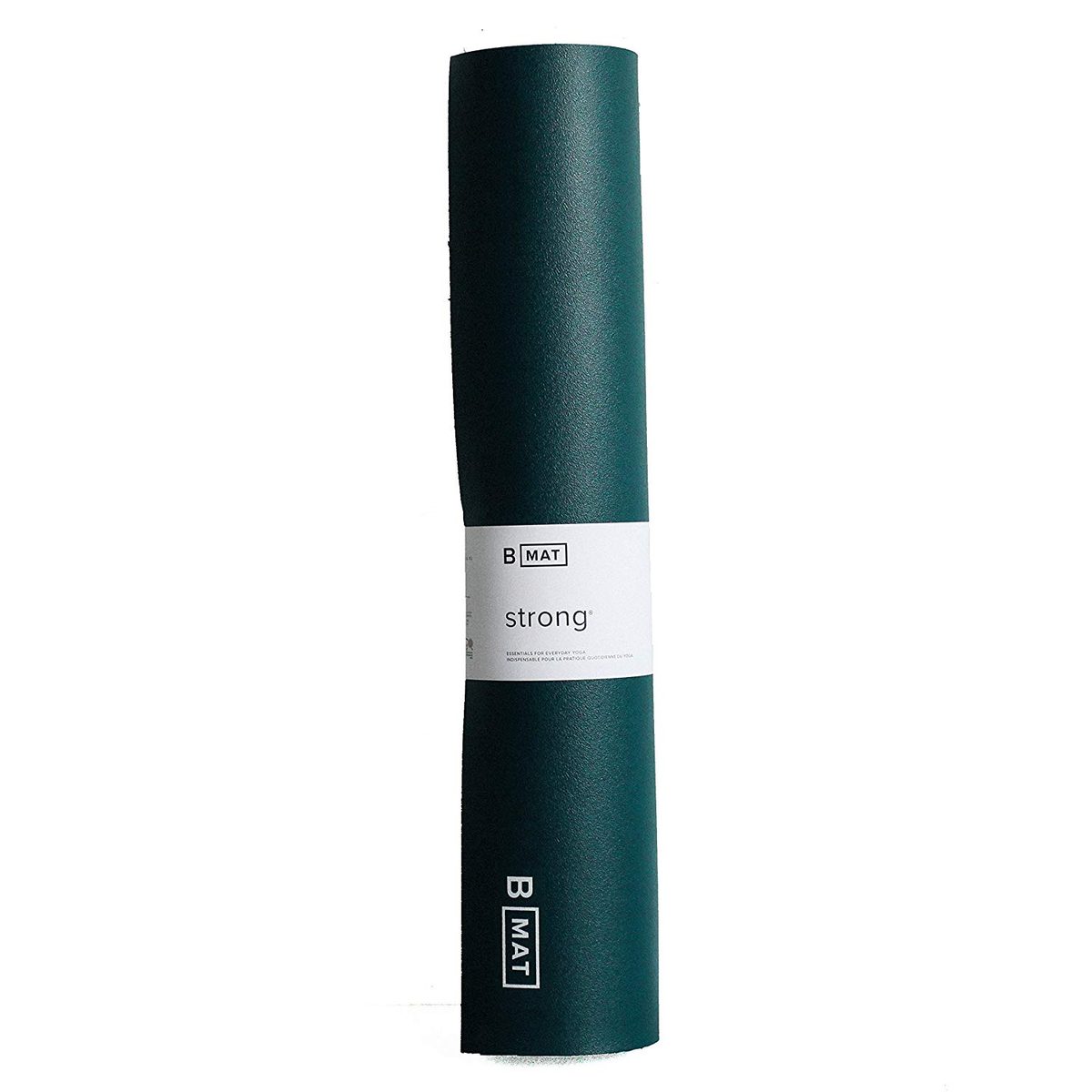
The B Mat Strong is 6 mm of natural rubber with a famously sticky grip — the mat teachers reach for when students complain about sliding. The extra cushion suits restorative and yin practice, and the rubber is biodegradable and sustainably harvested.
At 6.2 lb it is heavy, and the open-cell surface needs the same care as the Jade: gentle cleaning, no sun, no oils. The grip is so strong that transitions can feel sticky until you learn to lift rather than slide your feet.
Pros
- Exceptional grip
- 6 mm rubber cushion
- Sustainably harvested rubber
Cons
- Heavy at 6.2 lb
- Grip can feel too sticky in transitions
- Needs gentle care
B Yoga B Mat Strong 6mm
6 mm · 71" × 26" · Natural rubber
$100–$120 Typical price — check the live listing.
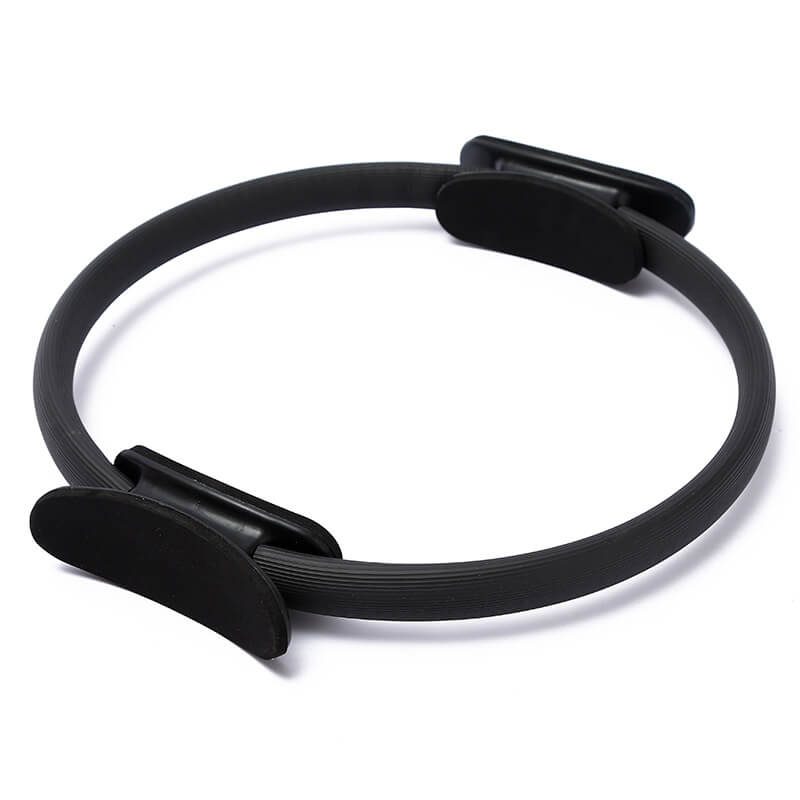
Pilates Ring (Magic Circle)
A fiberglass ring with padded grips for inner-thigh and upper-body resistance.
11. Hugger Mugger Earth Elements — Best Lightweight Mat
Best for: Travel and outdoor practice
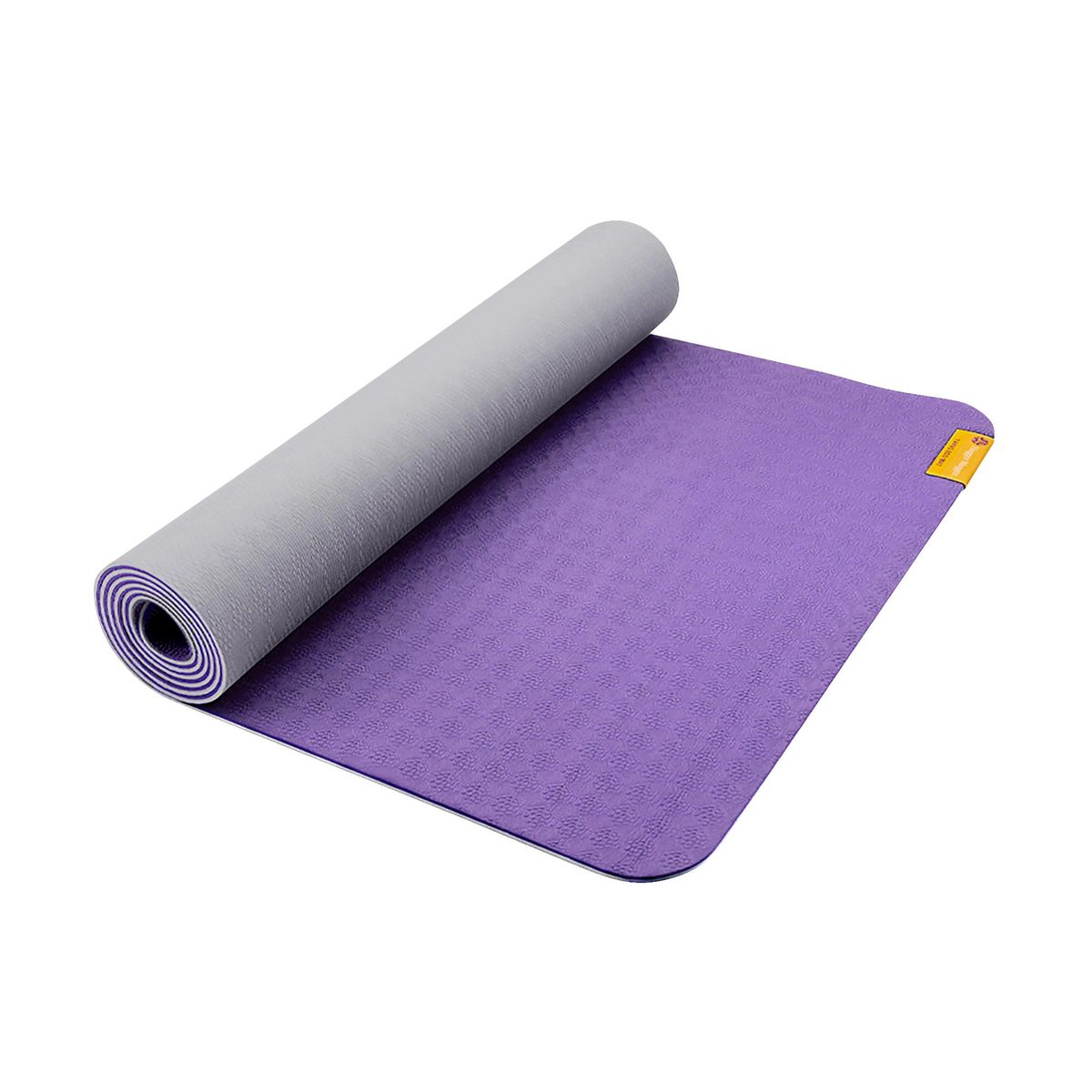
The Earth Elements is the lightest full-size mat in this guide at 2.2 lb: 5 mm of TPE that rolls small, carries anywhere and still cushions seated poses. It is the mat for the bag, the park and the hotel room.
TPE is not as durable as rubber or dense PVC, and the grip is good-dry, average-wet — sweaty hands will want a towel. But nothing else here disappears into a bag like this one.
Pros
- Lightest full-size mat here at 2.2 lb
- Rolls small, travels well
- Soft 5 mm cushion
Cons
- TPE wears faster than rubber
- Average wet grip
- Not for heavy daily use
Hugger Mugger Earth Elements Mat
5 mm · 68" × 24" · TPE
$75–$90 Typical price — check the live listing.
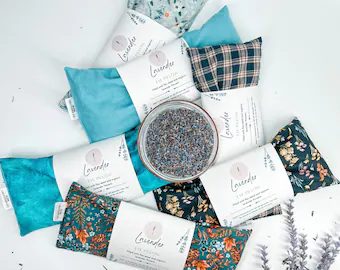
Lavender Yoga Eye Pillow
A flaxseed eye pillow with lavender for savasana and cool-downs.
12. IUGA Pro Non Slip — Best Value Upgrade
Best for: Grip on a mid-range budget
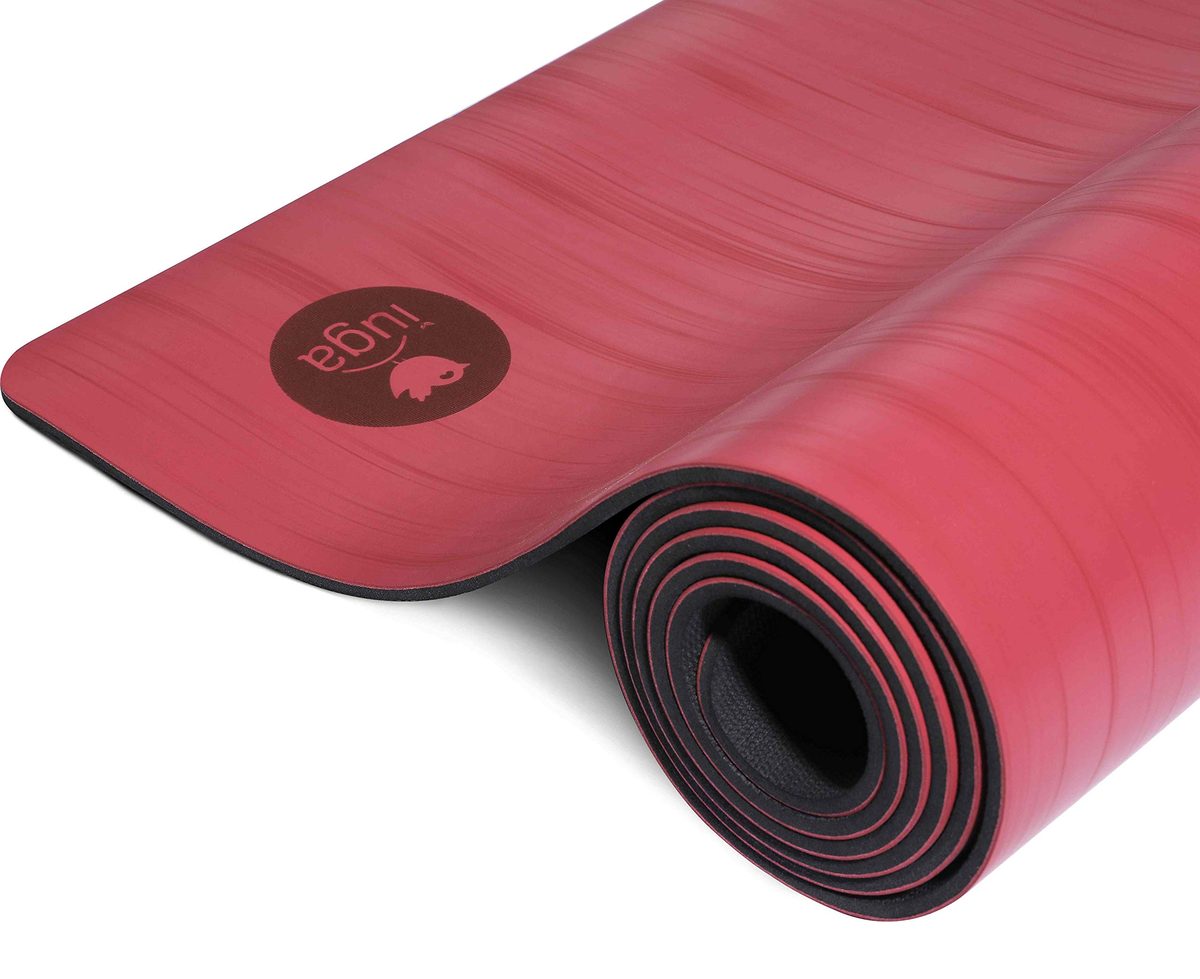
The IUGA Pro pairs a polyurethane top with a rubber base — the same construction as mats costing twice as much — at a mid-range price. At 2.1 lb it is nearly as light as the Hugger Mugger, and the 72 × 26 inch size is generous.
The polyurethane top layer is thinner than the Liforme's and wears faster, and the mat needs gentle cleaning. For the price, though, it is the best grip-per-dollar in this guide.
Pros
- Polyurethane grip at a mid-range price
- Light at 2.1 lb
- Generous 72 × 26 in size
Cons
- Top layer wears faster than premium mats
- Needs gentle cleaning
- Less cushion than 6 mm mats
IUGA Pro Non Slip Yoga Mat
5 mm · 72" × 26" · Polyurethane + rubber
$55–$70 Typical price — check the live listing.
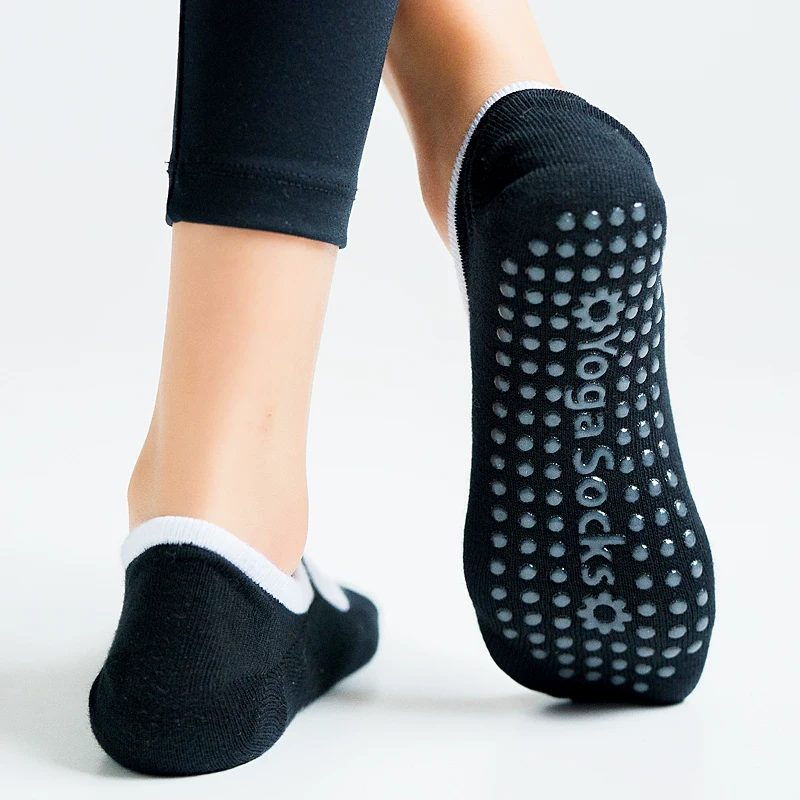
Non-Slip Grip Yoga Socks
Grippy socks that keep feet planted on smooth studio floors and slick mats.
13. BalanceFrom GoYoga — Best Thick Budget Mat
Best for: Floor work and sensitive knees
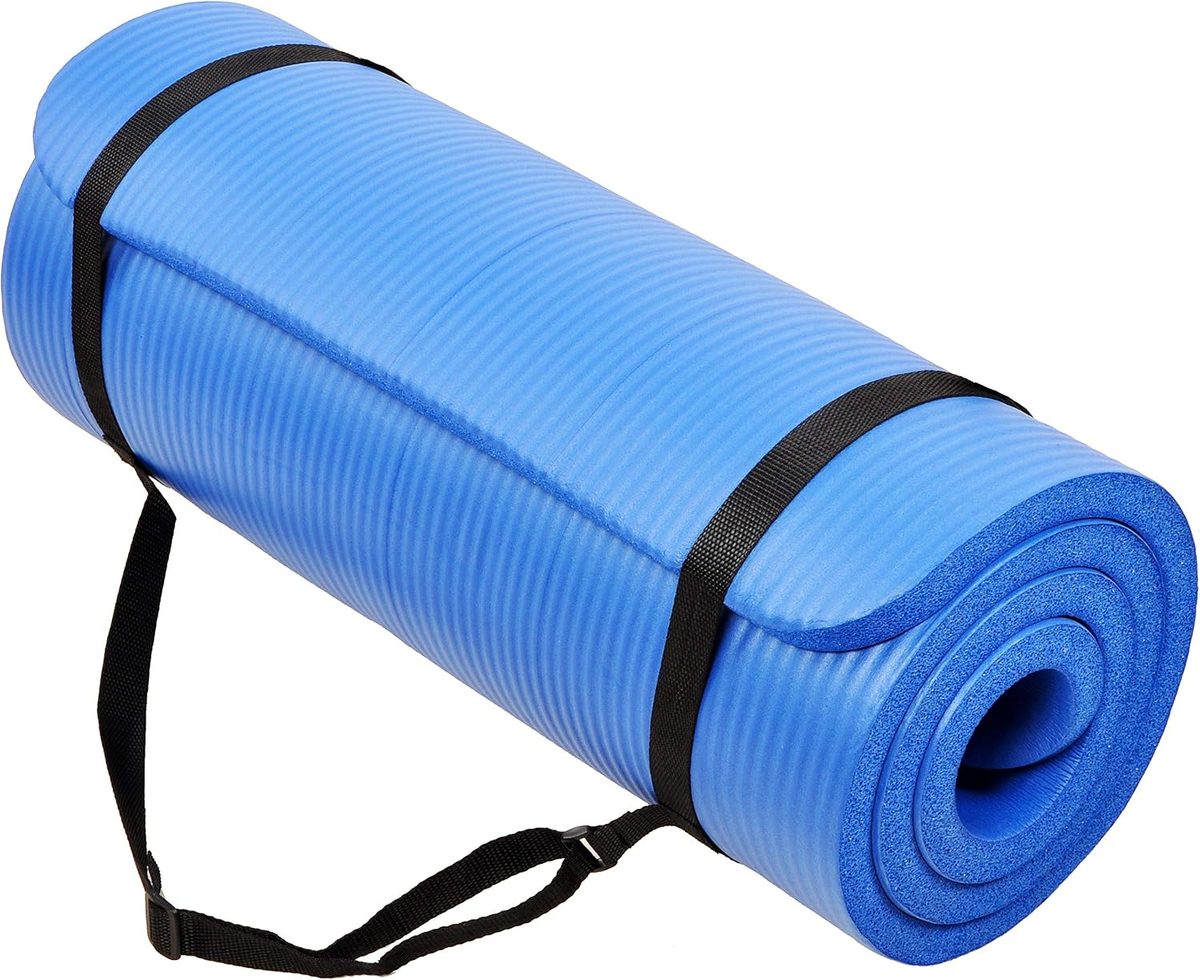
The GoYoga is a half inch (12.7 mm) of PVC foam — the thickest mat in this guide — which makes it the pick for floor work, Pilates and anyone whose knees complain on standard mats. It ships with a strap and costs about the same as the Gaiam Premium.
That thickness is also the drawback: balance poses feel wobbly on a half inch of foam, and the mat is bulky to store. Buy it for cushion, not for standing balance work.
Pros
- Half-inch cushion — thickest here
- Strap included
- Budget price
Cons
- Wobbly for balance poses
- Bulky to store
- Foam compresses over time
BalanceFrom GoYoga Mat
12.7 mm (1/2 in) · 71" × 24" · PVC foam
$20–$30 Typical price — check the live listing.
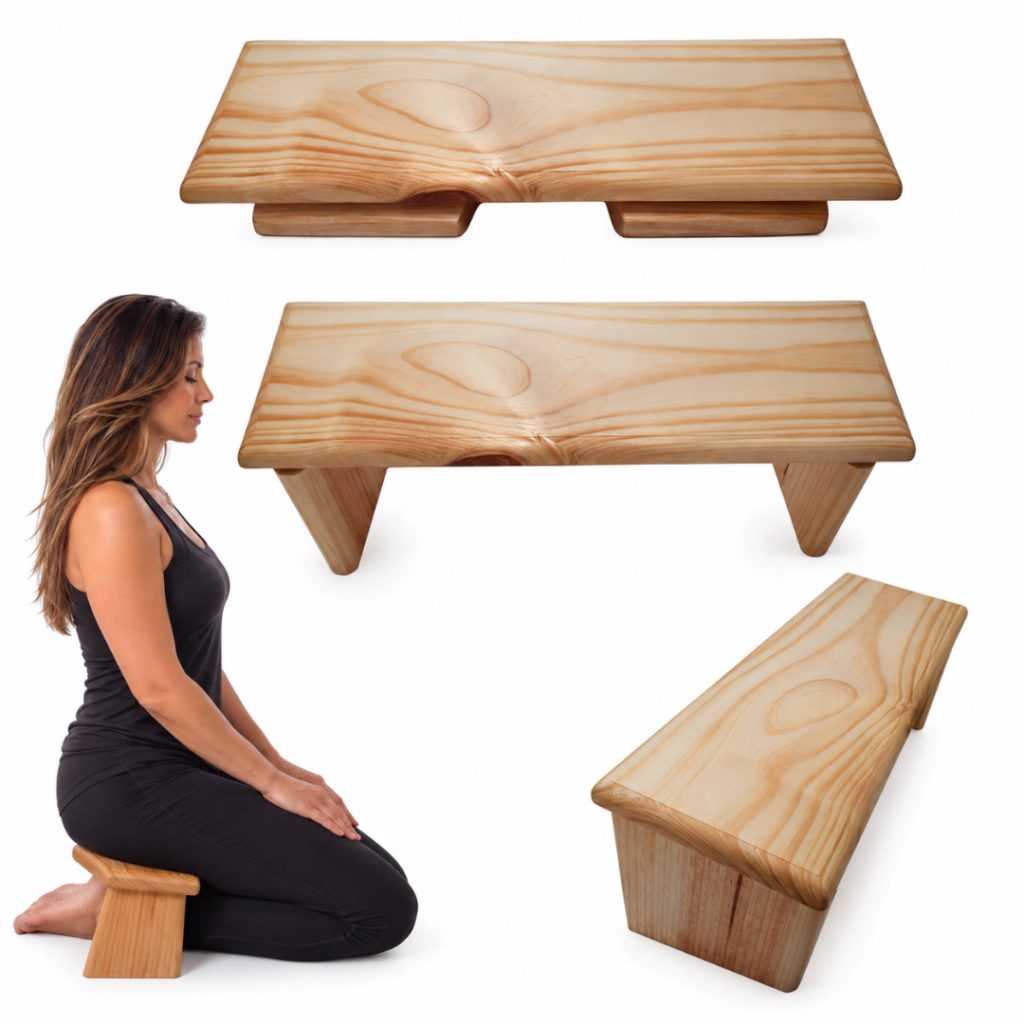
Wooden Meditation Bench
A folding kneeling bench that takes pressure off ankles in seated practice.
14. HemingWeigh Extra Thick — Best Extra-Thick Mat
Best for: Maximum cushion on hard floors
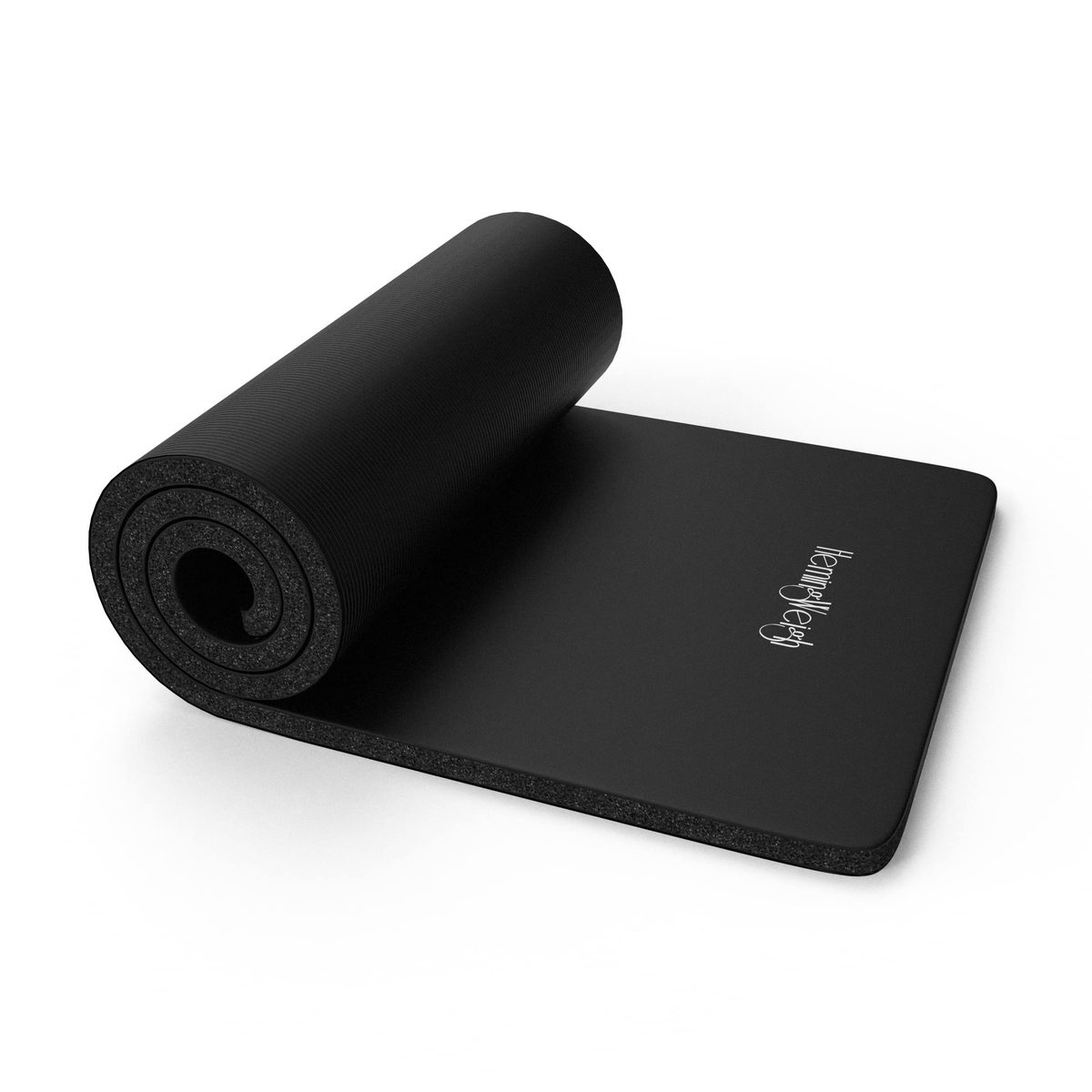
HemingWeigh's extra-thick mat matches the BalanceFrom at a half inch of foam, with a textured non-slip surface and a carry strap. It is the mat for concrete floors, garage gyms and anyone who does most of their work on the ground.
Same trade-off as the GoYoga: standing balance is harder on thick foam, and the mat takes up real storage space. Choose it when cushion is the priority and balance work is not.
Pros
- Half-inch cushion for hard floors
- Textured non-slip surface
- Carry strap included
Cons
- Wobbly for balance poses
- Bulky to store
- Foam compresses over time
HemingWeigh Extra Thick Yoga Mat
12.7 mm (1/2 in) · 72" × 24" · PVC foam
$25–$40 Typical price — check the live listing.
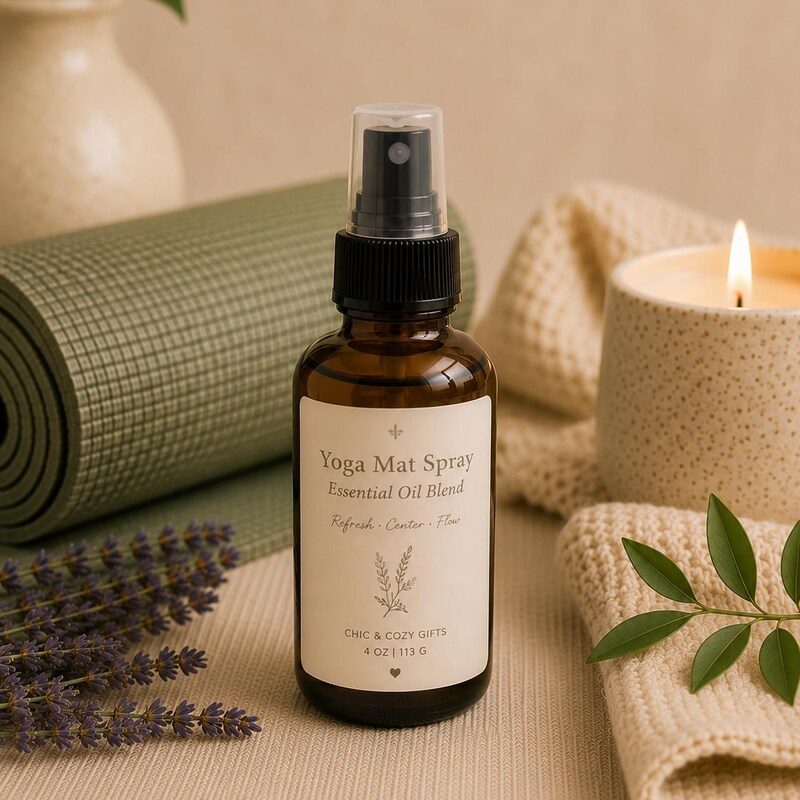
Yoga Mat Spray (Essential Oil Blend)
A scented mat spray for a quick refresh between deep cleans.
15. Yoloha Nomad Cork — Best Cork Mat
Best for: Sweaty practice, natural materials
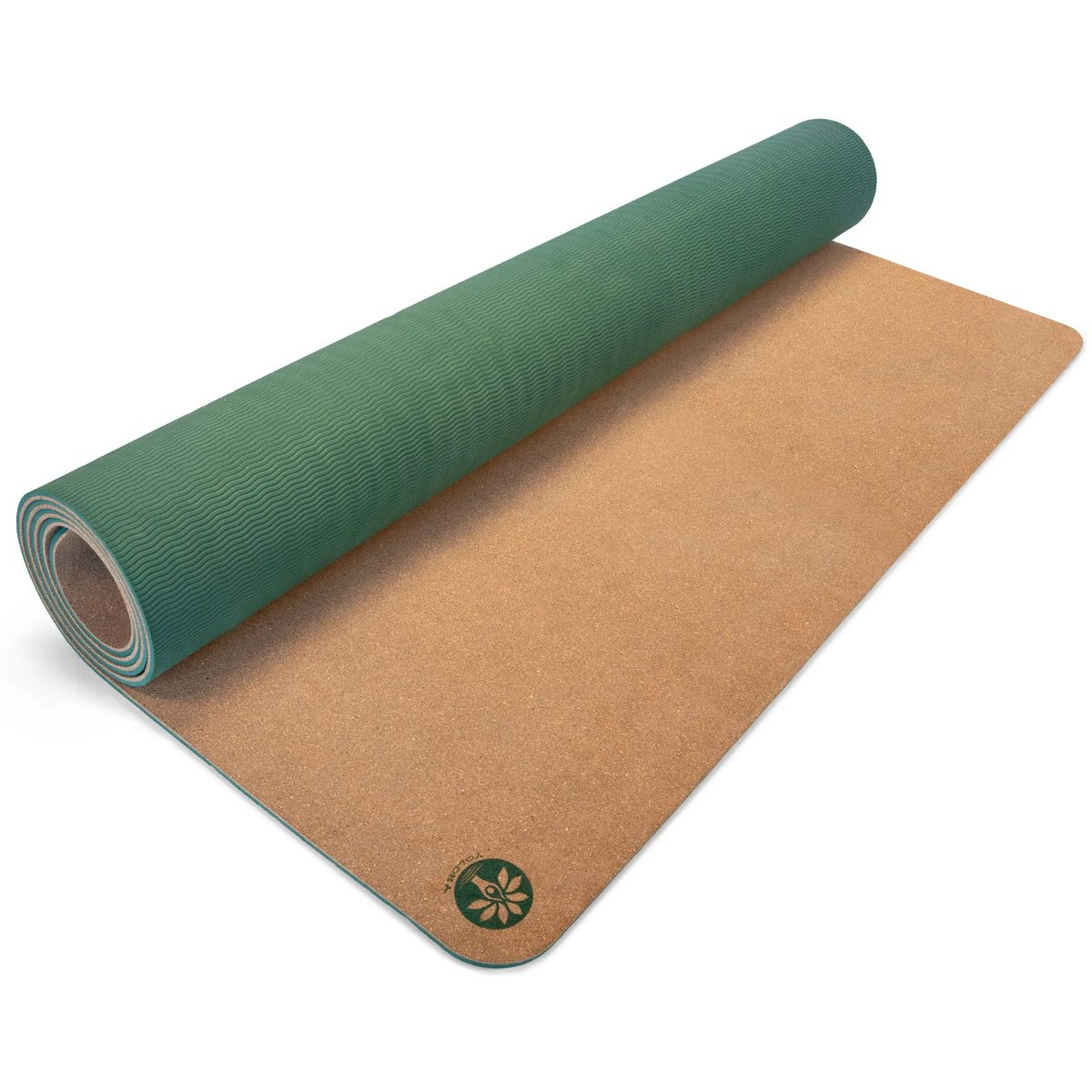
The Nomad pairs a cork top with a rubber base. Cork grips better wet than dry, resists odor naturally, and gives the mat a warm, distinctive look. At 72 × 25 inches with 4.5 mm of cushion, it is a proper full-size mat, not a travel novelty.
Cork needs care — no soaking, no harsh cleaners — and the surface can feel firm under knees compared with 6 mm mats. For practitioners who sweat and want a natural, antimicrobial surface, cork is the most interesting material in this guide.
Pros
- Cork grips better when wet
- Naturally odor-resistant
- Distinctive look and feel
Cons
- Firm under knees at 4.5 mm
- No soaking or harsh cleaners
- Premium price
Yoloha Nomad Cork Yoga Mat
4.5 mm · 72" × 25" · Cork + rubber
$95–$130 Typical price — check the live listing.
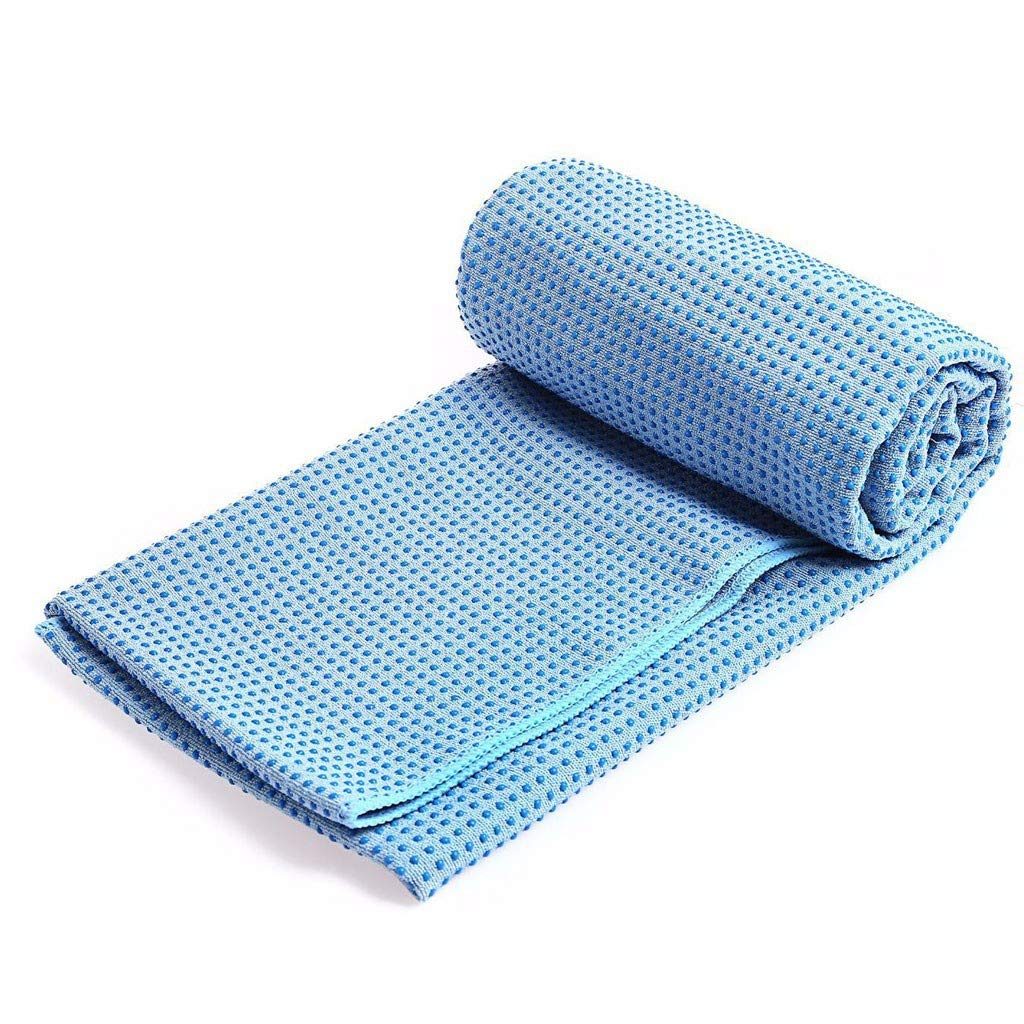
Non-Slip Yoga Mat Towel
A full-length dotted towel that grips harder as it gets damp.
Our verdict
For most people, the Manduka PRO is still the right default: dense, durable, guaranteed for life, and long enough for tall practitioners. If you sweat heavily, the Liforme or Jade Harmony will grip better — Liforme for alignment feedback, Jade for pure rubber grip at a lower price. And if you are just starting, the Gaiam Premium Print at around $30 is the honest place to begin; upgrade when you know what your practice needs.
One rule that covers every mat here: thickness is a trade-off, not a quality score. Thick mats cushion knees and wobble balance; thin mats ground you and punish knees. Pick the thickness for the practice you actually do.
Frequently asked questions
What thickness yoga mat is best?
6 mm is the most versatile thickness for home practice: enough cushion for knees on hard floors without wobbling balance poses. Go thinner (4–5 mm) for stability and travel, thicker (8–13 mm) for floor work and sensitive knees. There is no single best thickness — it depends on your floor and your practice.
Which yoga mat material grips best when sweaty?
Polyurethane tops (Liforme, Alo Warrior, IUGA) and open-cell natural rubber (Jade Harmony, Manduka eKO, B Mat) grip best when damp. Sealed PVC (Manduka PRO) grips well once broken in but is slippery at first. Cork grips better wet than dry. For very sweaty practice, add a microfiber yoga towel over any mat.
How long should a yoga mat last?
A premium mat (Manduka PRO, Liforme, Jade) should last 5–10 years with care. Budget PVC mats typically last 1–3 years before the surface compresses and grip fades. Replace any mat when the surface is smooth, the edges curl permanently, or the cushion has compressed flat.
Are expensive yoga mats worth it?
For daily practice, yes — the difference is durability and grip over years, not day one. A $140 mat that lasts eight years costs less per year than a $30 mat replaced every year. For occasional practice, a $30 mat is the honest choice.
Can I use a yoga mat on carpet?
Yes, but the mat will shift and bunch on thick carpet. Use a thinner, denser mat on carpet, or place a non-slip rug pad underneath. On hard floors, any mat works — the floor gives the grip, the mat gives the cushion.
How do I stop my yoga mat from slipping?
First, clean it — a film of dust or body oil kills grip on any surface. For sealed PVC mats, a break-in period of a few weeks is normal. For sweaty hands, a microfiber towel over the mat helps more than any spray. If a mat still slides after cleaning and break-in, the surface is worn and it is time to replace it.
What size yoga mat do I need?
Standard mats are 68 × 24 inches. If you are over 6 feet tall, look for 71–73 inch mats (Manduka PRO, Liforme, Alo Warrior). Wider mats (26–27 inches) help if you have broad shoulders or like extra room in wide-legged poses.
Related guides
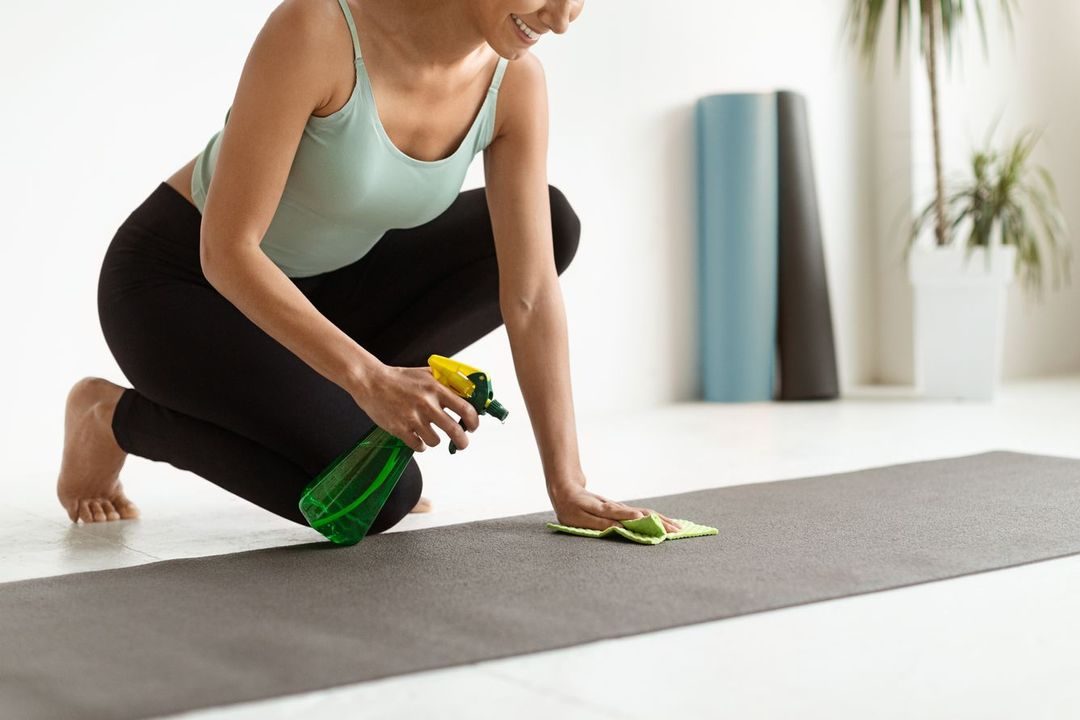
How to Clean and Care for Your Yoga Mat
A yoga mat is a surface you press your face into. Keeping it clean is not vanity — it is grip, hygiene and lifespan in one habit. Here is how to clean every mat…
How to Start a Home Gym on a Budget
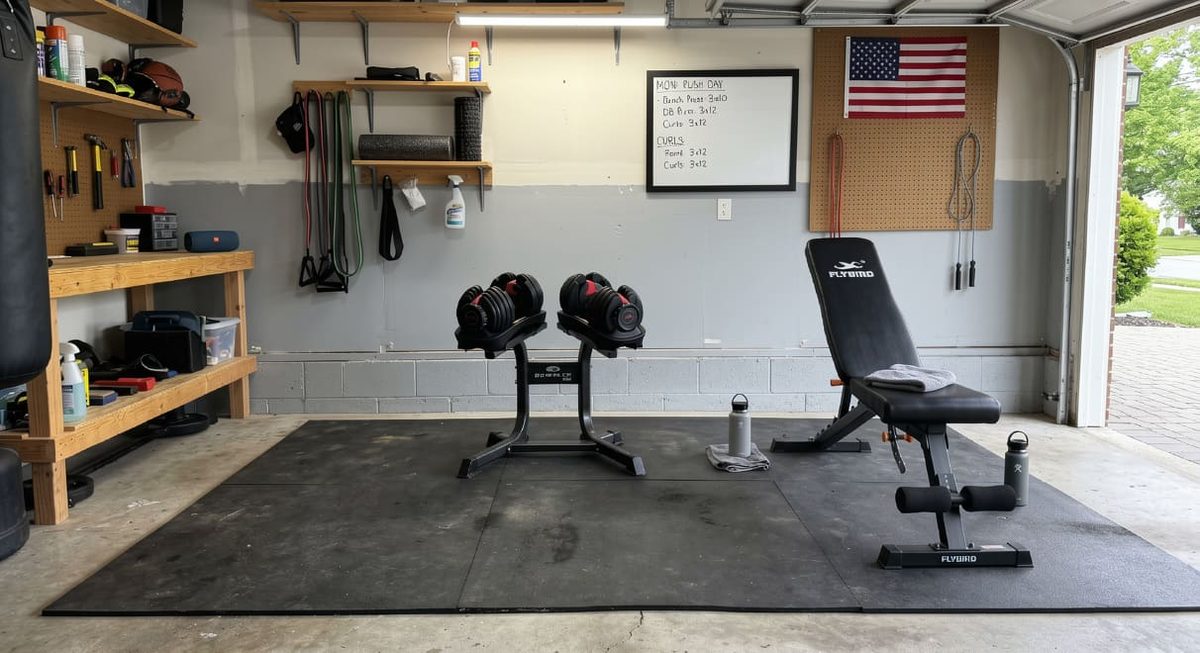
You do not need a $5,000 rack to train at home. You need a floor that survives dropped weight, one good pair of dumbbells, and a bench — in that order. Here is …
Resistance Bands vs Dumbbells: Which Builds More Strength?
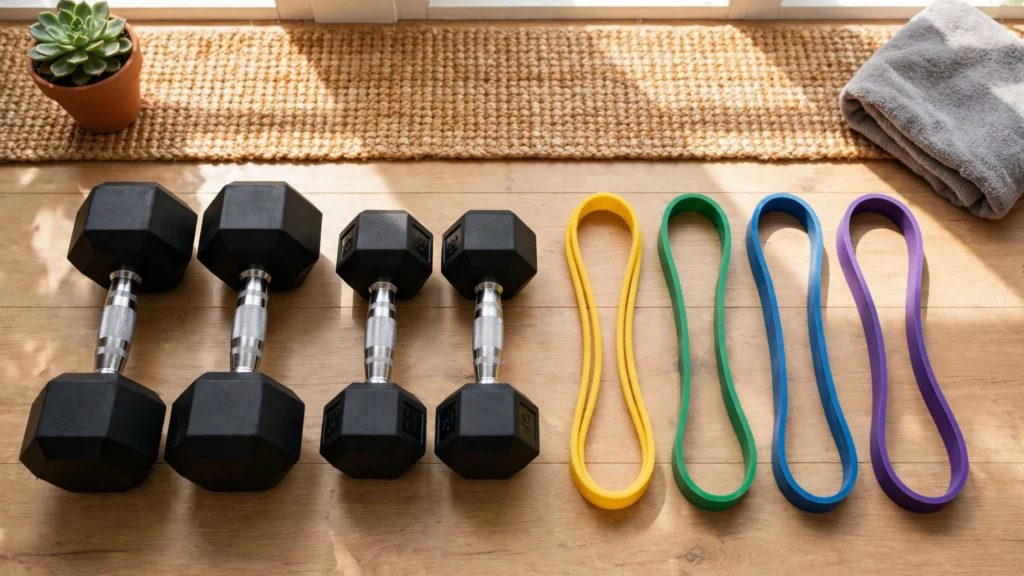
Bands are cheap, light and travel anywhere. Dumbbells are heavy, precise and last forever. The real question is not which is better — it is which kind of resist…
As an Amazon Associate, we earn from qualifying purchases. Prices and availability change — always check the live listing before you buy.