
Dumbbells
Resistance Bands vs Dumbbells: Which Builds More Strength?
Bands are cheap, light and travel anywhere. Dumbbells are heavy, precise and last forever. The real question is not which is better — it is which kind of resistance your training needs, and where each tool's limits actually sit.
Direct answer
Dumbbells build more maximum strength because their resistance is constant and measurable, and heavy sets keep progressing for years. Resistance bands win on price, portability and joint-friendly warm-ups, but their resistance changes through every repetition and tops out early. Most home gyms are best served by dumbbells first and bands second.
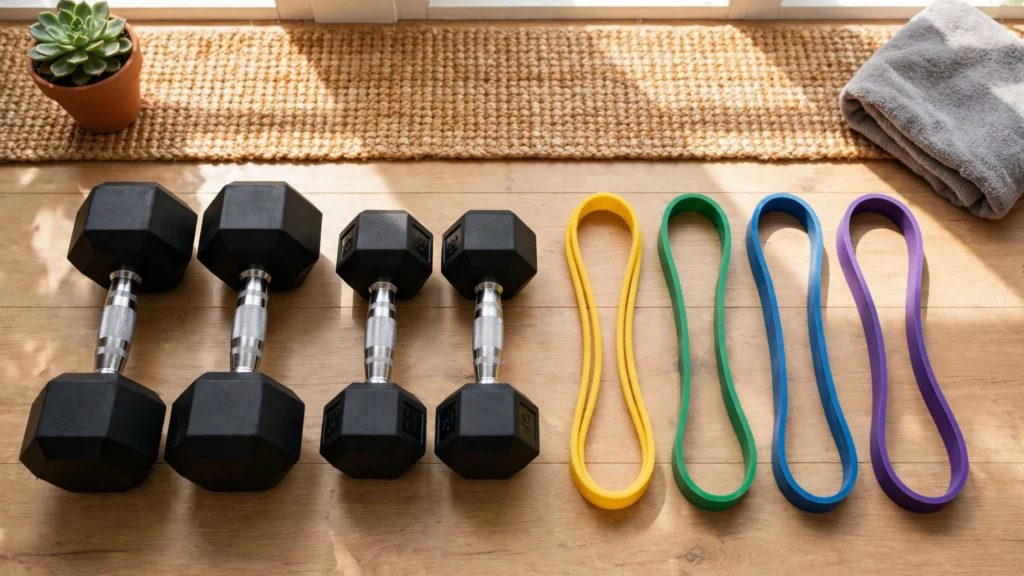
Resistance bands and dumbbells both provide resistance, but they provide it differently, and the difference matters more than the marketing suggests. A dumbbell's resistance is constant — 20 lb is 20 lb through the whole movement. A band's resistance increases as it stretches, which means the hardest part of the rep is the end, not the middle.
This guide compares the two tools on the things that decide a purchase: how resistance works, how heavy each goes, what each costs, how long each lasts, and where each one wins. It is an equipment comparison, not a training program.
Quick comparison
| Factor | Resistance bands | Dumbbells |
|---|---|---|
| Resistance type | Increases with stretch | Constant through the rep |
| Max load | ~150 lb (stacked heavy bands) | 5–120 lb per hand (adjustable) |
| Typical cost | $20–$60 for a full set | $90–$700 per pair |
| Weight / portability | Under 2 lb, fits in a bag | 50–180 lb per pair, stays home |
| Lifespan | 1–3 years (latex wears) | Decades (steel lasts) |
| Best for | Travel, warm-ups, assistance | Progressive heavy training |
1. How the resistance differs — and why it matters
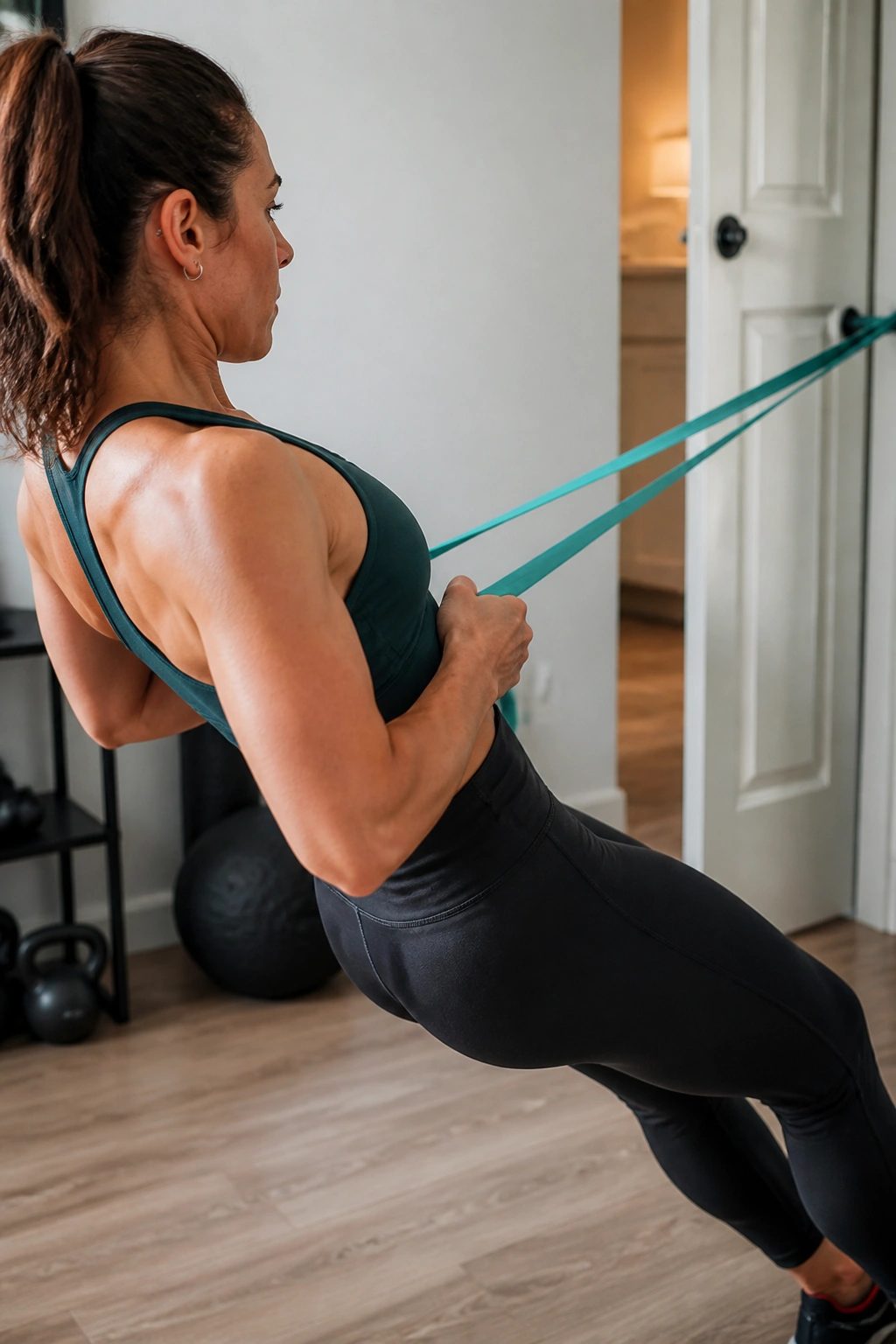
A dumbbell pulls straight down with the same force through the whole rep. A band pulls toward its anchor point with force that increases as it stretches — light at the start of the rep, heavy at the end. That variable resistance changes which part of the movement is hardest, and it means bands and dumbbells feel different even at the same nominal weight.
Neither is inherently better. Variable resistance suits the top of a press or the lockout of a row; constant resistance suits the full range of a curl or a squat. The difference is real, and it is the reason experienced lifters own both.
2. The strength ceiling: where bands run out
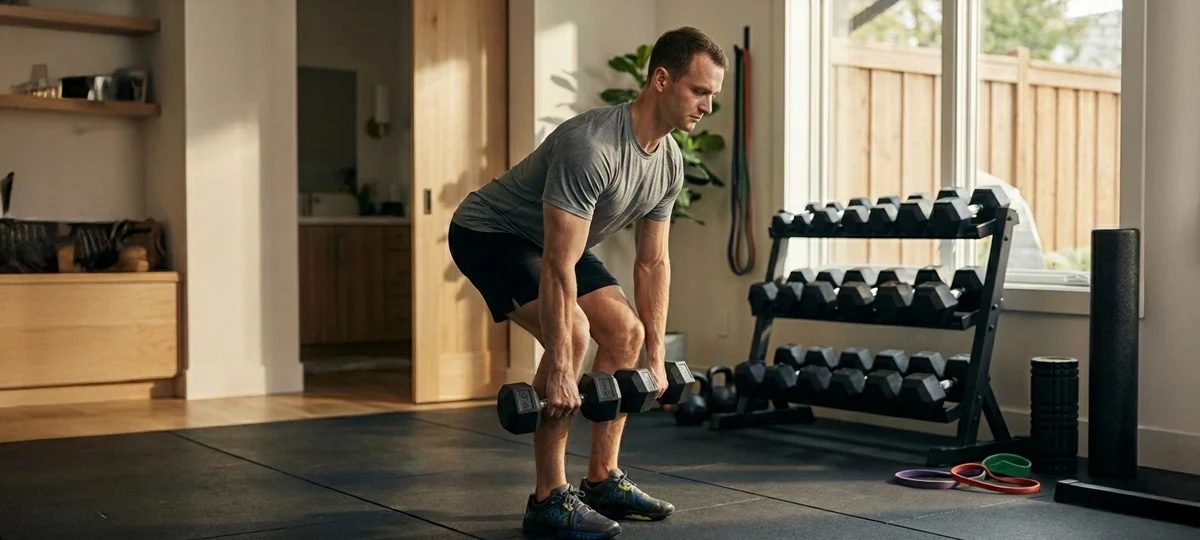
Bands top out. Even stacked heavy loop bands deliver around 100–150 lb of peak resistance, and that peak only exists at full stretch — the start of the rep is much lighter. For heavy lower-body work and progressive overload past the beginner stage, dumbbells go heavier, more precisely, and with resistance that does not depend on how far you stretch.
Dumbbells also offer exact increments: 2.5 lb steps, every time, measurable and repeatable. Bands are rated in approximate ranges, and the actual resistance depends on your height, your anchor point and how far you stretch. For tracking progress, dumbbells are the honest tool.
3. Portability: the one category bands win outright

A full band set weighs under two pounds and fits in a carry-on. A pair of adjustable dumbbells weighs 50–180 lb and stays in the room it lives in. For travel, hotel rooms and outdoor training, bands are not just better — they are the only option of the two that exists.
That portability also makes bands the best warm-up and assistance tool in a dumbbell gym. They live in a drawer, come out for shoulder work and activation, and go back. Many lifters who own full dumbbell sets still keep a band set for exactly this.
4. Cost: bands win on price, dumbbells win on value
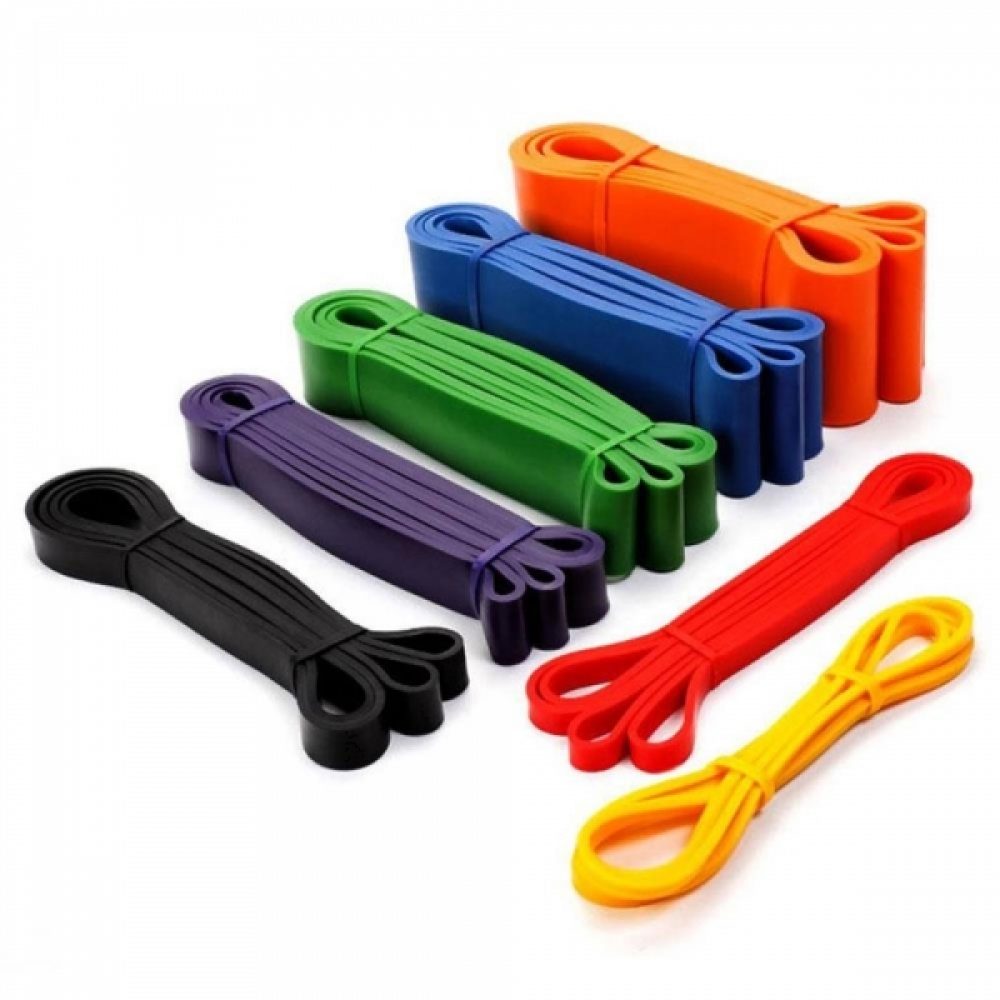
A complete band set costs $20–$60. A credible adjustable dumbbell pair costs $90–$700. On purchase price alone, bands win by an order of magnitude — and for a first home gym on a tight budget, a band set plus a single kettlebell is a legitimate starting point.
On cost per year, the math flips. Latex bands wear out in one to three years and need replacing; a steel dumbbell set lasts decades. Over ten years, the dumbbell pair is often cheaper per session. Buy bands for now, dumbbells for the long term.
5. Exercise range: dumbbells do more, bands do some things better

Dumbbells cover more movements with more precision: presses, rows, squats, lunges, carries and deadlifts all work with a pair of dumbbells and a bench. Bands cover fewer movements well, but they do a few things dumbbells cannot — lateral work, rotation, and resistance from angles gravity does not provide.
The practical answer for most home gyms is a dumbbell pair for the main lifts and a band set for the work around them: warm-ups, lateral raises, pull-aparts and assisted movements. Neither tool replaces the other.
6. Durability: steel outlasts latex by a decade
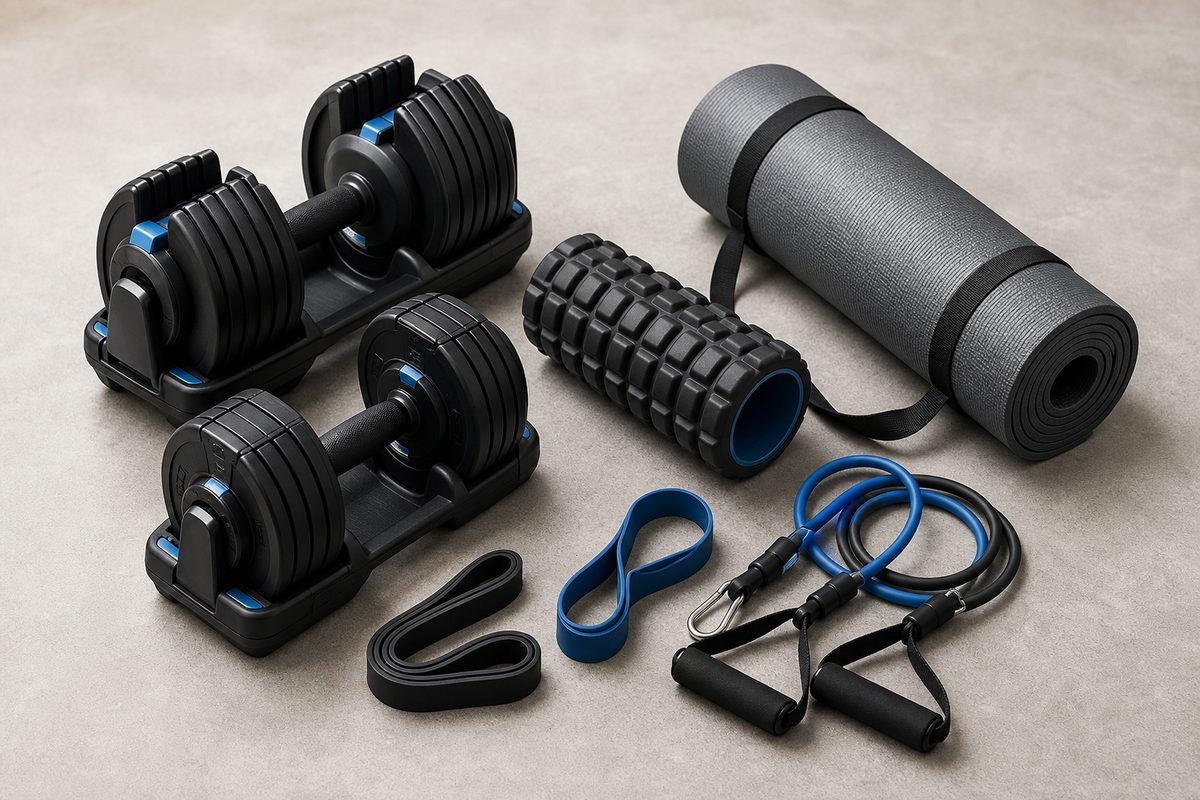
Latex bands degrade with sun, heat and time, even unused. Inspect them regularly: nicks, thinning and small tears are the warning signs, and a band that snaps mid-rep can cause a genuine injury. Store bands cool, dark and loose — never stretched, never in sunlight.
Steel dumbbells have no expiry date. The mechanism on an adjustable set can wear, but the weight itself is forever. If you buy one tool to last twenty years, it is the dumbbell. If you buy one tool to last two years and travel everywhere, it is the band.
7. Who should pick bands first
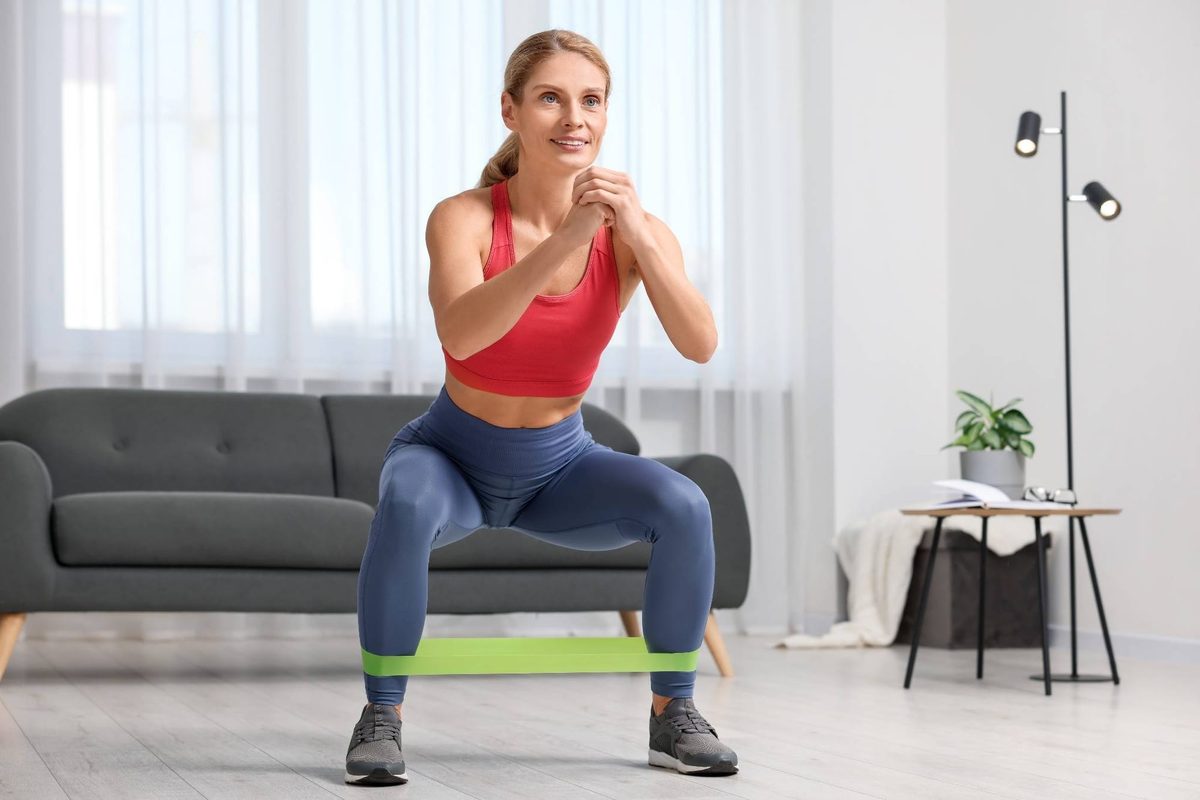
Pick bands first if you travel often, if your budget is under $100, if you have almost no storage space, or if you are returning to training and want the lightest possible starting resistance. Bands are also the right first buy for anyone whose training is mostly mobility, activation and light resistance work.
Bands are the wrong first buy if your goal is heavy progressive strength training — the ceiling arrives too fast, and the increments are too vague to track. Know which goal is yours before you buy.
8. Who should pick dumbbells first
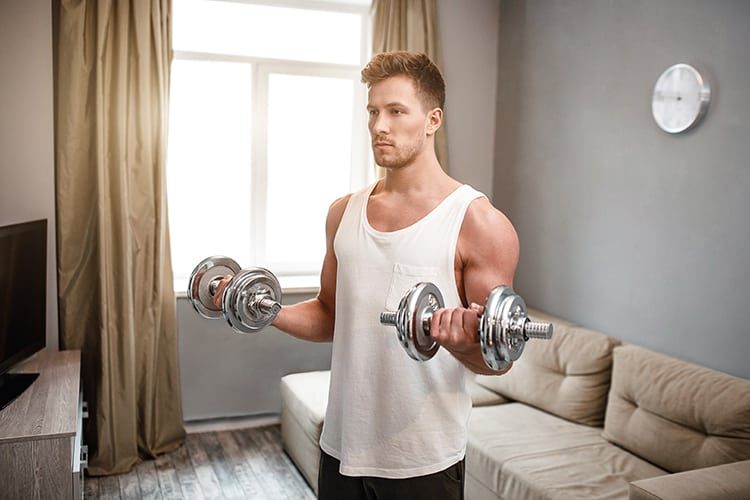
Pick dumbbells first if you train at home most of the time, if you want measurable progression, if you already lift and know your weights, or if you are building a permanent home gym. A 5–50 lb adjustable pair is the single most versatile purchase in home fitness.
The honest verdict: most home gyms end up owning both, because the tools solve different problems. Dumbbells are the main course; bands are the warm-up, the travel kit and the assistance work. If you can only buy one today, buy the one that matches where you train most.
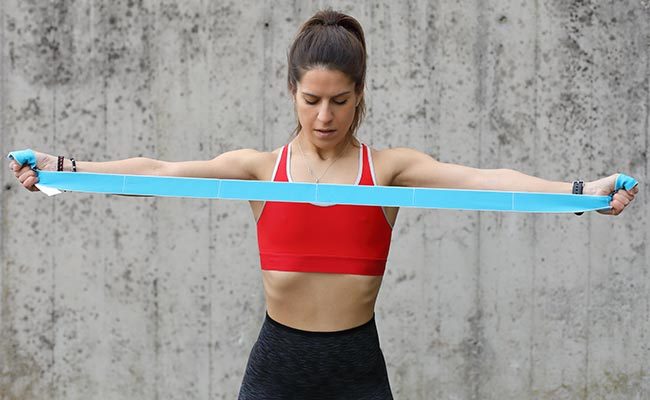
Our verdict
Dumbbells build more strength, full stop — heavier loads, exact increments, constant resistance, decades of life. Bands win on price, portability and a few movements dumbbells cannot do. The comparison is not a contest with one winner: it is two tools with different jobs, and the home gym that owns both is better equipped than the one that owns either alone.
Gear mentioned in this guide
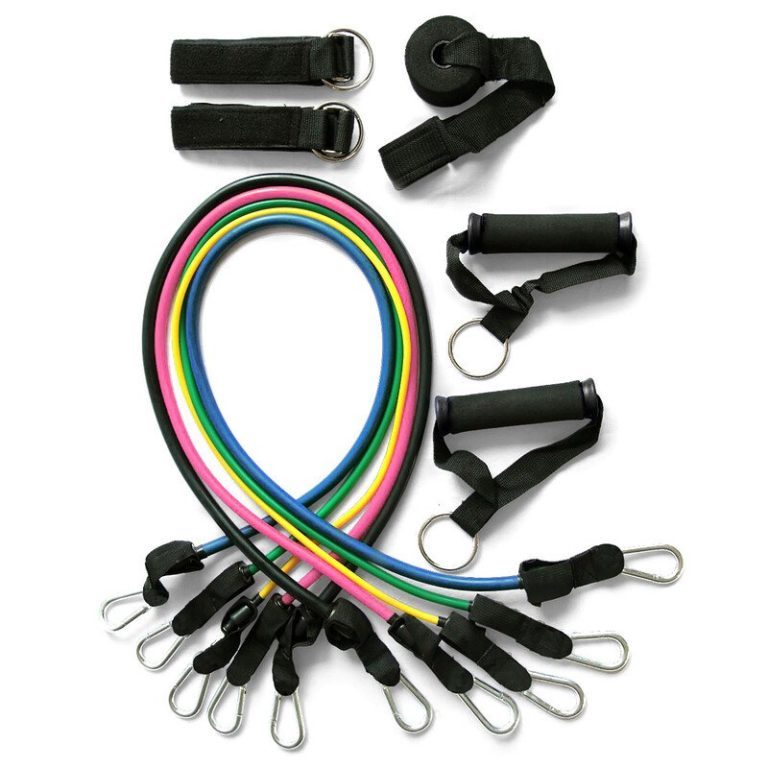
Resistance Bands Set with Handles
Tube bands with a door anchor for warm-ups, assistance work and travel days.
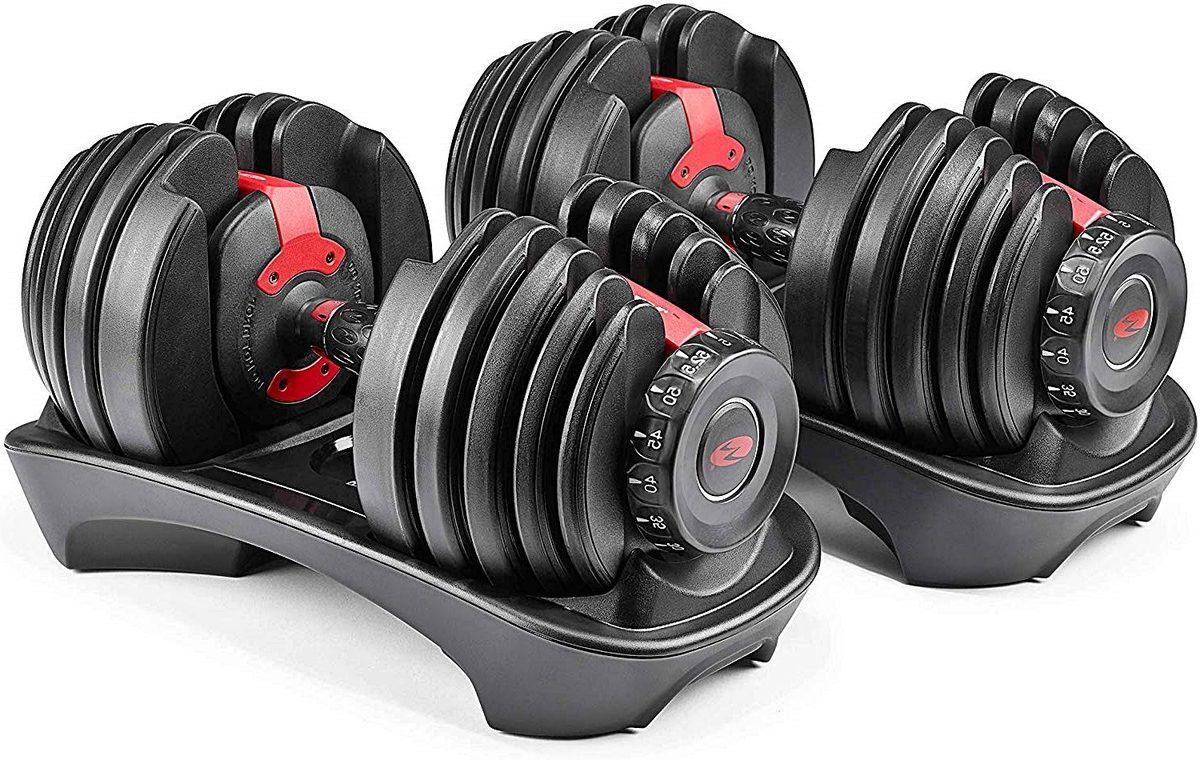
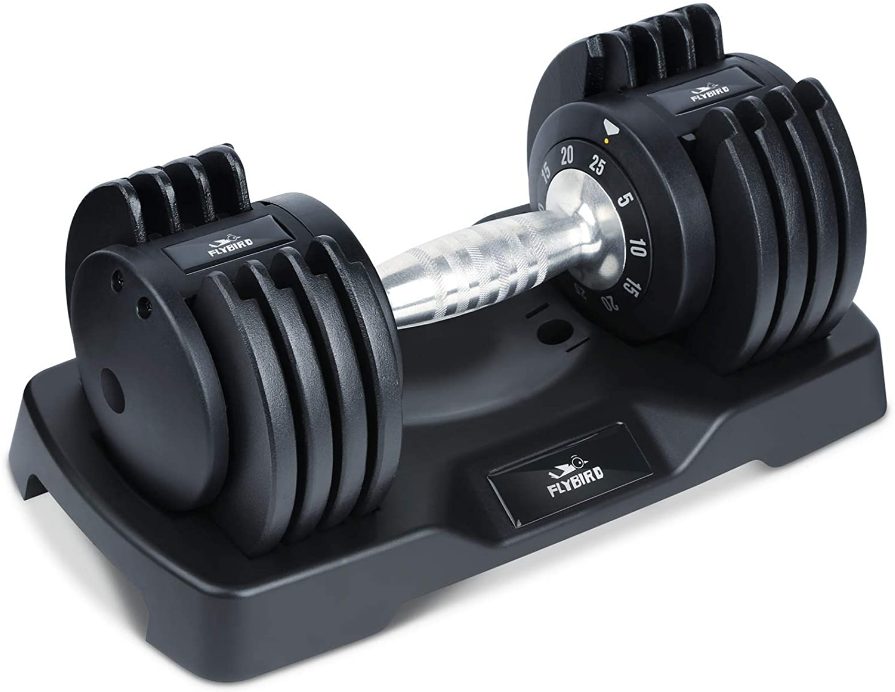
FLYBIRD 25 lb Adjustable Dumbbells
5–25 lb · Twist handle · Pair
$90–$140 Typical price — check the live listing.
Frequently asked questions
Can resistance bands build muscle like dumbbells?
Bands can build muscle, especially for beginners — resistance is resistance. But bands cap out around 100–150 lb of peak resistance, and the load is lightest at the start of each rep. For progressive overload past the beginner stage, dumbbells offer heavier, more precise loading.
Are resistance bands good for beginners?
Yes — bands are an excellent starting tool: cheap, light, forgiving on joints, and they cover a full-body workout with one set. Many lifters start with bands and add dumbbells when they want heavier, measurable loads.
How much resistance do bands actually provide?
Loop bands are typically rated 10–150 lb depending on thickness, but the real number depends on how far you stretch the band — resistance increases with stretch. A band rated 50 lb only delivers 50 lb near full stretch. Dumbbells, by contrast, deliver their rated weight through the whole rep.
Do resistance bands wear out?
Yes. Latex bands degrade with sun, heat and time, typically lasting one to three years with regular use. Inspect them for nicks, thinning and tears, and replace any band that shows damage — a snapping band can cause injury.
Can I use bands and dumbbells together?
Yes, and many lifters do: bands for warm-ups, activation and assistance work, dumbbells for the main lifts. Bands also pair with dumbbells for accommodating resistance — the band adds load where the dumbbell movement is easiest.
Which is better for travel: bands or dumbbells?
Bands, without question. A full set weighs under two pounds and fits in a carry-on bag. Adjustable dumbbells weigh 50–180 lb per pair and do not travel.
Are bands or dumbbells better for small apartments?
Bands take almost no space. But a single pair of adjustable dumbbells takes about two square feet and replaces a whole rack, so dumbbells are practical in small spaces too. If you have room for one pair of dumbbells, get the dumbbells and add bands for travel.
Related guides
Best Adjustable Dumbbells for Home Gyms
One pair that replaces a whole rack is the single best purchase a home gym can make — if you pick the right mechanism. We compared 15 adjustable sets on weight …
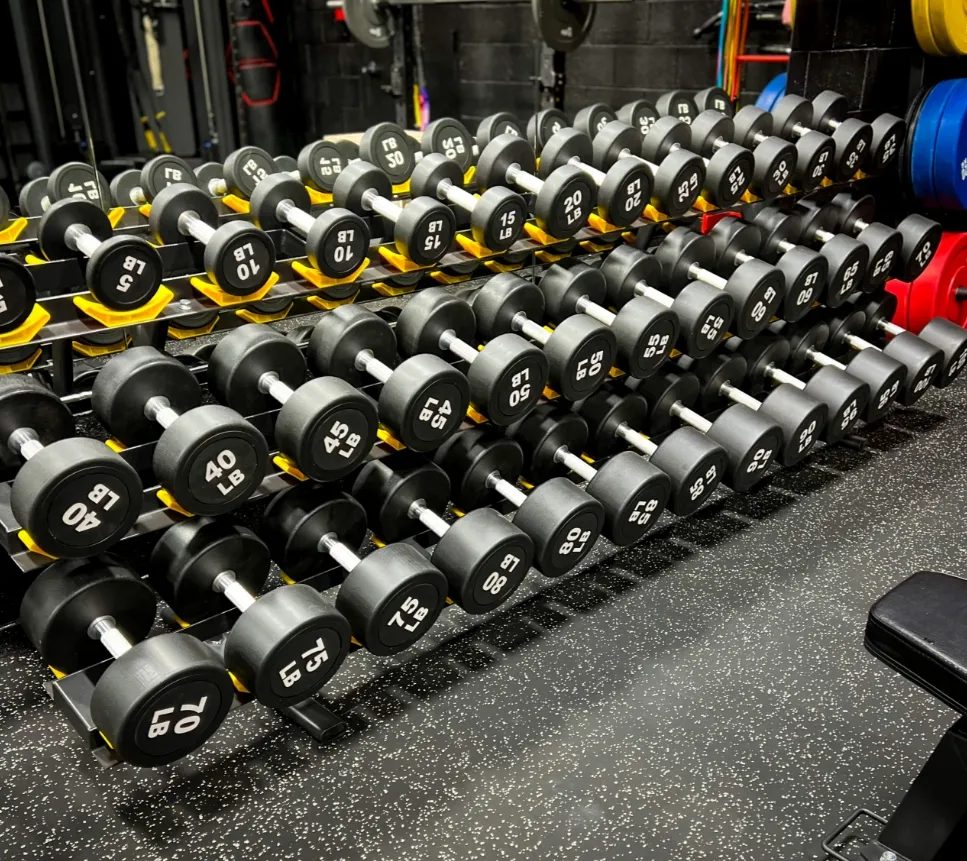
Dumbbell Weight Guide: How Heavy Should You Lift?
The right dumbbell weight is not a number on a chart — it is the weight that makes the last two reps of a set genuinely hard. Here is how to find yours for ever…
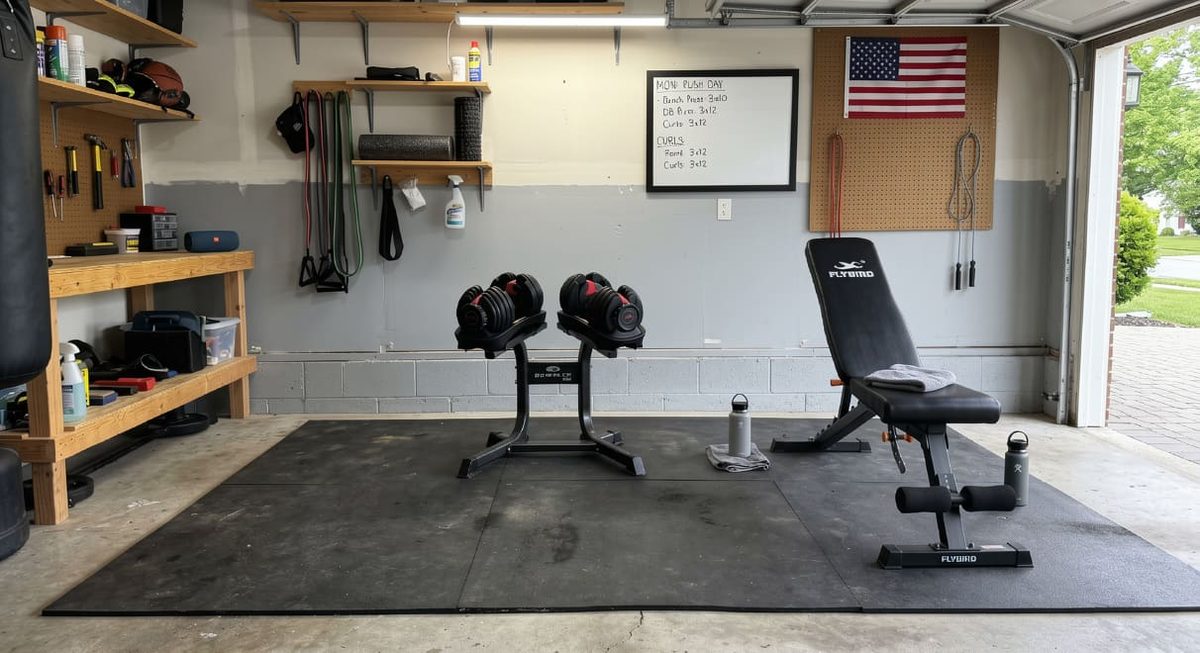
How to Start a Home Gym on a Budget
You do not need a $5,000 rack to train at home. You need a floor that survives dropped weight, one good pair of dumbbells, and a bench — in that order. Here is …
As an Amazon Associate, we earn from qualifying purchases. Prices and availability change — always check the live listing before you buy.