Dumbbells
Dumbbell Weight Guide: How Heavy Should You Lift?
The right dumbbell weight is not a number on a chart — it is the weight that makes the last two reps of a set genuinely hard. Here is how to find yours for every exercise, and how to pick a set that grows with you.
Direct answer
Choose a dumbbell weight that makes the last two repetitions of a set genuinely hard while your form stays clean. As a starting point, most beginners use 3–15 lb for small-muscle exercises, 15–35 lb for presses and rows, and 40 lb or more for legs — then move up when the last reps stop feeling hard.
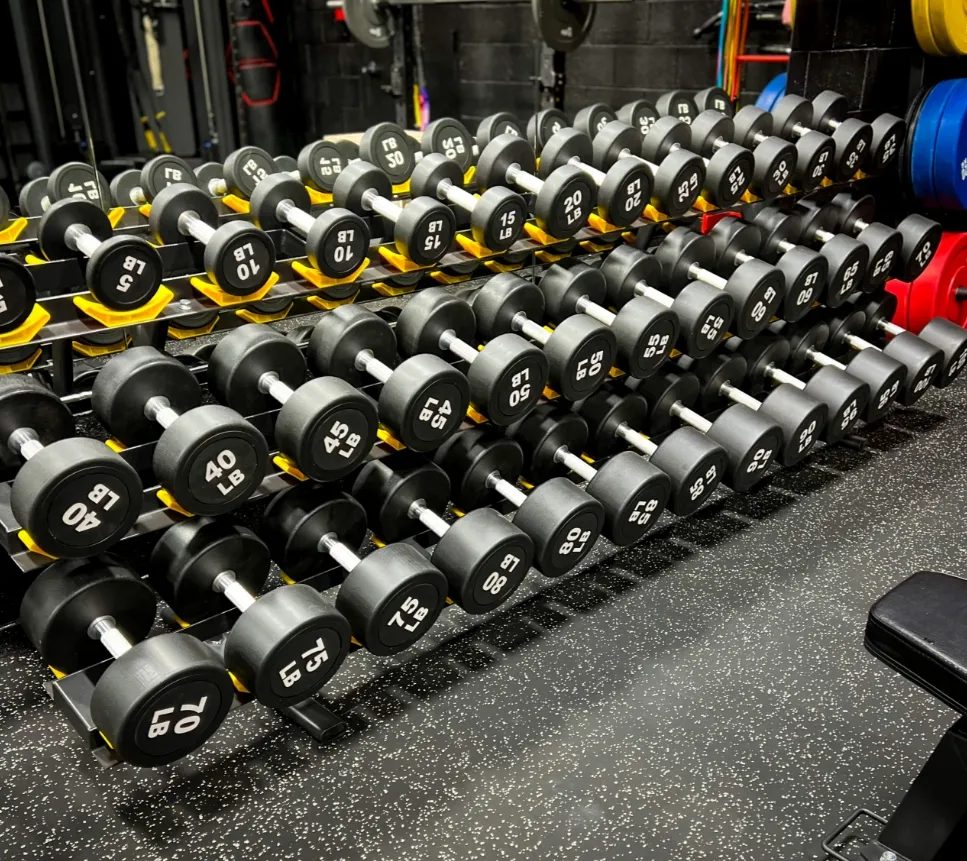
Walk into any gym and you will see the same two mistakes: someone curling a weight they have to swing to move, and someone pressing a weight they could lift twenty times without effort. Both are choosing by ego or by guesswork instead of by a simple test.
This guide explains that test, gives realistic weight ranges by exercise type, and shows how the numbers map to the adjustable dumbbell sets in our buying guide. It is equipment guidance, not a training program — and if you have a health condition that affects what you can lift, that conversation belongs with a clinician.
Quick comparison
| Exercise type | Typical starting range (per hand) | Notes |
|---|---|---|
| Shoulder raises, light work | 3–10 lb | Small muscles, small weights |
| Curls, triceps work | 10–25 lb | Most common range for arms |
| Chest press, rows | 20–40 lb | Larger muscles, heavier loads |
| Goblet squats, lunges | 25–50 lb | Legs move the most weight |
| Heavy rows, deadlifts | 40–90 lb | Needs a heavy adjustable set |
1. The short answer: use the last-two-reps test
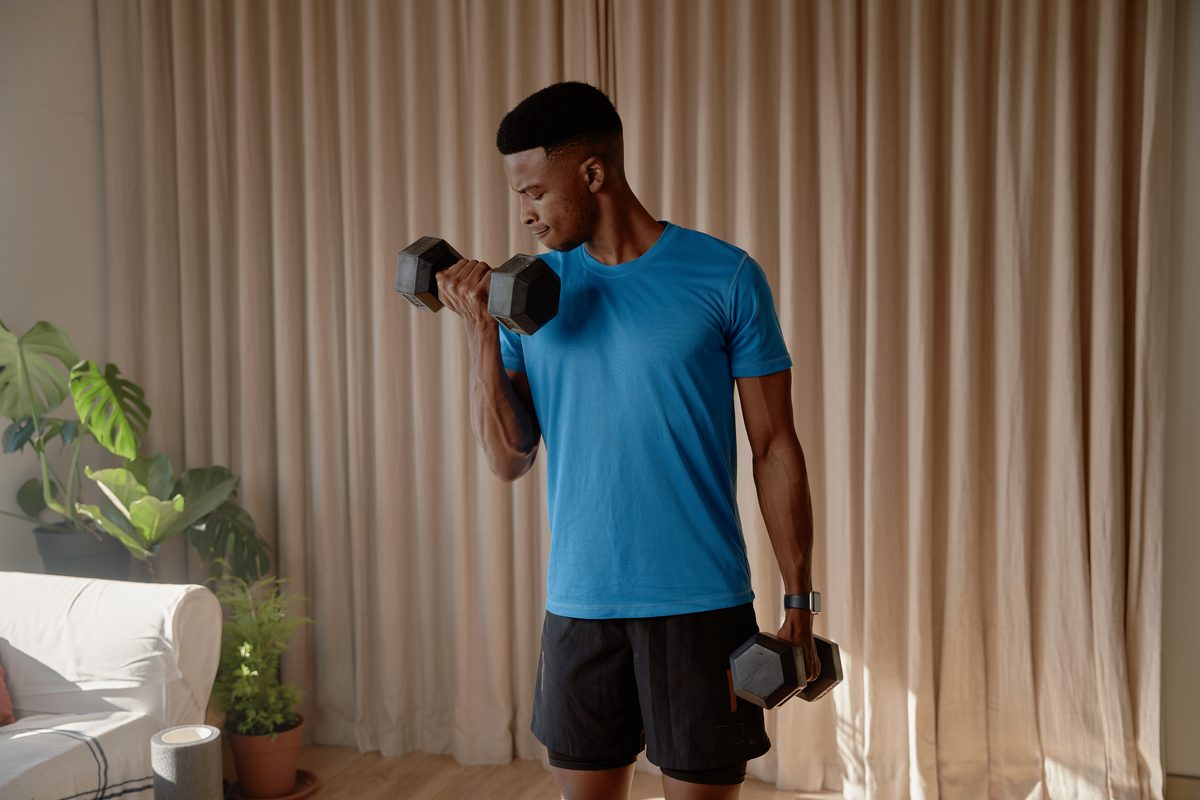
Pick a weight, do a set of 10–12 reps. If the last two reps feel genuinely hard — slow, controlled, but completed with good form — the weight is right. If you could do five more, it is too light. If you cannot reach eight with good form, it is too heavy. That test works for every exercise and every level, and it is more useful than any chart.
Test with one exercise at a time, and test the movement you actually plan to do. The right weight for a curl is not the right weight for a row, and the right weight for a row is not the right weight for a squat.
2. Upper body and lower body need different weights
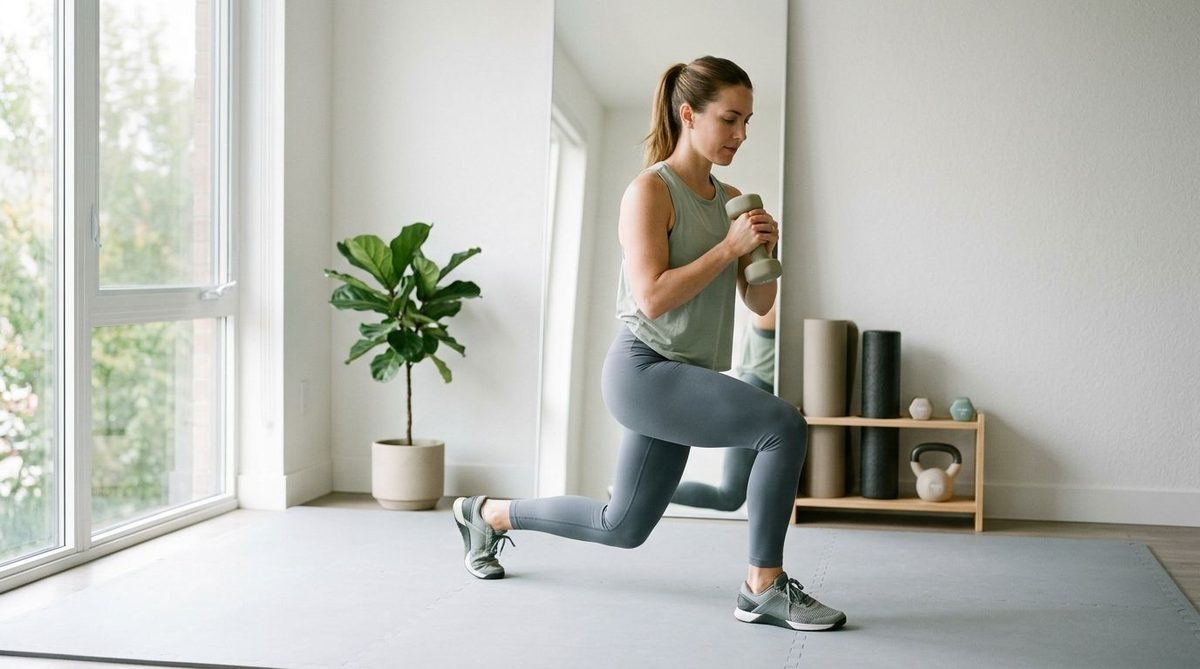
Leg muscles are bigger and stronger than arm muscles, so lower-body work needs substantially more weight. A lifter who curls 20 lb may goblet-squat 50 lb with the same effort. This is why a single fixed pair is never enough: the weight that challenges your shoulders will not challenge your legs.
As a rough guide, expect your lower-body dumbbell weight to be roughly double your upper-body weight for the same rep range. Adjustable sets exist precisely because of this gap — one pair covers both ends.
3. Light dumbbells (3–15 lb): small muscles and warm-ups
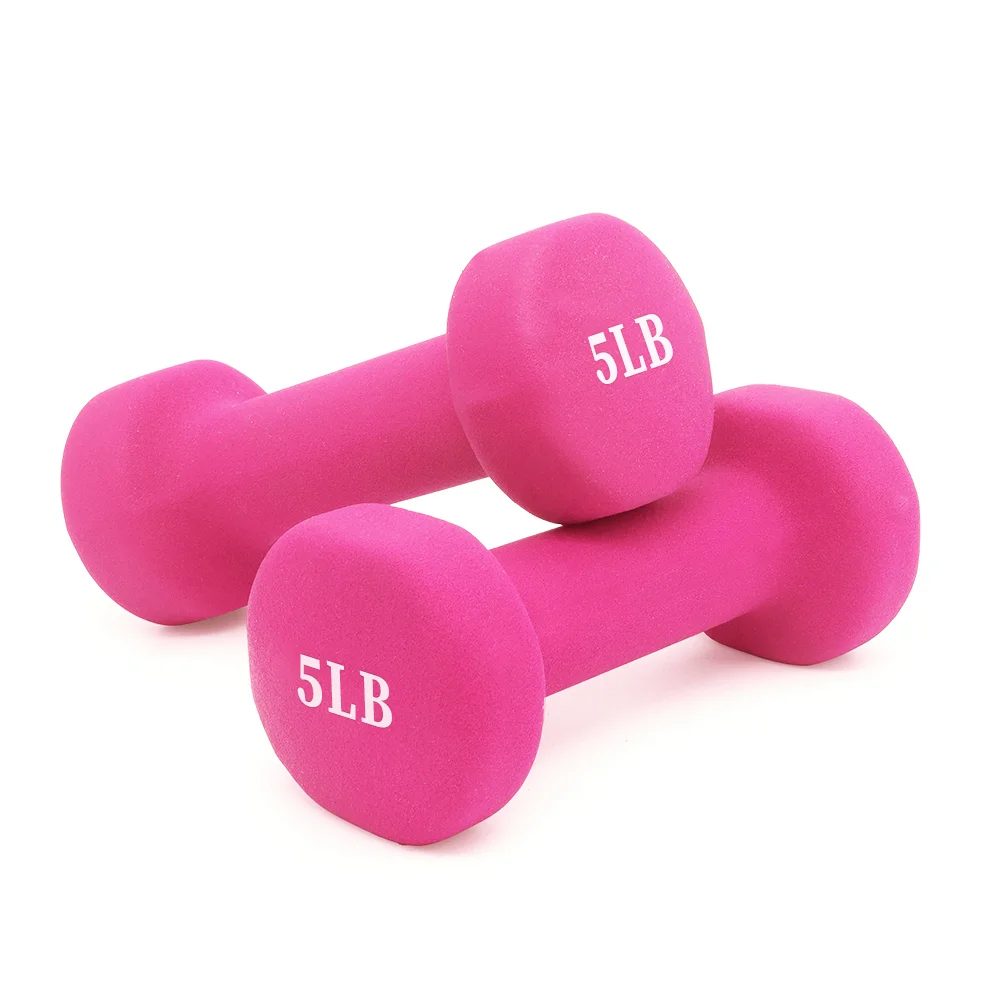
Light dumbbells serve shoulder raises, rotator work, warm-ups and high-rep finishing work. They are also the right starting point for anyone returning to training after a long break. There is no shame in a 5 lb dumbbell — the shoulder muscles it trains are small, and they do not care what the label says.
If your adjustable set starts at 10 lb, a cheap light fixed pair fills the gap. Many sets (Bowflex 552, PowerBlock) start at 5 lb, which is one reason they rank highly.
4. Medium dumbbells (15–35 lb): the workhorse range
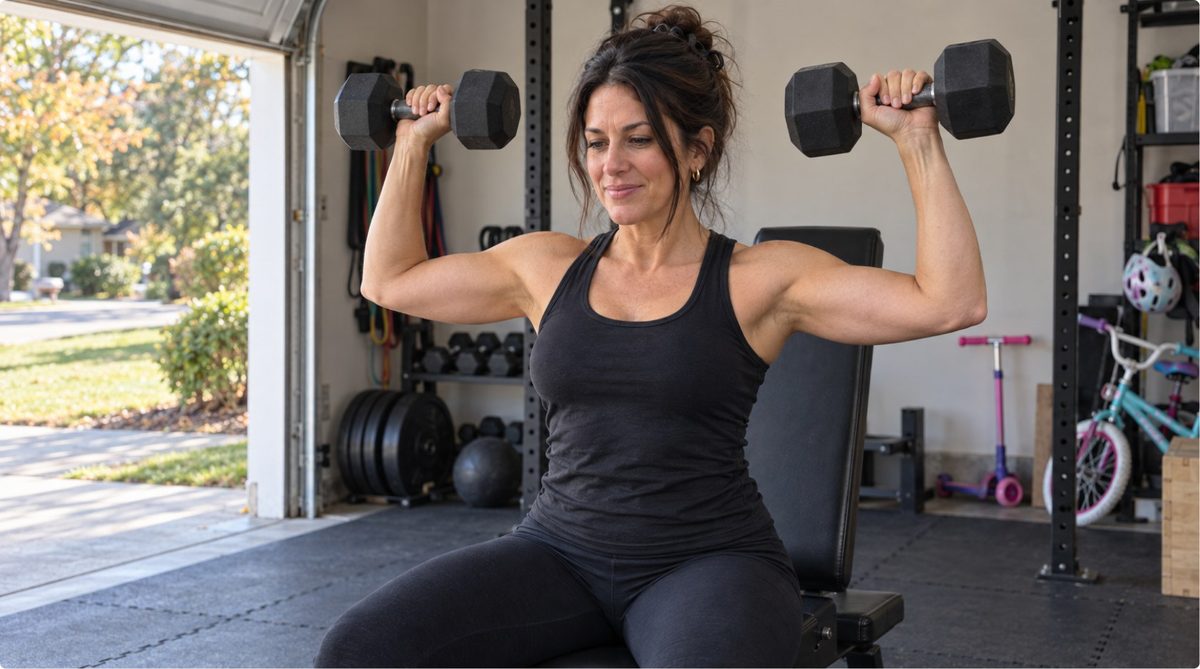
This is where most home training lives: curls, presses, rows, lunges and carries. A 20–30 lb pair covers the majority of upper-body work for most adults, and it is the range where 2.5 lb increments matter most — the jump from 20 to 25 lb is a 25% increase, which is why sets with fine steps earn their price.
If you can only own one fixed pair, make it a 20 or 25 lb pair. If you are buying adjustable, make sure the set covers this range with small steps.
5. Heavy dumbbells (40–90 lb): legs, rows and deadlifts
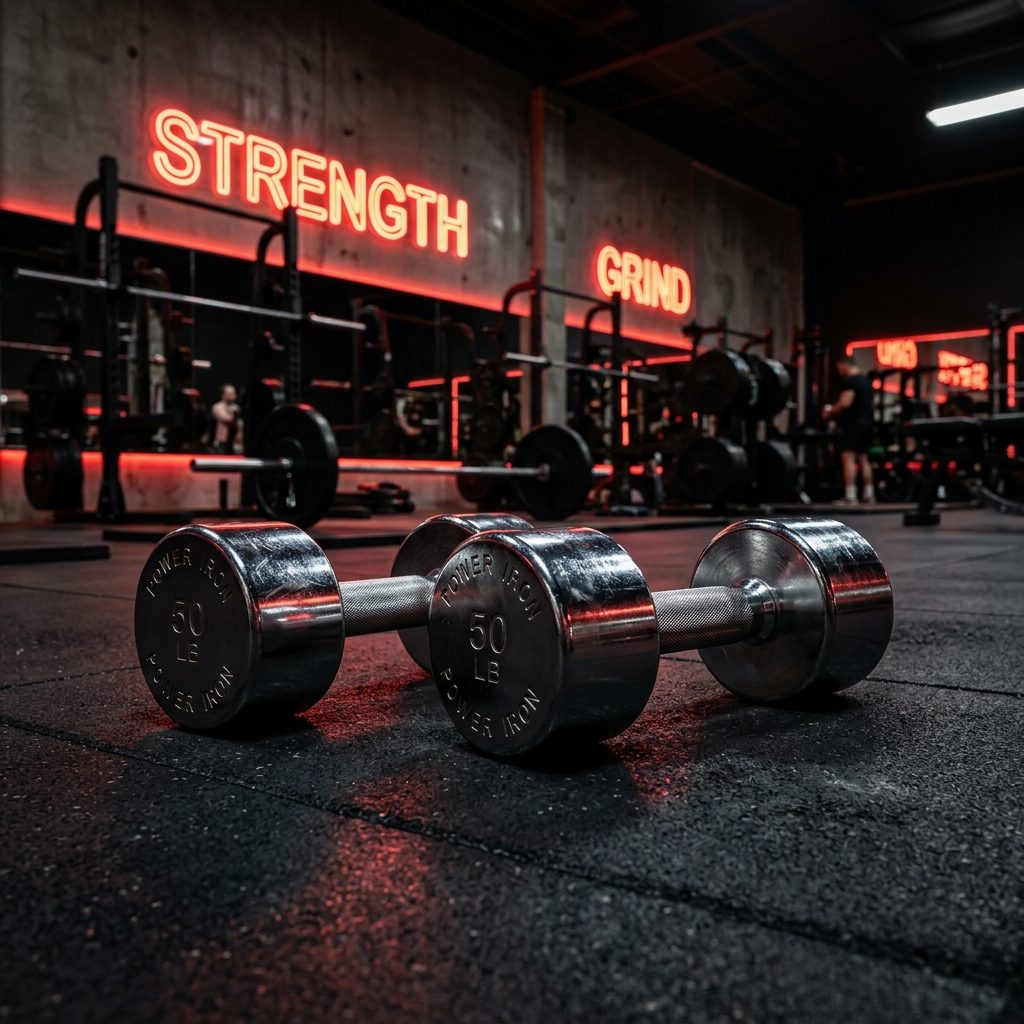
Heavy dumbbells are for the movements that use the biggest muscles: deadlifts, heavy rows, goblet squats and farmer's carries. You will reach for them less often than the medium pair, but when you need them, nothing lighter substitutes.
This is the range that separates adjustable sets. A 25 lb set caps out before heavy leg work begins; a 50 lb set covers most lifters for years; a 90 lb set (Bowflex 1090, PowerBlock with expansions, NUOBELL 580) covers serious training. Buy the ceiling you will grow into, not the one you have already reached.
6. Grip and handle: the weight you can hold matters
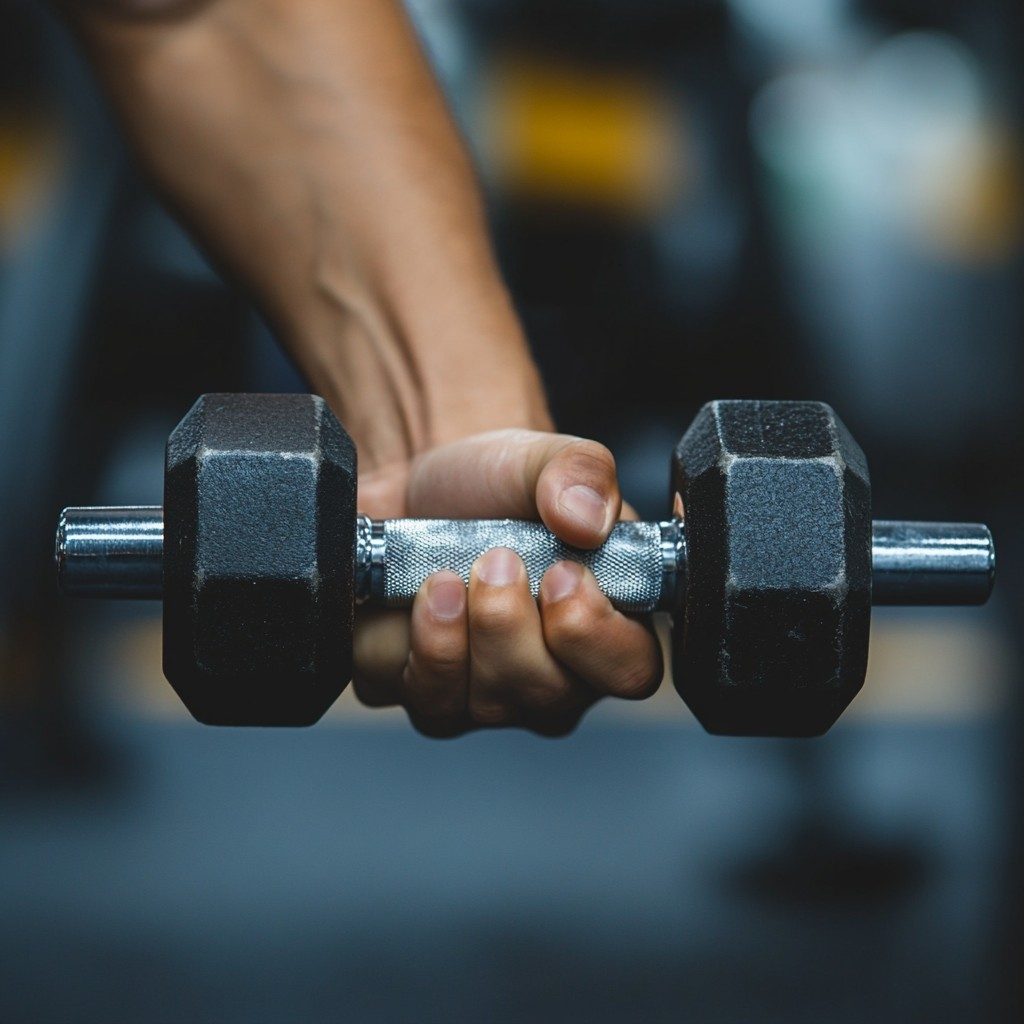
The heaviest dumbbell in the world is useless if you cannot hold it. Handle diameter, knurling and grip texture decide how much weight your hands can actually manage, especially as the set gets heavier. Contoured and knurled steel handles (NUOBELL, Ironmaster) hold better than smooth or fat plastic grips.
If your grip fails before the target muscle does, the answer is not always a lighter dumbbell — lifting straps and chalk exist for this reason. But a handle that feels wrong at 20 lb will feel worse at 50 lb, so handle comfort is a buying criterion, not a detail.
7. Adjustable vs fixed: which grows with you
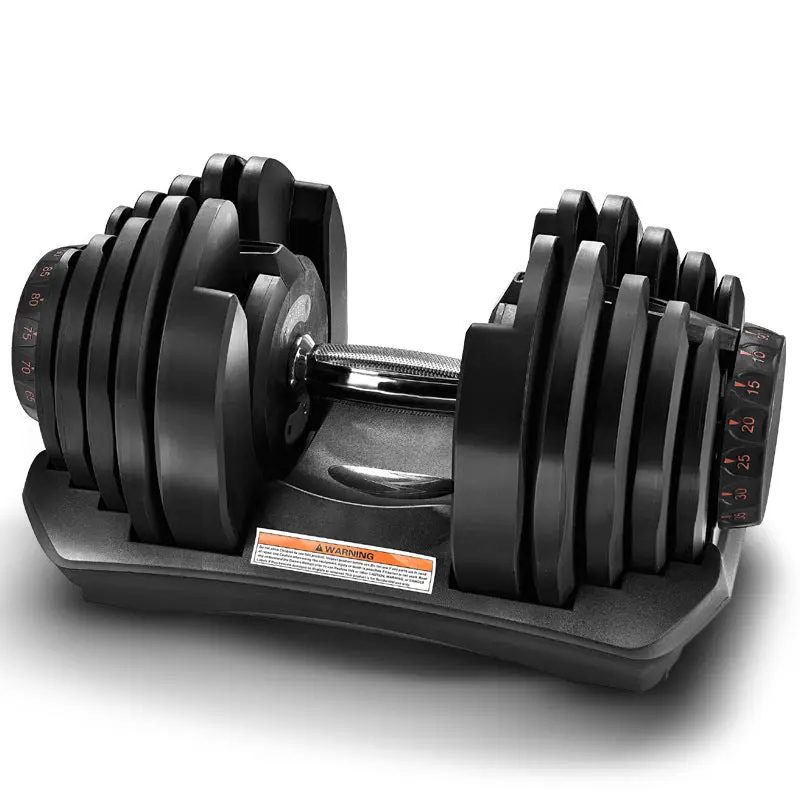
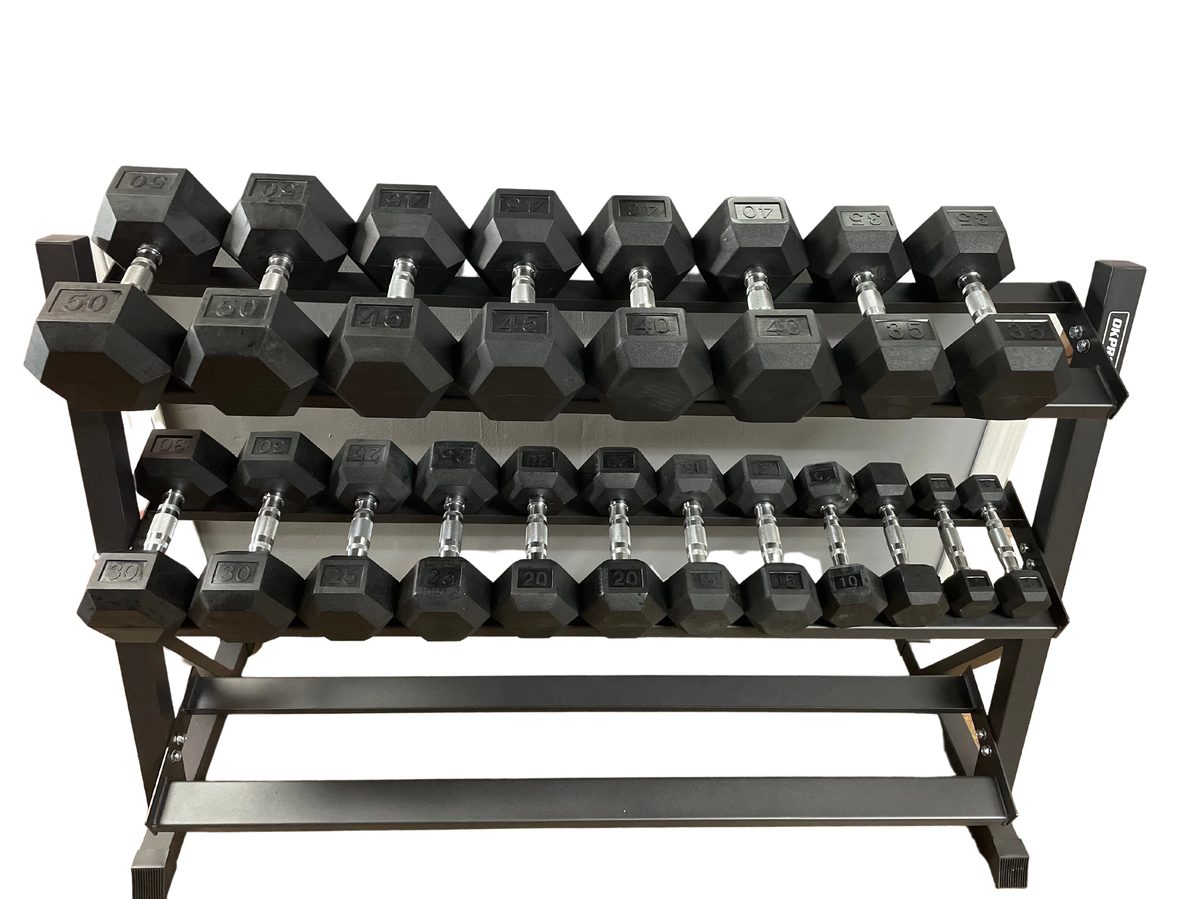
Fixed dumbbells are bought one pair at a time, which means every strength gain triggers a new purchase. Adjustable dumbbells front-load the cost: one pair covers 5–50 lb, and the next purchase is an expansion kit, not a new rack. Over two years of regular training, adjustables cost less and take a tenth of the space.
The trade-off is the mechanism. Fixed dumbbells have nothing to break; adjustables have dials, pins or screws. Buy the mechanism you trust, keep the trays on a mat, and never drop the set. Our full comparison of 15 adjustable dumbbells covers the trade-offs in detail.
8. When to go heavier: the signs are simple
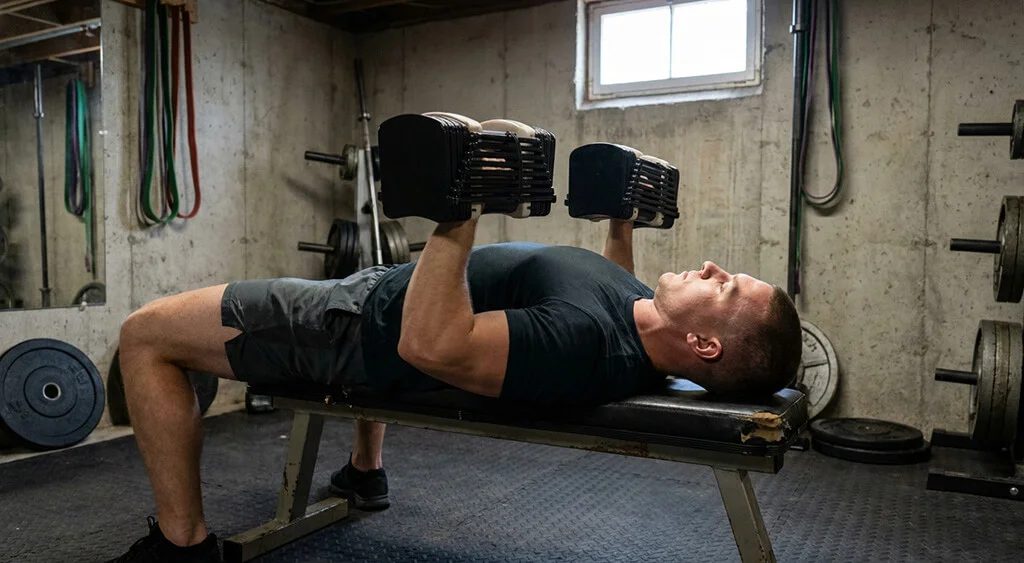
Go heavier when you can complete all sets of 12 reps with good form and the last two reps no longer feel hard. That is the only signal that matters. Move up by the smallest step your set allows — 2.5 lb if you have it — and re-test. A jump that is too big turns good form into bad form, which is how progress stalls.
Plateaus are normal. If the next weight up is too big a jump, add reps first, then weight. A set with fine increments makes this easier, which is why step size is one of the first specs we list in every review.
Our verdict
Start with the last-two-reps test, not a chart. Most adults will train mostly in the 15–35 lb range per hand, need 40 lb or more for leg work, and benefit from a set with 2.5 lb steps in the middle range. An adjustable pair covering 5–50 lb is the right default purchase — and the weight you choose matters less than the consistency with which you lift it.
Gear mentioned in this guide
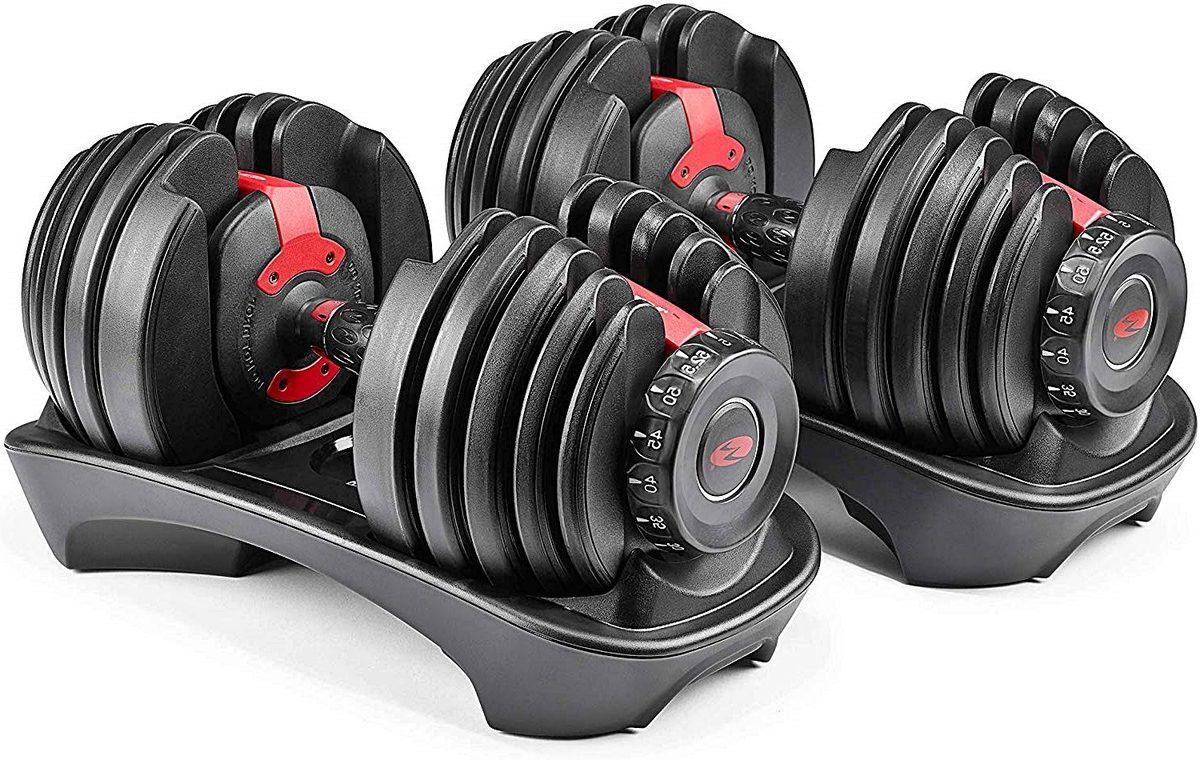
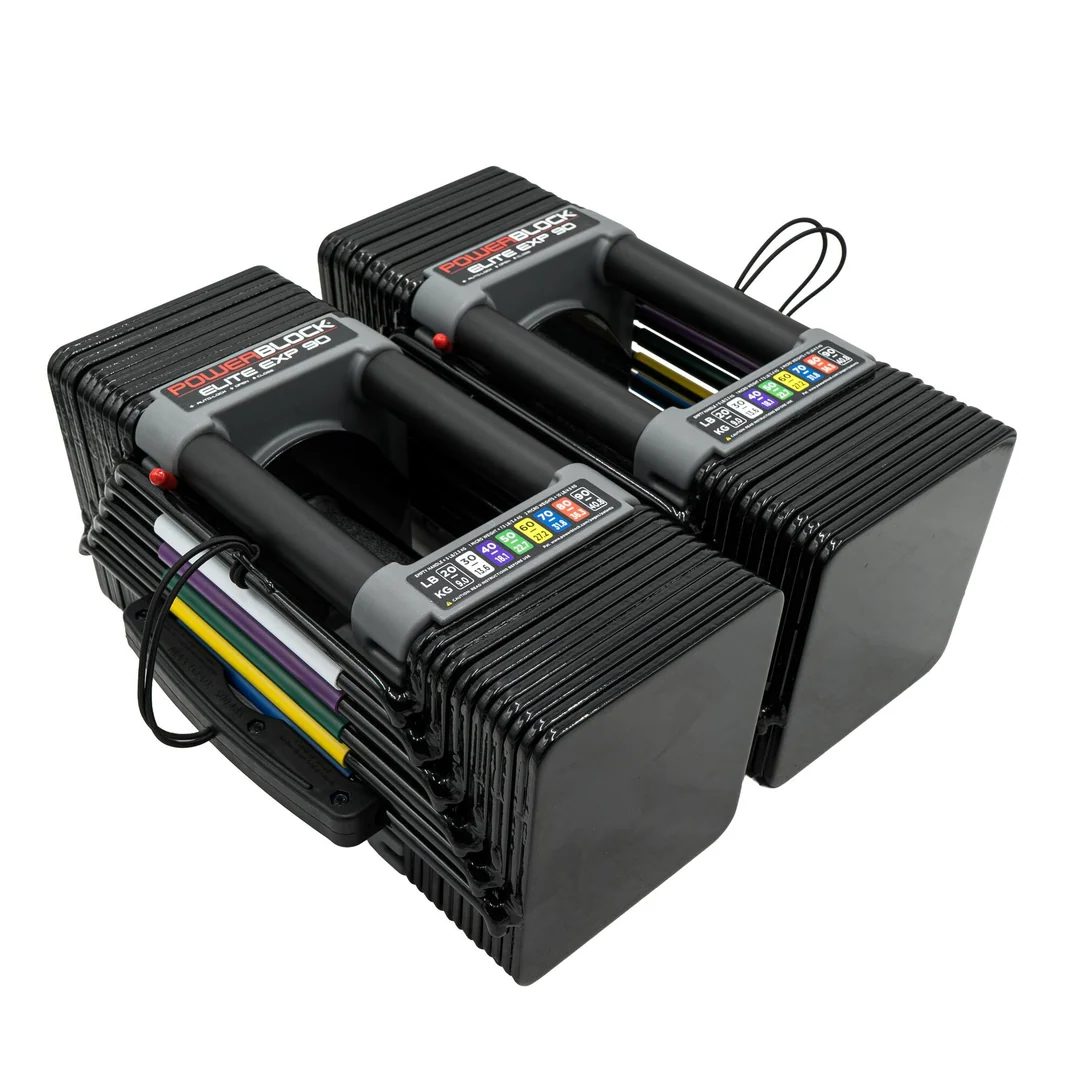
PowerBlock Elite EXP (Stage 1)
5–50 lb · Selector pin · Pair
$350–$400 Typical price — check the live listing.
Frequently asked questions
What dumbbell weight should a beginner start with?
Most beginners start with 10–20 lb per hand for upper-body work and 20–30 lb for lower-body work, then adjust with the last-two-reps test. An adjustable set starting at 5 lb covers the full learning curve without extra purchases.
How heavy should dumbbells be for building muscle?
Heavy enough that the last two reps of a 10–12 rep set are genuinely hard with good form. That weight differs by exercise and by person — there is no universal number. The test matters more than the chart.
Is a 25 lb dumbbell enough?
For upper-body work and early training, yes. For leg work and heavy rows, most lifters outgrow 25 lb within months. A 25 lb set is a good starter; a 50 lb set is a better long-term buy.
Should I buy 5 lb increments or 2.5 lb increments?
2.5 lb increments matter most in the 10–30 lb range, where a 5 lb jump is a 20–50% increase. Sets with fine steps (Bowflex 552, PowerBlock, NordicTrack) make progression smoother. Above 40 lb, 5 lb steps are fine.
What is the difference between dumbbell weight per hand and total?
Dumbbell weights are listed per dumbbell (per hand). A '50 lb pair' means two 50 lb dumbbells, 100 lb total. Adjustable set ranges (5–50 lb) also refer to each dumbbell. Check listings carefully — some budget sellers list total weight.
Do I need different weights for different exercises?
Yes — that is normal. Shoulders and arms use lighter weights; chest, back and legs use heavier ones. An adjustable set exists to cover that spread with one pair.
How often should I increase dumbbell weight?
When you can complete all sets of 12 reps with good form and the last reps no longer feel hard. For most lifters that is every few weeks in the first year, then slower. Small steps beat big jumps.
Related guides
Best Adjustable Dumbbells for Home Gyms
One pair that replaces a whole rack is the single best purchase a home gym can make — if you pick the right mechanism. We compared 15 adjustable sets on weight …
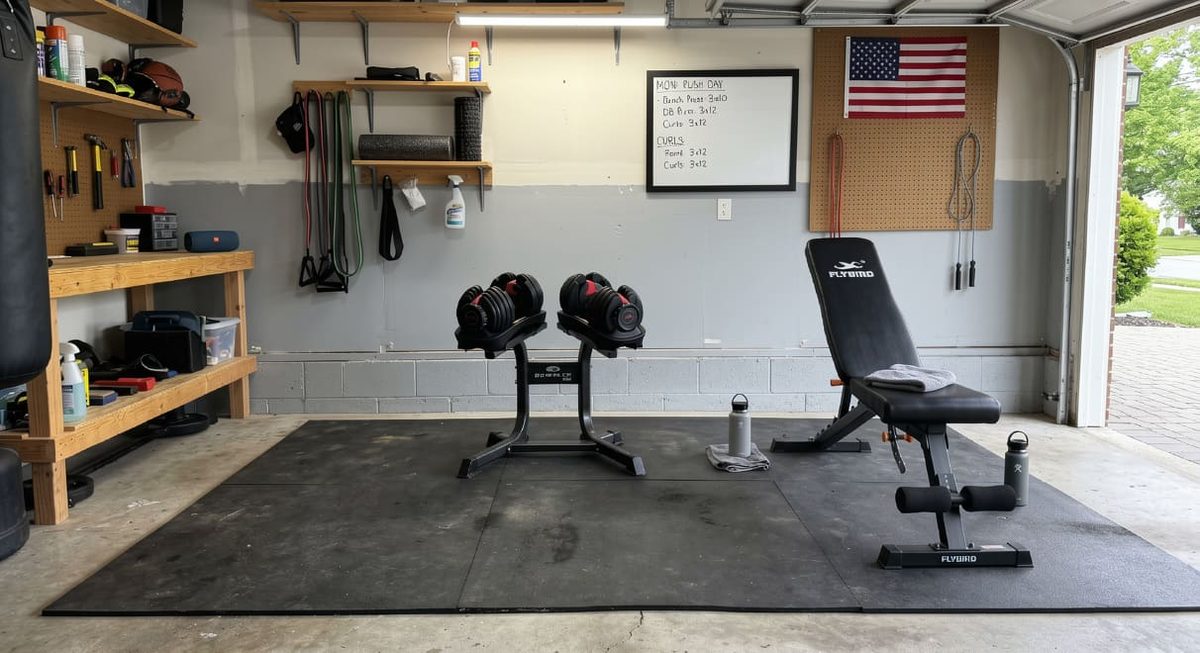
How to Start a Home Gym on a Budget
You do not need a $5,000 rack to train at home. You need a floor that survives dropped weight, one good pair of dumbbells, and a bench — in that order. Here is …
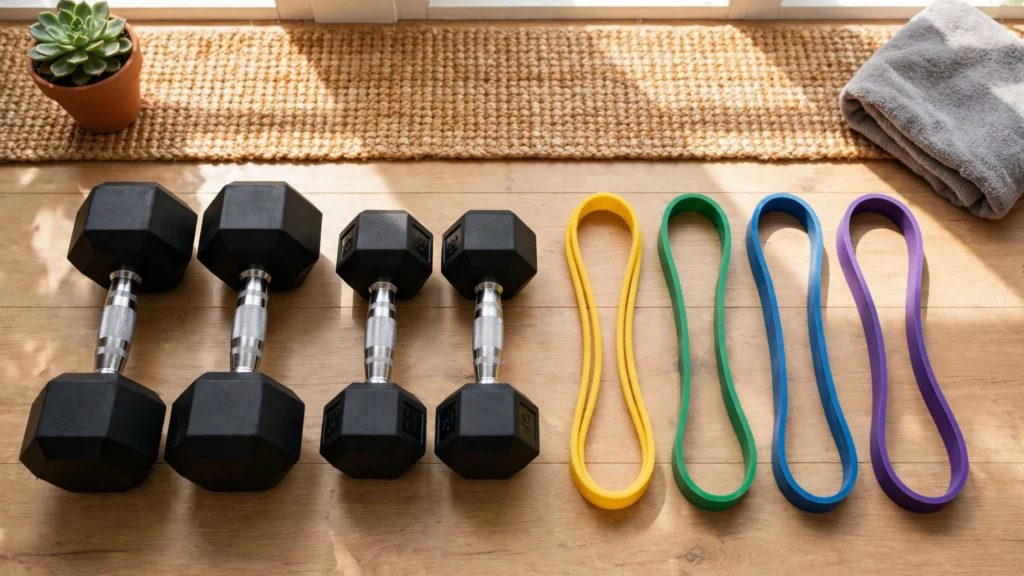
Resistance Bands vs Dumbbells: Which Builds More Strength?
Bands are cheap, light and travel anywhere. Dumbbells are heavy, precise and last forever. The real question is not which is better — it is which kind of resist…
As an Amazon Associate, we earn from qualifying purchases. Prices and availability change — always check the live listing before you buy.