
Dumbbells
How to Store Dumbbells in a Small Apartment Without a Rack
A full dumbbell rack needs a wall you may not have. Here is how to store dumbbells in a small apartment safely — vertically, on trays, and off your floorboards.
Direct answer
Store dumbbells in a small apartment on a rubber mat or tray in one fixed corner, not scattered around the room. One adjustable pair replaces a whole rack in about two square feet, and a low two-tier stand or vertical corner keeps the floor clear without a full rack.
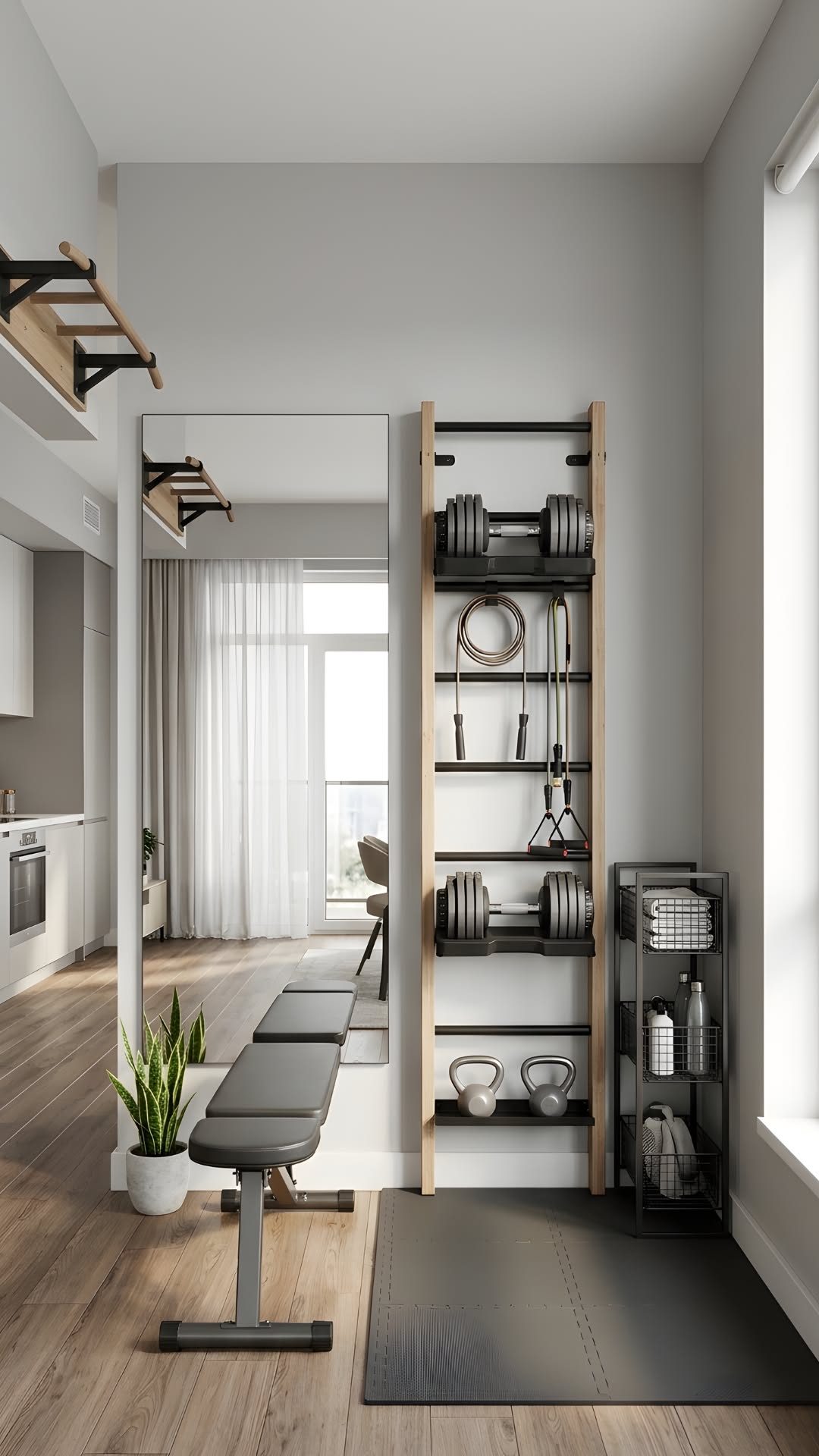
Dumbbells are the easiest home-gym equipment to own and the easiest to trip over. In a small apartment, two fixed pairs left beside the sofa become a daily obstacle, and bare metal on wood flooring leaves marks within weeks.
This guide covers storage that works without a full rack: what to measure first, when an adjustable pair solves the problem outright, and how to protect the floor underneath. If you are still choosing weights, start with our dumbbell weight guide and our adjustable dumbbell guide before you buy storage for pairs you may not need.
Quick comparison
| Storage option | Floor space | Best for |
|---|---|---|
| Adjustable pair on its tray | About 2 sq ft | Most small apartments |
| Low two-tier stand | About 3–4 sq ft | 2–4 fixed pairs |
| Vertical corner storage | About 2 sq ft | One pair plus bands |
| Full three-tier rack | 8–12 sq ft | Dedicated gym corner |
| Under-sofa tray | Hidden | One light pair only |
1. What is the smallest way to store dumbbells at home?
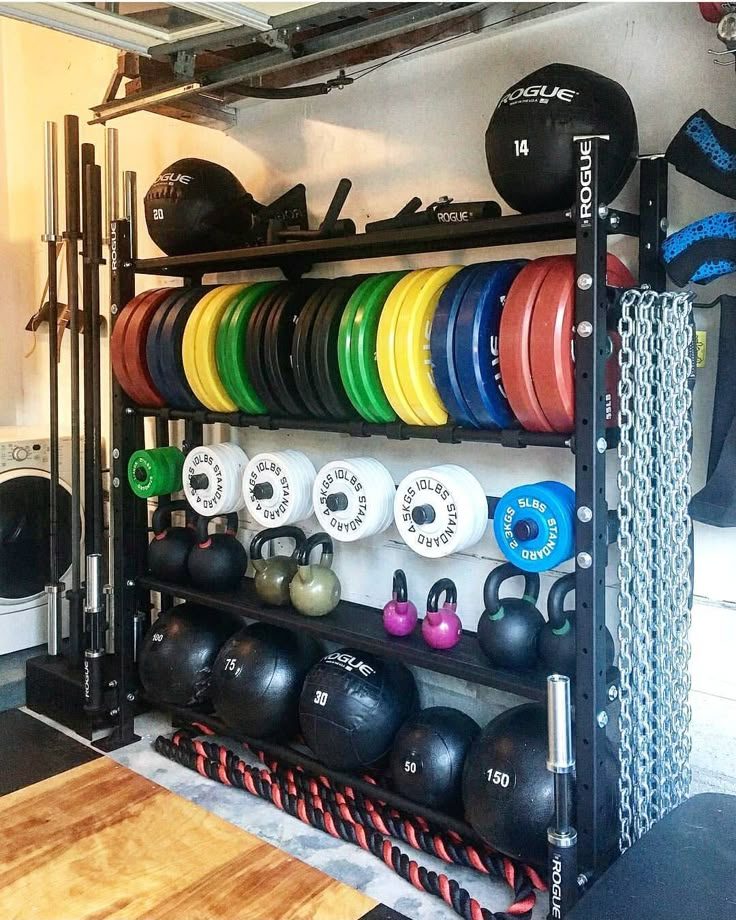
The smallest storage is vertical storage: one fixed corner, weights stacked or racked upward instead of spread along a wall. A corner two feet wide can hold an adjustable pair, a kettlebell and resistance bands without taking walking space.
Measure the corner before you buy anything. You need clearance to lift the heaviest dumbbell out without twisting, and enough depth that the pair does not creep into the walkway. If the corner fails that test, move the storage, not the furniture you use daily.
2. Do adjustable dumbbells solve the storage problem?
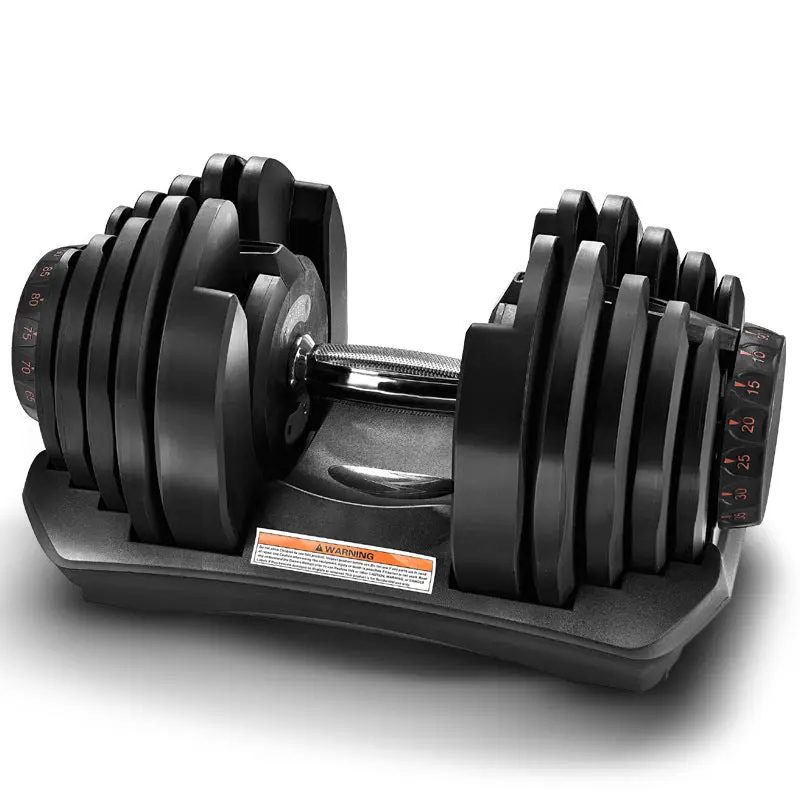
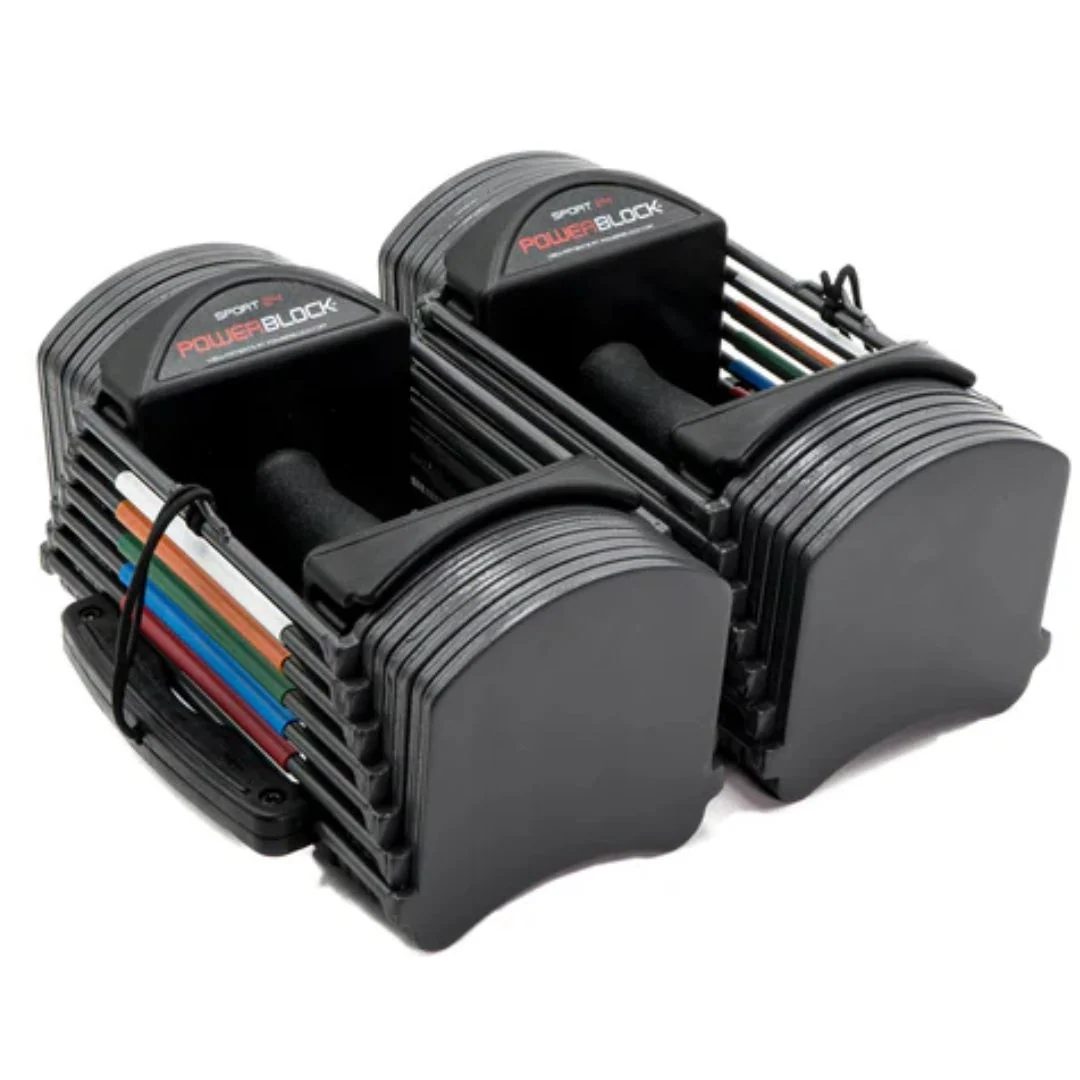
Yes — one adjustable pair replaces roughly 15 pairs of fixed dumbbells in about two square feet of floor. For most small apartments, that single purchase removes the storage problem instead of managing it.
The tray matters as much as the dumbbell: it keeps plates aligned, protects the floor, and gives the pair one obvious home. Our adjustable dumbbell rankings compare footprints and tray designs alongside weight ranges.
3. When is a small stand better than the floor?
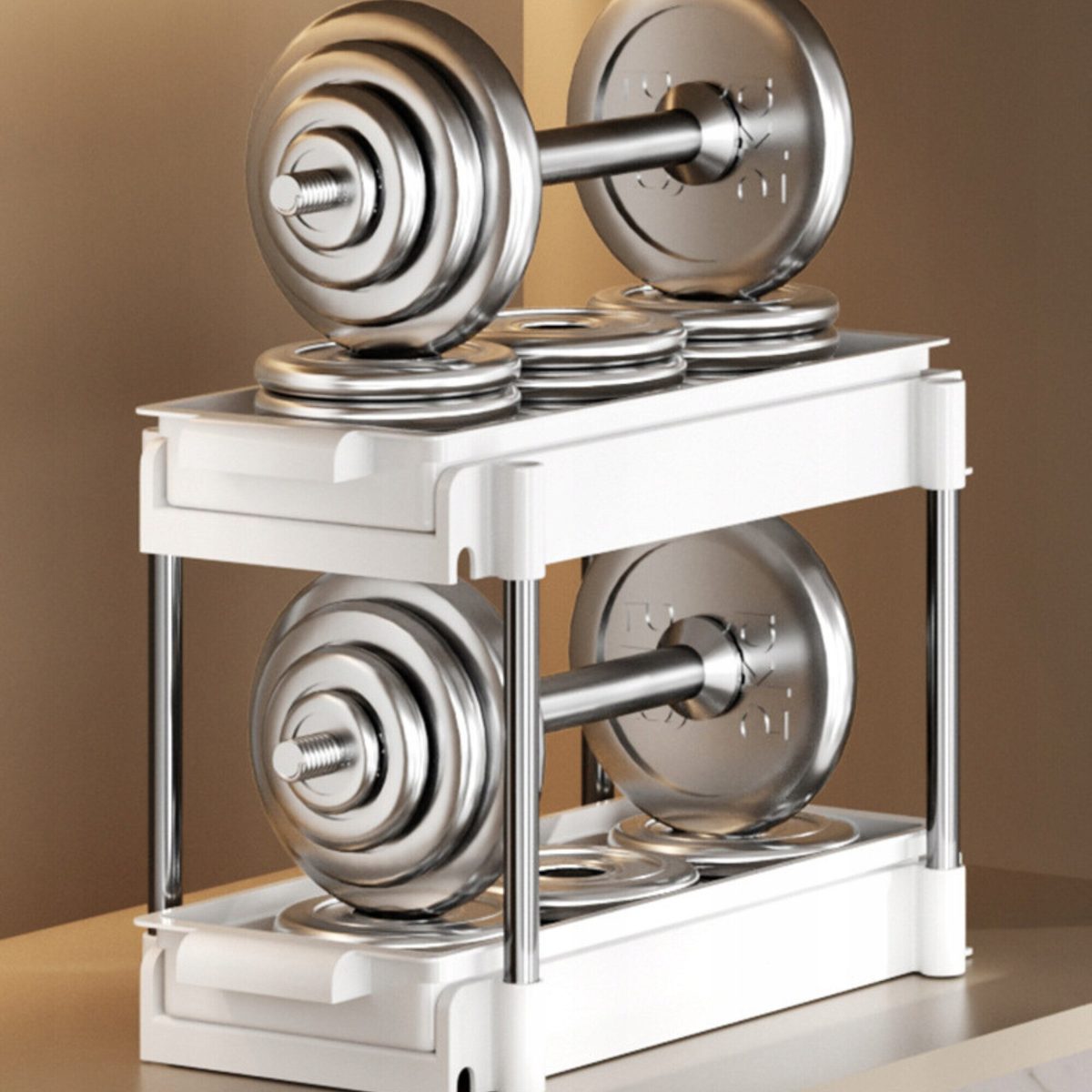
A low two-tier stand is better than the floor as soon as you own more than two fixed pairs. It keeps pairs in order, stops them rolling, and puts the heaviest pair at knee height instead of ankle height.
Choose a stand rated well above your total weight, with rubber feet or saddles. Cheap stands wobble under load, and a wobbling stand in a small room is worse than a tidy floor corner.
4. How much space does a dumbbell rack really need?
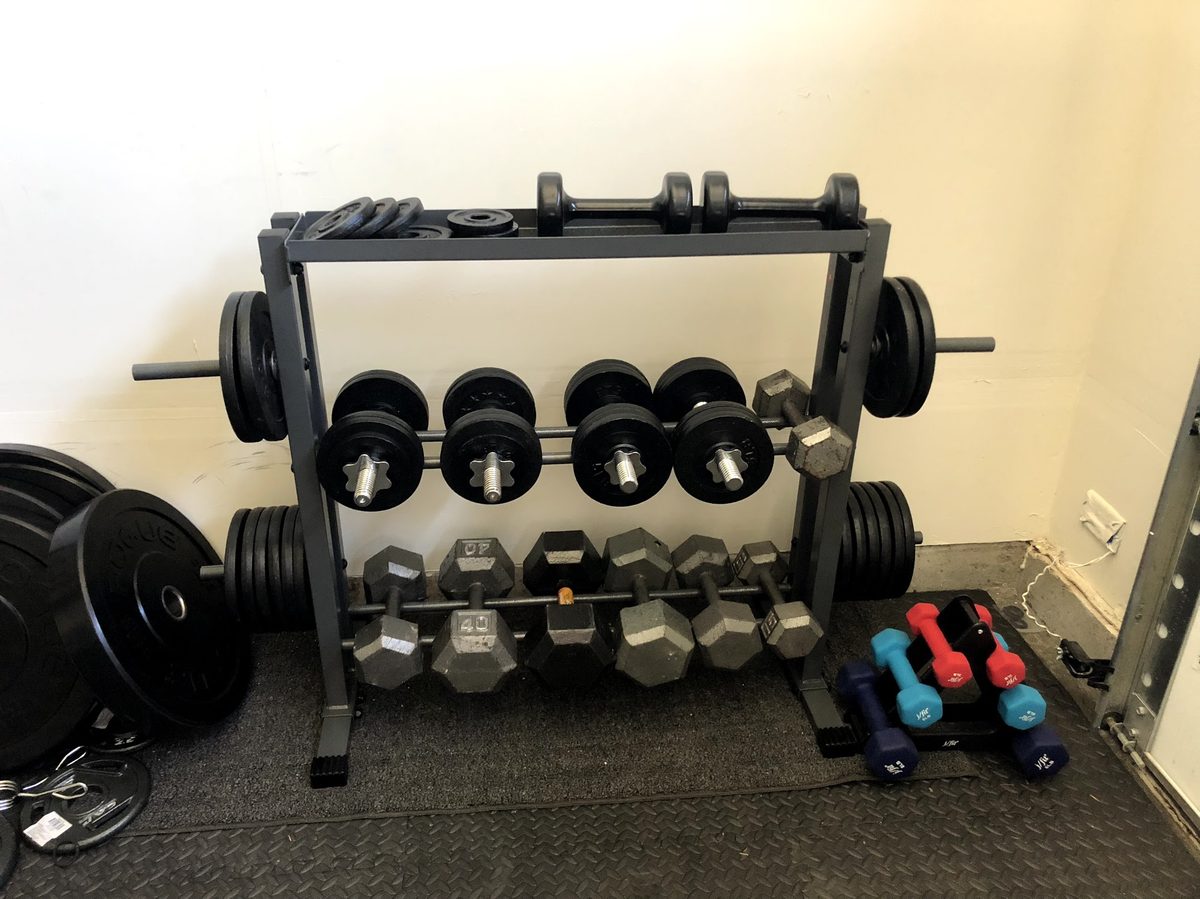
A full three-tier rack needs 8–12 square feet of floor plus standing room in front of it — roughly the space of a small desk. In a studio apartment, that is usually too much unless the rack is the room’s main feature.
Count the pairs you actually use weekly before buying a rack. Most home lifters rotate through three or four pairs; the rest of a full set is decoration that still needs dusting and floor space.
5. How do you protect apartment floors from dumbbells?
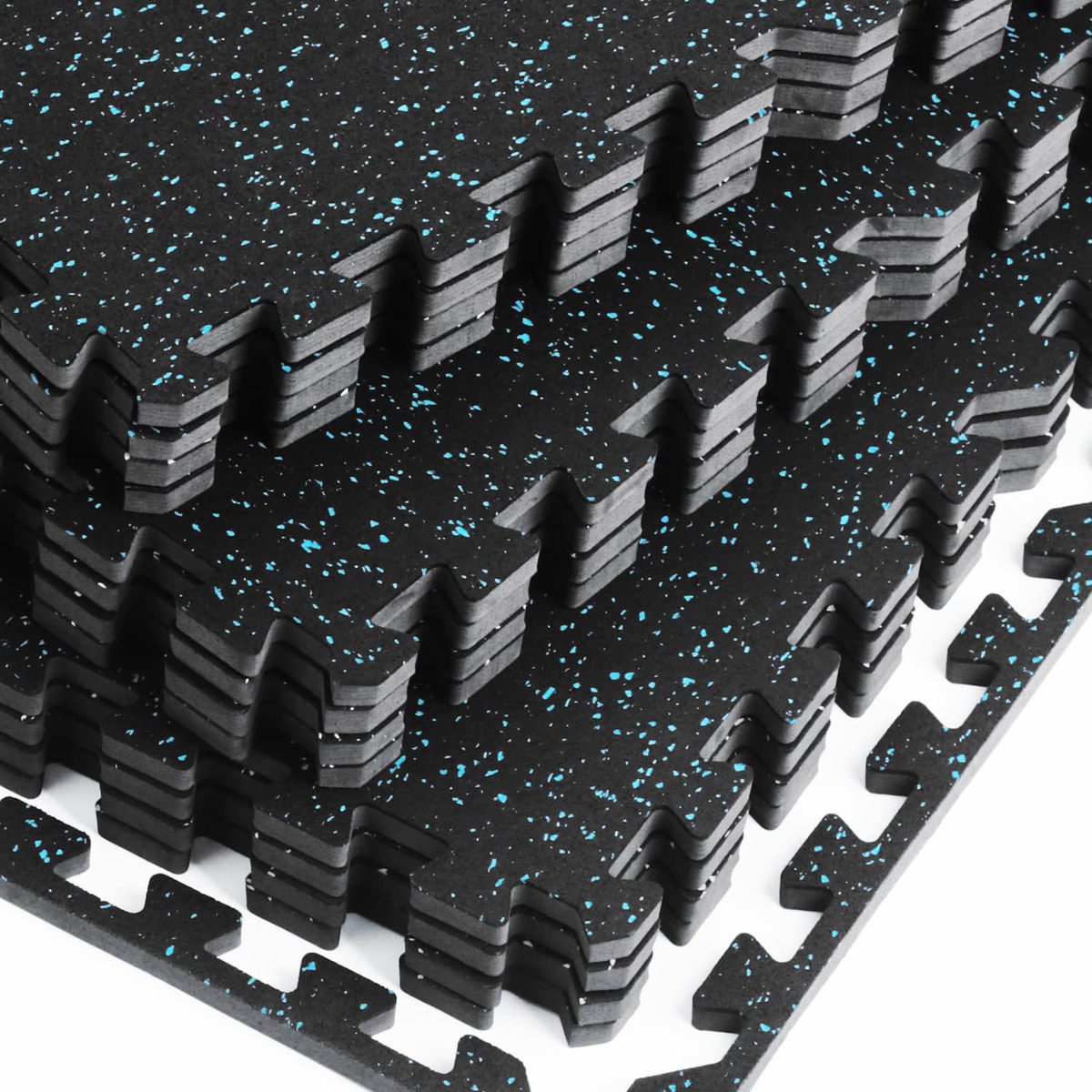
Rubber protects apartment floors: a mat or interlocking tiles under the storage corner absorb impact, stop metal marking wood, and deaden the clunk that carries to the flat below. Half-inch rubber tiles are the practical minimum under stored dumbbells.
Cover the storage corner and the drop zone in front of it, not the whole room. Tiles only where weights actually land keep the cost and the visual footprint small.
6. Where should the training corner go in a small room?
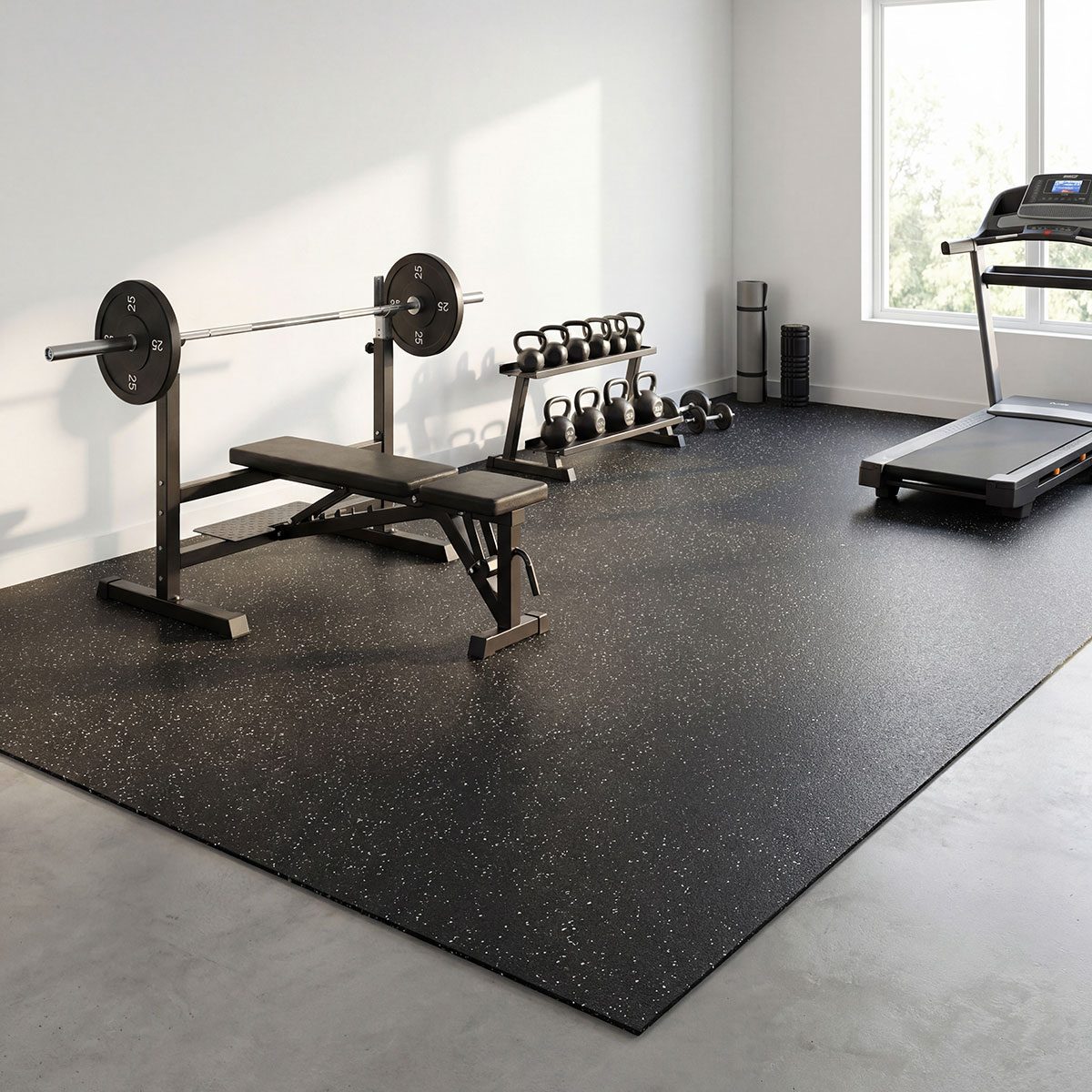
Put the training corner against the longest clear wall, with storage at one end and clear floor in front. You need about six by eight feet to press, row and lunge without moving furniture each session.
Keep the layout fixed. A corner that must be rebuilt before every workout is a corner that stops being used; our budget home gym guide shows a full small-space layout.
7. Can dumbbells live in a living room without looking messy?
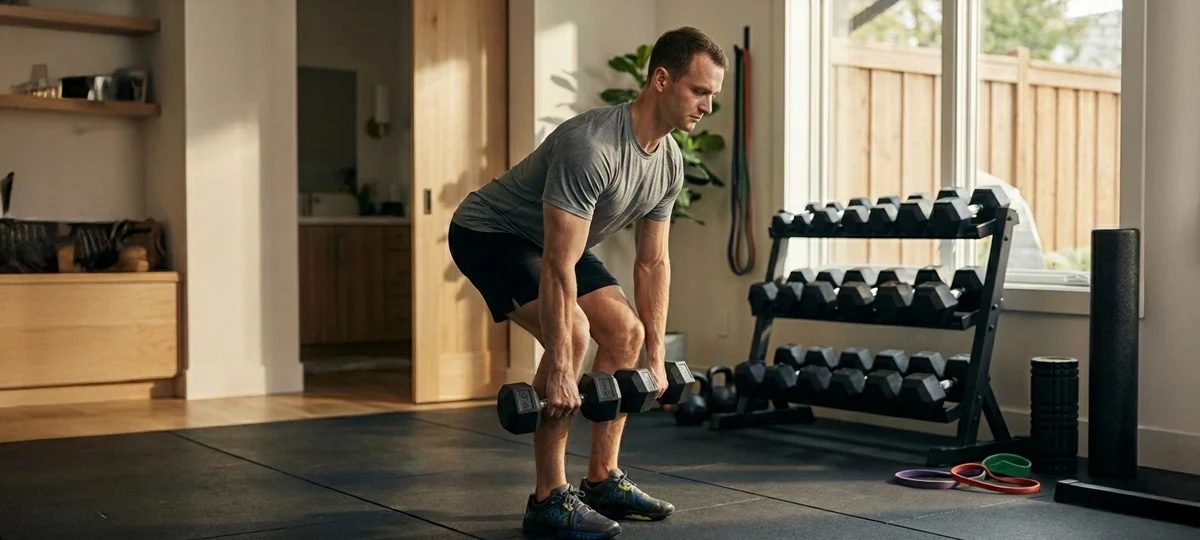
Yes, if the storage looks deliberate: one stand or tray, pairs in size order, and nothing stored outside the corner. Visual order is what separates a training corner from clutter.
Match the finish to the room where you can — black stands and trays disappear against most walls. Avoid storing dumbbells on carpet for long periods; the pile crushes and holds moisture against the metal.
8. What storage mistakes damage dumbbells and floors?
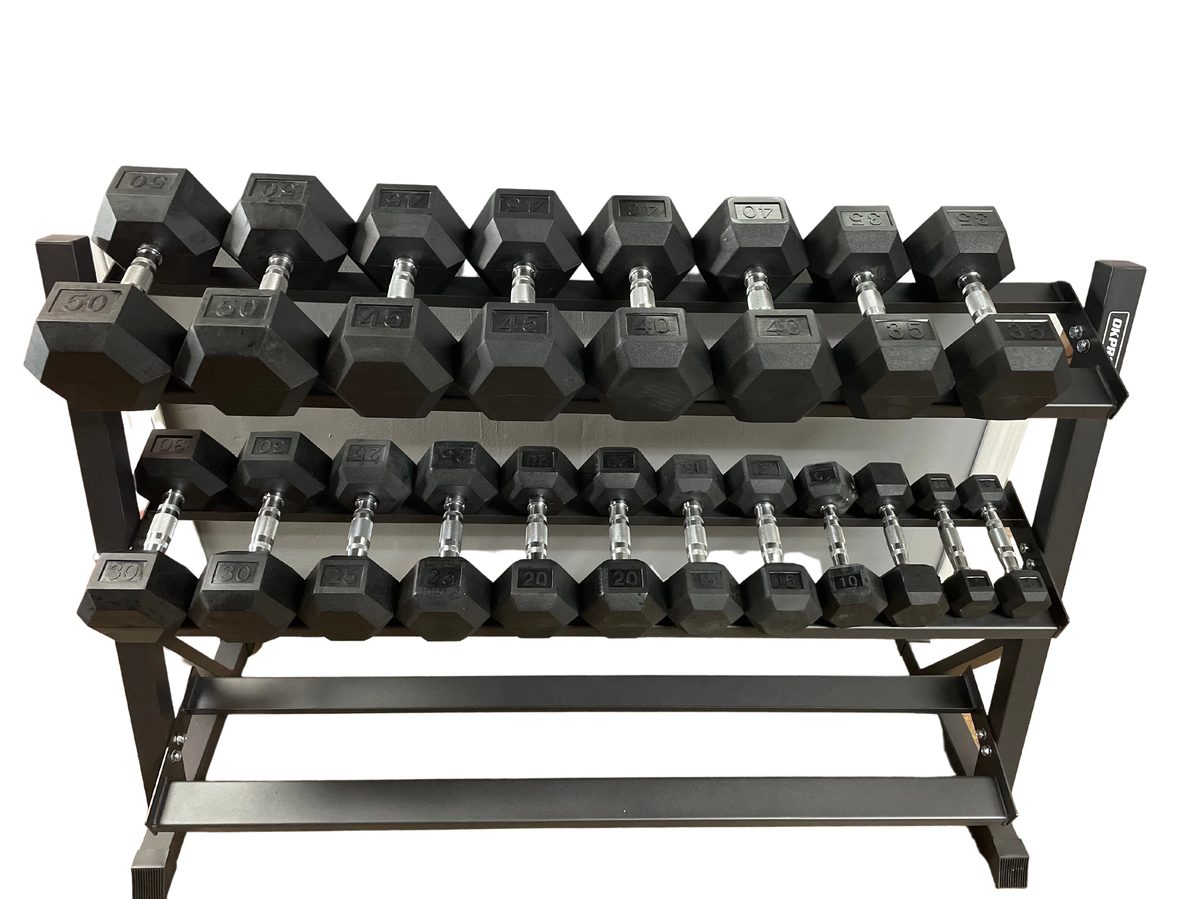
The damaging mistakes are storing bare metal directly on wood, stacking pairs on top of each other, and leaving dumbbells in a damp hallway or balcony. Each one marks the floor, chips coatings, or starts rust on knurled handles.
Wipe handles after sweaty sessions and keep pairs on their tray or stand, heaviest at the bottom. Small habits like these are why some sets look new after five years and others look tired after one.
Our verdict
For most small apartments, the answer is one adjustable pair on its tray, on rubber tiles, in one fixed corner. Add a low stand only when fixed pairs multiply, and a full rack only when the room can give it a wall.
Storage is equipment too: buy it for the pairs you own and use, not for the gym you imagine owning later.
Gear mentioned in this guide
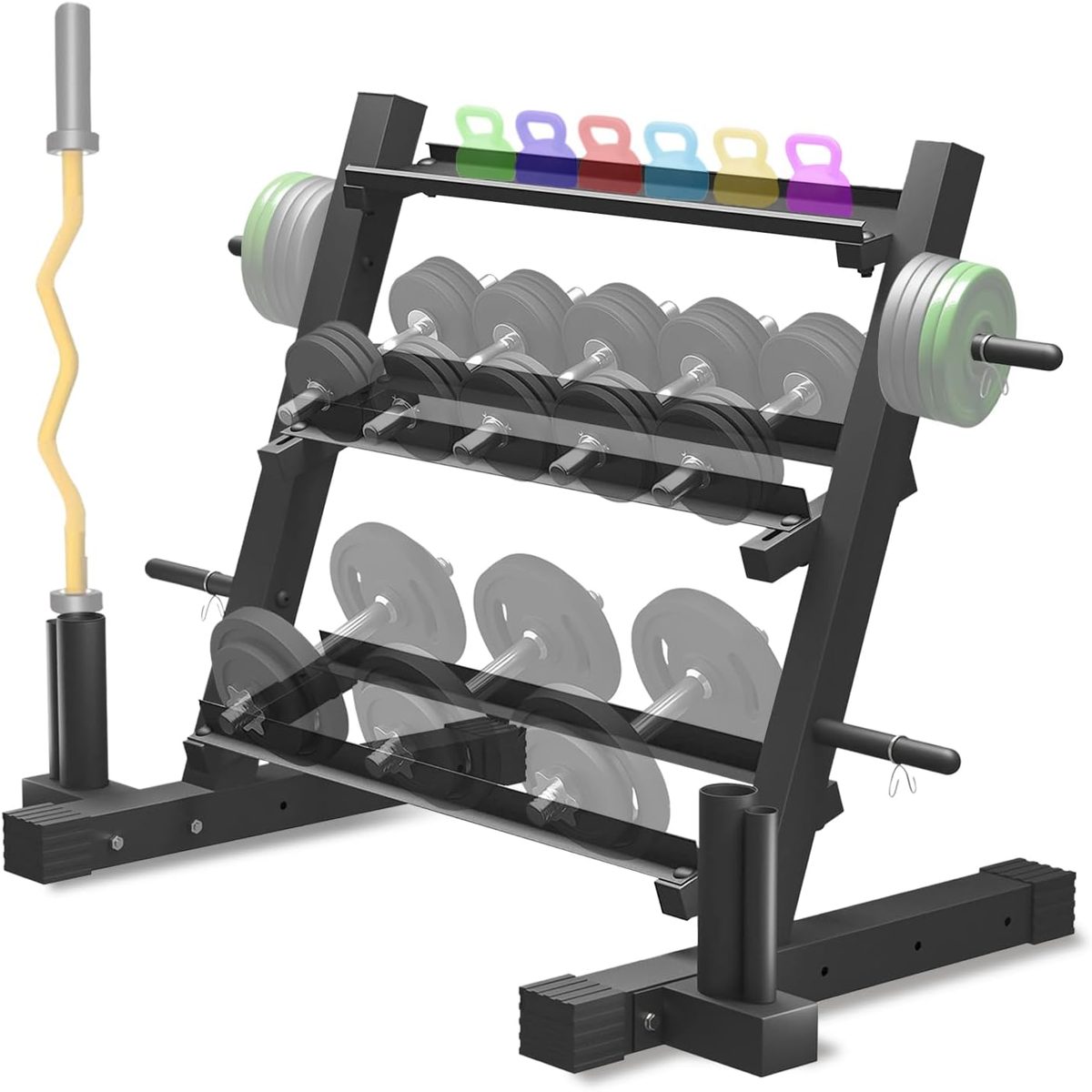
3-Tier Dumbbell Rack Stand
Keeps fixed pairs off the floor and your training space walkable.
Interlocking Rubber Gym Floor Tiles
Protects wood and tile floors under stored dumbbells.
Frequently asked questions
How do you store dumbbells in a small apartment without a rack?
Use one fixed corner: an adjustable pair on its tray, or fixed pairs in size order on rubber tiles. Vertical, deliberate storage takes about two square feet and keeps walkways clear.
Is it bad to leave dumbbells on the floor?
On bare wood, yes — metal marks and dents flooring over time. On a rubber mat or tray, floor storage is fine and is how most adjustable sets are designed to live.
How much space does one adjustable dumbbell pair need?
About two square feet for the pair on its trays, plus room to stand in front. That replaces a rack of fixed pairs needing 10–15 square feet.
Can dumbbells be stored under a sofa or bed?
Only light pairs on a tray, and only if you can slide them out without dragging metal across the floor. Heavy pairs belong on a stand or in a corner you can reach safely.
Do dumbbells damage carpet?
They crush the pile and can hold moisture against the coating. A rubber mat or board under the pair prevents both problems.
What is the best dumbbell storage for renters?
Rubber tiles plus a tray or low stand: nothing is fixed to the wall, the floor is protected, and everything lifts out cleanly when you move.
Should the heaviest dumbbells go on the bottom shelf?
Yes. Heaviest pairs belong lowest — the stand stays stable and you lift heavy weights from knee height, not shoulder height.
Related guides
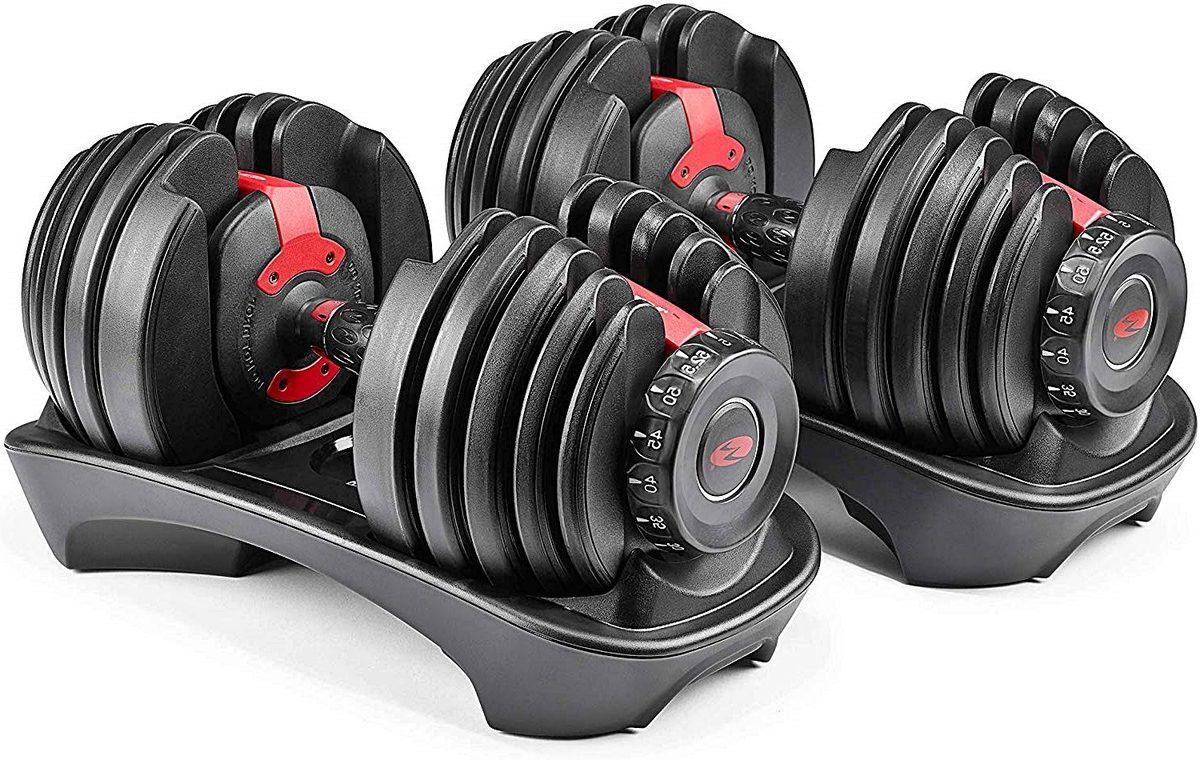
Best Adjustable Dumbbells for Home Gyms
One pair that replaces a whole rack is the single best purchase a home gym can make — if you pick the right mechanism. We compared 15 adjustable sets on weight …
How to Start a Home Gym on a Budget
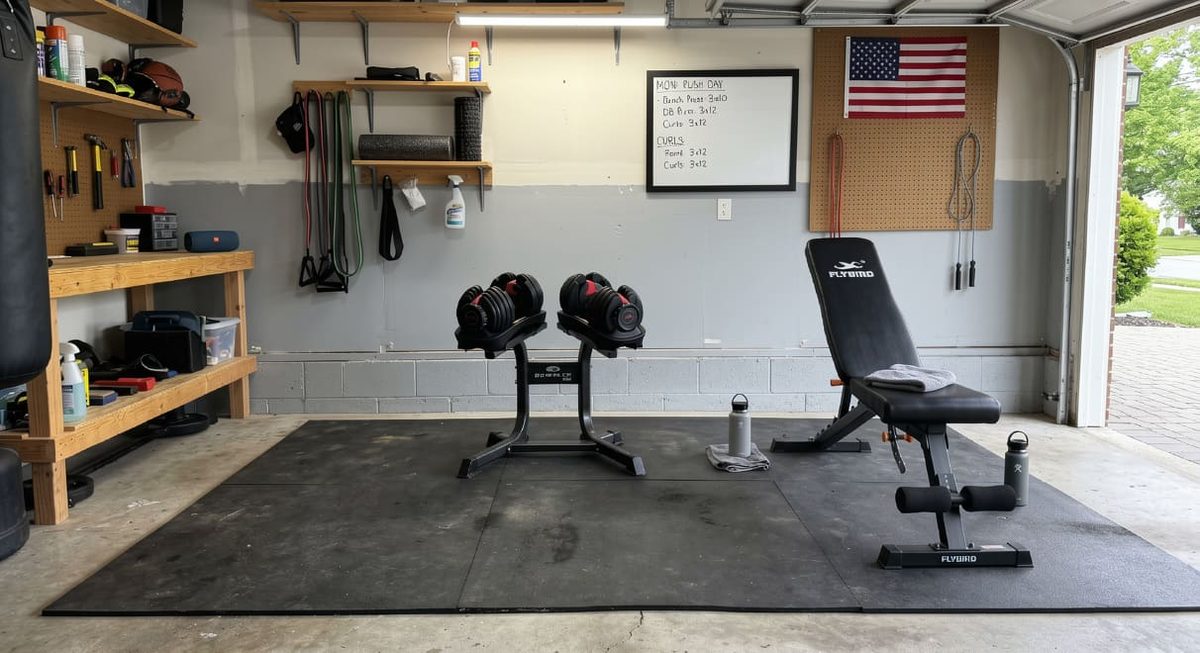
You do not need a $5,000 rack to train at home. You need a floor that survives dropped weight, one good pair of dumbbells, and a bench — in that order. Here is …
Resistance Bands vs Dumbbells: Which Builds More Strength?
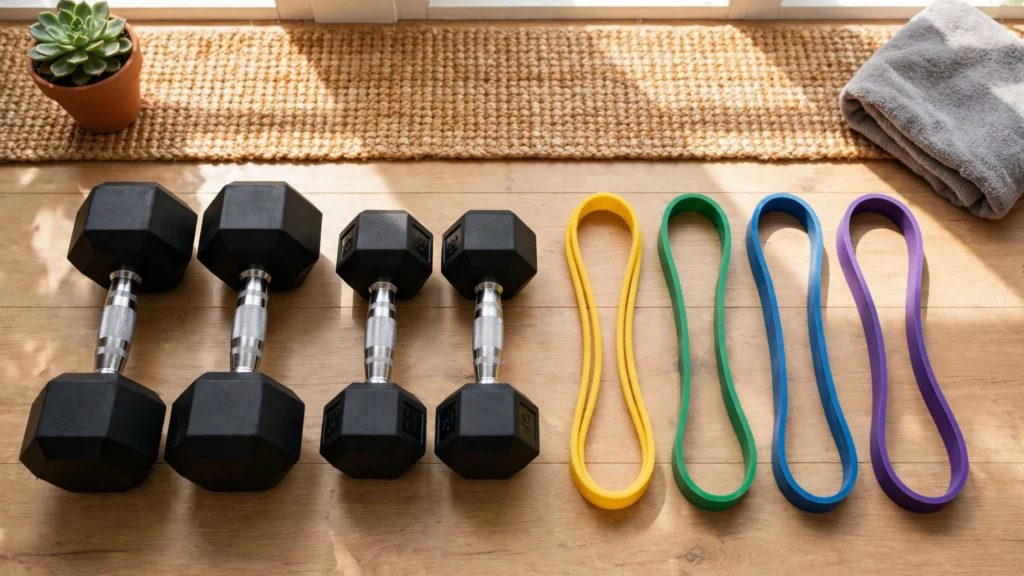
Bands are cheap, light and travel anywhere. Dumbbells are heavy, precise and last forever. The real question is not which is better — it is which kind of resist…
As an Amazon Associate, we earn from qualifying purchases. Prices and availability change — always check the live listing before you buy.